
Website Design Service for Tradies That Generates Qualified Enquiries
SEO Agency for Tradies provides mobile-first tradie website design for Australian trade businesses. Each website explains your services, defines your service areas, displays verifiable proof and converts suitable visitors into phone calls, booking requests and qualified quote enquiries.
Our web design for tradies service can include professional copywriting, individual service pages, service-area architecture, project galleries, quote forms, call tracking, Google Analytics 4, Google Search Console and local SEO foundations.
You retain access to the website, domain, content, analytics and enquiry data included within the agreed project scope.
Find out what's holding you back
Enter your number — we’ll call you with a free ranking report for your suburb.
We call within 2 business hours. No scripts. No pressure.
Businesses We Support Across Australia
We support trade and commercial service businesses with stronger local visibility, clearer lead generation and marketing systems connected to measurable commercial outcomes.







Built for Australian Trade Businesses
A website for tradies needs to connect a defined service, geographic market, proof element and contact action within one clear customer journey.
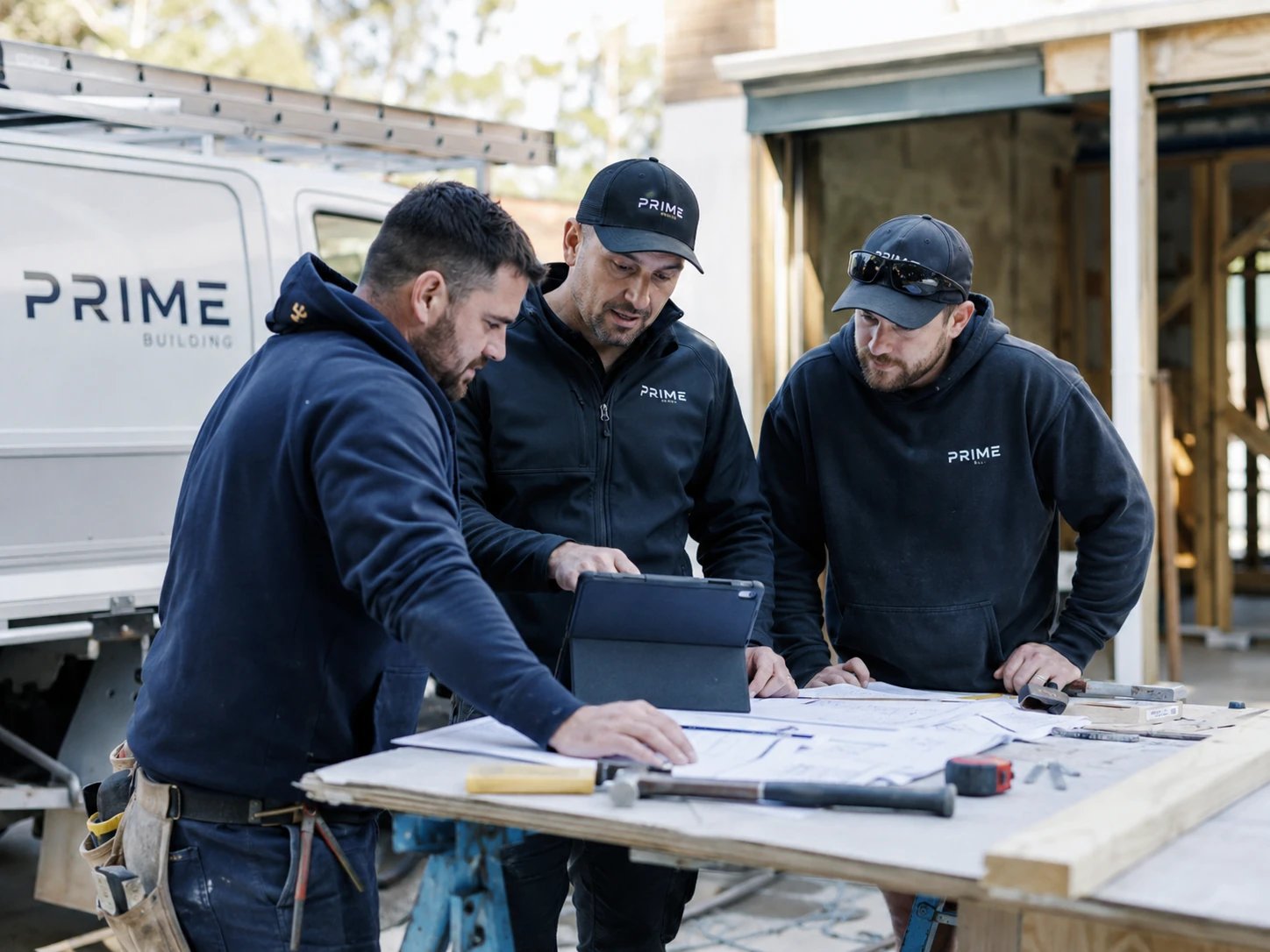
SEO Agency for Tradies designs websites for owner-operators, growing trade companies, multi-crew businesses and commercial contractors. The website structure changes according to business size, customer type, job value and service model.
A residential plumber may need emergency call buttons, blocked-drain pages and suburb targeting. A commercial shopfitter may need sector pages, detailed project evidence, compliance credentials and a request-for-quotation form.
| Website requirement | Implementation |
|---|---|
| Local enquiries | Service and service-area architecture |
| Mobile phone calls | Click-to-call buttons and sticky mobile contact controls |
| Quote requests | Structured enquiry forms with job-qualification fields |
| Search visibility | Crawlable pages, metadata, internal links and local relevance |
| Customer trust | Licences, insurance, reviews, photographs and case studies |
| Lead measurement | Call, form, booking and source tracking |
| Business control | Administrator access and documented asset ownership |
The Australian Government identifies professional presentation, customer discoverability, service promotion and easy contact as core functions of a business website.
A Tradie Website Must Generate Work, Not Just Look Professional
A tradies website performs a commercial function when it attracts relevant visitors, answers their hiring questions and provides a measurable route to contact the business.
Visual design affects usability and brand consistency. It does not independently generate qualified work. Enquiry performance also depends on search demand, service relevance, local competition, customer reviews, pricing, availability and lead follow-up.
For that reason, our tradie web design process plans the website around four connected systems:
- Acquisition: The visitor reaches a service, location, advertisement or referral landing page.
- Evaluation: The visitor checks services, qualifications, project evidence, reviews and service coverage.
- Conversion: The visitor calls, books or submits a quote request.
- Measurement: Analytics records the page, source and completed action.
This structure allows the business to determine whether the website supports residential call-outs, planned maintenance, construction projects or commercial tenders.
The page hierarchy can also prioritise higher-value work. For example, an electrician may separate switchboard upgrades, commercial maintenance, solar installations and emergency faults instead of placing all electrical services on one generic page.
Why Do Tradie Websites Fail to Generate Enquiries?
Tradies websites commonly underperform because their services, service areas, evidence and contact pathways do not match the customer’s search intent.
A website may contain professional colours, photographs and animations while still creating conversion friction. Conversion friction is any page element that delays, confuses or prevents a visitor from completing the required action.
Weak service relevance
A generic services page cannot explain every customer problem with sufficient detail. A homeowner searching for roof-leak repairs requires different information from a builder searching for commercial roof plumbing.
Each priority service needs a defined page when it serves a distinct search intent, customer type or conversion action.
Unclear geographic coverage
Customers need to confirm whether the business serves their suburb, city or region. A broad statement such as “servicing all areas” does not define travel limits, priority locations or branch coverage.
Service-area content can specify metro areas, regional routes, suburbs and postcodes. Location pages require unique local evidence. Examples include completed projects, local reviews and branch information.
Poor mobile usability
Phone numbers, navigation controls and quote forms may become difficult to use on a smaller screen. Google uses the mobile version of a website’s content for indexing and ranking through mobile-first indexing. The mobile version therefore needs equivalent content, metadata and crawlable resources.
Missing proof
Customers cannot independently verify statements such as “experienced,” “trusted” or “high quality” without supporting evidence.
Proof elements include licence details, public liability insurance, Google reviews, team photographs, completed projects, association memberships and workmanship guarantees.
Unqualified forms
A form that collects only a name and email address creates limited operational value. A quote form can also collect the service type, postcode, urgency, customer category and project description.
However, unnecessary fields can increase abandonment. The form length must reflect the value and complexity of the enquiry.
No measurement framework
Traffic does not show whether the website generates usable enquiries. The measurement framework must distinguish calls, forms, bookings, qualified leads and completed jobs.
The Australian Government recommends defining digital goals first, then selecting measurable indicators that show whether those goals are being achieved.
Who Is This Tradie Website Design Service Built For?
This service is built for Australian trade businesses that need a structured website to generate enquiries, present capability or support expansion.
The appropriate trade website design scope depends on the company’s operational stage.
Growth-stage trade businesses
A growth-stage trade business may manage 3–20 employees, several vehicles, multiple services or more than one service region. Its website must support lead volume without sending every visitor to the same generic page.
The structure may include:
- Individual service pages
- Priority service-area pages
- Crew or branch enquiry routing
- Job-qualification forms
- CRM or job-management integration
- Call and form attribution
The main commercial question is not whether the website looks modern. It is whether the website can promote suitable work across services, customer types and locations.
Established owner-operators
An established owner-operator may receive work through referrals, Facebook groups, Google Business Profile or lead platforms. The website needs to establish an owned digital presence without creating an additional administrative burden.
The project can include copywriting, image selection, domain setup, service-page planning and a simple editing system.
Businesses replacing an underperforming website
A redesign requires more than changing colours and page layouts. The existing URLs, search performance, content assets, forms, analytics and domain access need to be audited before migration.
The project scope may include redirect mapping, content consolidation, administrator access recovery and conversion tracking.
Commercial and specialist contractors
Commercial buyers evaluate different evidence from residential customers. Procurement managers, builders and facilities managers may inspect project capacity, insurance, licences, safety systems, sectors and tender experience.
Commercial contractor websites can include capability statements, sector pages, RFQ forms, project filters and document-upload fields.
Newly established tradies
A new trade business may need a smaller launch structure. The first version can establish the domain, business identity, services, licence information, service areas and contact pathways.
The architecture must still allow future service pages, locations and case studies to be added without rebuilding the complete website.
Research undertaken by the University of the Sunshine Coast with ASBFEO found that problems between Australian small businesses and digital providers often arose from poor commercial fit, limited understanding of the client’s needs and unclear return-on-investment expectations. The study involved 420 survey participants and 20 semi-structured interviews.
What Does Our Tradie Website Design Service Include?
Our tradies website design service can include strategy, information architecture, copywriting, interface design, development, search foundations, tracking and launch support.
The final scope is defined before production. This prevents an entry-level brochure website from being represented as a complete lead-generation system.
Website strategy
The strategy phase identifies what the website must achieve and how that result will be measured.
We examine the business’s services, customers, locations, lead sources and operational priorities. We then define the sitemap, page hierarchy, conversion paths and content requirements.
For example, a roofing company may prioritise roof repairs, roof replacements and commercial maintenance. A landscaper may prioritise landscape construction, retaining walls and pool surrounds.
Information architecture
Information architecture determines how pages are grouped, labelled and connected.
The architecture may contain:
- Service categories
- Individual services
- Residential and commercial sectors
- Service areas
- Projects
- Case studies
- Support content
A clear hierarchy allows customers and search engines to identify the relationship between the business, its services and its geographic coverage.
User-experience and interface design
User-experience design controls how visitors locate information and complete tasks. Interface design controls the visible layout, typography, spacing, buttons and media.
The design process prioritises service discovery, proof visibility and contact access. Decorative effects are secondary to comprehension and task completion.
Website development
Development converts approved layouts into a responsive content-management system.
The build can include reusable page templates, form configuration, structured navigation, analytics tags, security controls and supported integrations.
Website copywriting
Copywriting explains the service, customer problem, work process, evidence, coverage and next action.
The content is written in Australian English. Technical terminology is used only when it helps the customer understand the scope, safety requirement or expected result.
Search foundations
Search foundations can include metadata, heading hierarchy, internal links, crawlability, indexability, image optimisation, structured data and XML sitemap configuration.
These foundations support discovery. They do not guarantee rankings, traffic or leads.
Testing and launch
Testing covers desktop and mobile layouts, forms, buttons, redirects, tracking, browser compatibility and indexability.
The website is launched after the approved scope passes the agreed quality checks.
Why Choose SEO Agency for Tradies?
SEO Agency for Tradies structures websites around trade services, service areas, proof, enquiry qualification and measurable customer actions.
Our work begins with the business model. We identify whether the company sells urgent call-outs, scheduled maintenance, quoted residential projects, commercial contracts or recurring services.
The website architecture then reflects that model.
A generic website designer for tradies may begin with visual preferences. Our process begins with service priority, customer intent, geographic coverage and conversion requirements.
The service includes four operational principles.
Defined scope
Pages, revisions, integrations and exclusions are documented before production.
Trade-specific structure
Services, locations, licences and completed work are represented through a hierarchy that matches the business.
Measurable conversions
Calls, forms and booking requests can be tracked through the agreed measurement setup.
Client access
Domain, website, analytics and software access are defined in the proposal and handover documentation.
We do not guarantee Google rankings, lead volume or revenue. Those results depend on search demand, competition, reputation, pricing, availability and sales execution.
What Pages Are Included in Websites for Tradies?
Websites for tradies usually need pages for the business, individual services, service areas, project evidence, customer questions and contact actions.
The correct page count depends on service diversity and market coverage. A four-service owner-operator does not require the same structure as a commercial contractor serving three states.
| Page type | Primary function | Example content |
|---|---|---|
| Homepage | Establish relevance and route visitors | Services, areas, proof and contact options |
| About page | Verify business identity | Team, history, licences and operating model |
| Service page | Match one service intent | Roof repairs, switchboard upgrades or excavation |
| Service-area page | Define geographic coverage | Sydney, Newcastle or regional NSW |
| Project page | Demonstrate completed work | Scope, location, process and result |
| Case study | Explain capability in context | Problem, delivery method and outcome |
| Reviews page | Consolidate customer evidence | Google reviews and verified testimonials |
| Quote page | Capture and qualify enquiries | Service, suburb, urgency and project details |
| Contact page | Provide direct contact options | Phone, email, hours and service area |
| FAQ page | Resolve buying objections | Cost, timing, licences and availability |
Legal and system pages may include a privacy policy, terms and conditions, thank-you page and custom 404 page.
Not every website requires a separate page for every suburb or variation. Pages are created when they serve a legitimate customer, search or operational purpose.
How Does a Tradie Website Generate and Qualify Leads?
A tradie website generates leads by matching customer intent and qualifies them by collecting the information required to assess service suitability.
The first conversion path needs to remain simple. A visitor with an urgent electrical fault may need to call immediately. A builder requesting an excavation quotation may need to upload plans and provide a project timeline.
The website can support both behaviours.
Direct contact path
The direct path can include a visible phone number, click-to-call control and opening-hour information. Emergency services may also state their after-hours process and geographic limits.
Short enquiry path
A short form can collect:
- Name
- Phone number
- Email address
- Required service
- Suburb
- Brief message
This format suits general questions and lower-complexity jobs.
Qualified quote path
A detailed quote form can collect:
- Residential or commercial customer type
- Project address or postcode
- Required service
- Preferred timeframe
- Urgency
- Budget range
- Job photographs
- Plans or supporting documents
The form should collect only information required for the next business action. Australian privacy obligations vary by business type and turnover. Businesses covered by the Privacy Act need to manage personal information transparently and collect information that is reasonably necessary for their functions.
Clear labels, required-field instructions and textual error messages also improve form completion. W3C guidance states that labels and instructions help users enter information correctly and reduce repeated submissions caused by avoidable errors.
Which Conversion Features Can Be Added?
Conversion features are selected according to the customer’s urgency, job complexity and preferred contact method.
The website can include click-to-call buttons, quote forms, online booking, photograph uploads, project-document uploads and service-area checks.
A residential emergency page may use a prominent call button and a short backup form. A commercial project page may use an RFQ form with plan-upload capability.
Conversion controls can also change by device. A sticky call button may be useful on mobile phones, while a desktop layout may keep the phone number and quote CTA visible in the header.
The website can provide:
- A primary action for ready-to-hire visitors
- A secondary action for visitors comparing providers
- A lower-commitment action for complex projects
For example, the primary action may be Request a Quote, while the secondary action may be View Completed Projects.
The objective is not to place more buttons on every page. It is to provide the correct action at the correct decision stage.
Why Is Mobile-First Design Required for a Tradie Website?
Mobile-first design ensures that service information, proof and contact controls remain usable on smaller screens and mobile networks.
The mobile layout is designed before unnecessary desktop complexity is added. This approach identifies the essential content sequence:
- Confirm the service.
- Confirm the service area.
- Display relevant proof.
- Explain the next step.
- Provide a contact action.
Google uses mobile-page content for indexing and ranking. Different mobile metadata, blocked resources or missing content can therefore affect how Google crawls and understands the website.

Mobile testing also covers form fields, tap targets, navigation controls, image dimensions and sticky elements. A call button must not obscure content. A large project gallery must not delay access to the service information.
The final website is tested across representative mobile, tablet and desktop dimensions.
How Fast Should a Tradie Website Load?
A tradie website should meet current Core Web Vitals thresholds where the platform, hosting, media and third-party scripts allow it.
Google’s Core Web Vitals measure three user-experience dimensions:
| Metric | What it measures | Recommended threshold |
|---|---|---|
| Largest Contentful Paint | Loading performance | 2.5 seconds or less |
| Interaction to Next Paint | Interaction responsiveness | 200 milliseconds or less |
| Cumulative Layout Shift | Visual stability | 0.1 or less |
Google recommends evaluating these thresholds at the 75th percentile of page loads across mobile and desktop users.
Performance work can include image compression, modern image formats, caching, script reduction, font optimisation and server configuration.
However, performance varies according to user devices, network conditions, third-party software and page content. A website cannot be assigned one permanent speed score that applies to every visitor.
Project photographs require particular control. Images should be exported at the dimensions required by the layout instead of uploading original camera files without optimisation.
What Local SEO Foundations Are Built Into the Website?
Local SEO foundations connect the business’s services, geographic coverage and verifiable business information through crawlable website architecture.
The website can include individual service pages, location architecture, descriptive URLs, internal links, metadata, local business details and Google Business Profile connections.
A typical implementation includes:
- One indexable URL for each justified service or location page
- A unique title tag and heading hierarchy
- Consistent business name, address and phone details
- Contextual links between services, locations and projects
- An XML sitemap
- Indexability checks
- Relevant structured data
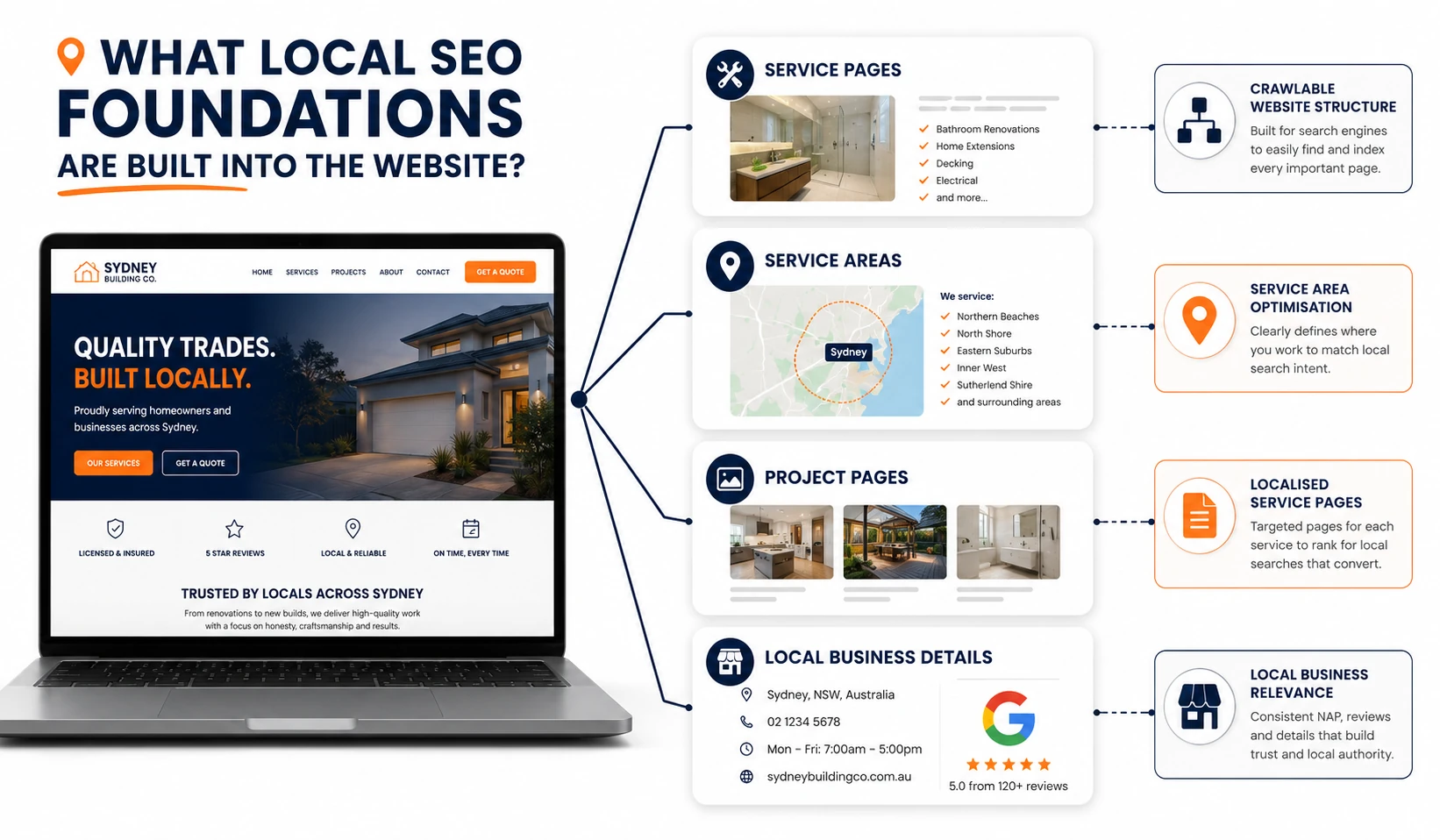
Google’s LocalBusiness structured data allows eligible businesses to describe details such as opening hours, departments and other business information. Structured data helps Google interpret page content, but it does not guarantee a rich search result or ranking improvement.
Local SEO foundations are not the same as an ongoing SEO campaign. Recurring SEO may also require content production, Google Business Profile management, digital PR, citation work, technical monitoring and competitor analysis.
How Is Website Copy Written for Trade Customers?
Tradie website copy explains the service, customer problem, delivery process, evidence, service area and contact action without unnecessary technical language.
The copywriting process begins with service discovery. The writer needs to understand the difference between services that may appear similar to a generalist.
For example, “electrical services” may include emergency fault finding, switchboard upgrades, data cabling and preventive commercial maintenance. Each service has different customers, risks and decision criteria.
A service page should answer:
- What is the service?
- Which problem does it address?
- Who requires it?
- Where is it available?
- What does the process include?
- Which licences or qualifications apply?
- What evidence supports the business’s capability?
- How does the customer request service?
The copy must also preserve factual accuracy. The business reviews all service claims, licences, coverage statements, warranties and response-time information before publication.
Keyword insertion does not replace subject-matter accuracy. Search terminology such as website design for tradesmen, websites for trades and website designer for tradies is used only where it matches the audience and page intent.
Which Trust Signals Should a Tradie Website Display?
A tradie website should display evidence that allows customers to verify the business’s identity, capability and risk controls.
Trust signals are not decorative badges. Each signal answers a specific hiring concern.
| Customer concern | Relevant evidence |
|---|---|
| Is the business legitimate? | ABN, business details and physical contact information |
| Is the trade regulated? | Licence number and relevant qualification |
| Is the business insured? | Public liability or professional insurance information |
| Has the business completed similar work? | Project pages and case studies |
| Were previous customers satisfied? | Google reviews and verified testimonials |
| Who will perform the work? | Team profiles and authentic photographs |
| What happens if a defect occurs? | Warranty or workmanship guarantee terms |
| Can the business handle the project? | Staff, fleet, equipment, sectors and delivery capacity |
The homepage can introduce the strongest evidence. Individual service pages should then display proof relevant to that service.
For example, a builder’s new-home page can display completed builds and licence information. A commercial cleaning page can display sector experience, insurance and quality-control processes.
Claims must remain specific. “Over 500 projects completed” should appear only when the business can verify the number and define what is counted as a project.
Website Design for Different Trade Industries
Different trades require different service taxonomies, proof formats and enquiry paths.
A builder’s website cannot use the same content structure as an emergency plumbing website. The customer intent, project duration, quotation process and regulatory evidence differ.
Website Design for Builders
Builder websites can include new-home services, renovations, extensions, project galleries, licence details and consultation forms.
Residential builders may need detailed project evidence. Commercial builders may also need sector pages, delivery capability and tender information.
Website Design for Plumbers
Plumbing websites can separate emergency plumbing, blocked drains, hot-water systems, gas fitting and commercial maintenance.
Urgent services require direct phone access. Planned work can use quote forms with photographs and appointment preferences.
Website Design for Electricians
Electrician websites can separate residential, commercial and industrial services.
Relevant pages may include switchboard upgrades, rewiring, fault finding, lighting and data cabling.
Website Design for Landscapers
Landscaping websites rely on visual evidence and defined project categories.
Pages may cover landscape design, construction, paving, retaining walls, irrigation and maintenance.
Website Design for Roofers
Roofing websites can distinguish repairs, replacement, restoration, inspections and commercial maintenance.
Project photographs should identify roof type, work performed and location.
Website Design for Shopfitters
Shopfitter websites need to present sectors, project capacity, delivery regions, compliance credentials and completed fit-outs.
RFQ forms can support plans, drawings and project documentation.
Website Design for Excavation Companies
Excavation websites can cover site cuts, trenching, land clearing, drainage, demolition and earthmoving.
Plant information, project access requirements and commercial experience can support qualification.
How Do Residential and Commercial Tradie Websites Differ?
Residential websites prioritise fast customer contact, while commercial contractor websites require deeper capability and compliance evidence.
| Dimension | Residential trade website | Commercial contractor website |
|---|---|---|
| Primary customer | Homeowner or landlord | Builder, developer or facilities manager |
| Typical decision | Call or request a quote | Evaluate capability or issue an RFQ |
| Required proof | Reviews and before-and-after work | Case studies, licences and project capacity |
| Form design | Short service enquiry | Detailed project qualification |
| Supporting files | Job photographs | Plans, scope documents and tender files |
| Main content | Services and suburbs | Sectors, capability and project experience |
| Sales cycle | Often shorter | Commonly multi-stage |
A business serving both markets can create separate residential and commercial pathways. This prevents a homeowner from navigating tender content and prevents a procurement manager from relying only on residential testimonials.
The same business identity can support both pathways, but the page sequence and evidence must reflect each buyer’s evaluation process.
Can the Website Integrate With Job-Management and CRM Software?
The website can connect with supported booking, CRM and job-management systems when the integration requirements are defined before development.
Possible systems include ServiceM8, Tradify, Jobber, HubSpot and supported calendar platforms.
The integration may transmit a form submission, create a contact record, trigger an email, assign an enquiry or start an automation. The exact behaviour depends on the software’s API, subscription level and access controls.
Before quoting an integration, we define:
- Which data the website collects
- Where the data needs to be sent
- Which event triggers the transfer
- Which staff member receives the notification
- What happens if the transfer fails
- How consent and personal information are managed
An integration is not complete because two logos appear in the proposal. It must be tested using a defined input and expected output.
Third-party subscriptions, API charges and software limitations are stated separately from the website-development fee.
Tradie Website Redesign and Migration
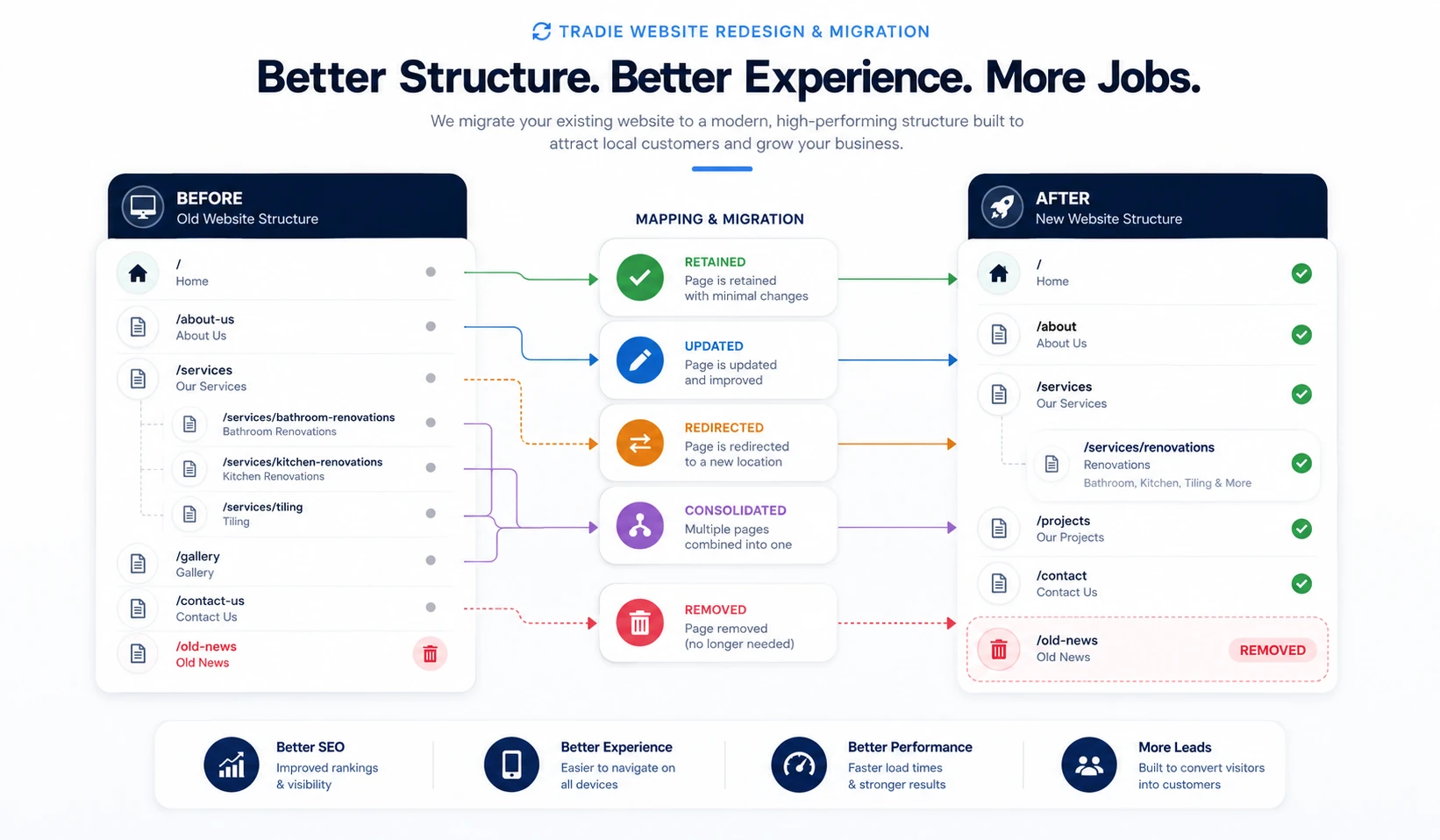
A website redesign replaces the interface while preserving or deliberately changing valuable content, URLs, tracking and search signals.
A redesign begins with an inventory of the existing website. The audit records indexable pages, incoming links, analytics data, forms, media, plugins and administrator access.
The migration then determines which URLs will be:
- Retained
- Updated
- Consolidated
- Redirected
- Removed
Redirects are required when a valuable URL changes. Sending every old page to the homepage removes topical relevance and creates a poor user path.
The redesign process can also identify structural problems. Examples include duplicate service pages, thin suburb content, missing conversion tracking and broken contact forms.
Redesign sequence
- Audit the current website.
- Export performance and URL data.
- Confirm domain and hosting access.
- Define the new architecture.
- Map every retained and replaced URL.
- Migrate approved content.
- Configure redirects.
- Test forms and tracking.
- Launch the website.
- Monitor crawling, indexing and errors.
Our Tradie Website Design Process
Our process defines the commercial objective before design and verifies the completed website before launch.
1. Discover the business requirement
We document the services, customers, locations, existing lead sources and website limitations. The discovery phase also identifies the decision-makers, required integrations and available evidence.
2. Define the website strategy
We establish the primary website goal, page hierarchy and conversion actions. The strategy specifies which services and locations justify dedicated pages.
3. Collect the source material
We collect business information, licence details, reviews, project photographs, service explanations and brand assets. Missing information is recorded before copywriting begins.
4. Write the website content
The content is structured around customer intent and verified business information. The business reviews factual claims before approval.
5. Design the page system
We design the homepage and reusable page templates. Templates can include service, location, project and article layouts.
6. Develop the website
Approved layouts are built within the agreed content-management system. Forms, menus, media and supported integrations are configured.
7. Configure search and measurement foundations
We implement agreed metadata, internal links, structured data, analytics and conversion events.
8. Test the completed website
Testing covers devices, browsers, forms, links, redirects, page speed and indexability.
9. Launch and verify
The website is published after approval. We then verify the live pages, forms, analytics and search access.
10. Complete the handover
The business receives the agreed access, documentation and training. Training can increase trust and internal capability. The University of the Sunshine Coast and ASBFEO research found that small-business owners reported greater trust when digital providers included training in project-based work.
How Long Does a Tradie Website Take to Build?
The build time depends on page count, content readiness, custom functionality, approval speed and third-party integrations.
A small informational website requires fewer production stages than a multi-location contractor website with 30 service and location pages.
The timeline is divided into measurable phases rather than one unsupported completion promise.
| Project phase | Completion condition |
|---|---|
| Discovery | Services, goals and responsibilities confirmed |
| Architecture | Sitemap and page scope approved |
| Content | Required page copy and business evidence approved |
| Design | Core layouts approved |
| Development | Approved layouts built |
| Testing | Forms, devices, tracking and links validated |
| Launch | Website and access checks completed |
Delays commonly occur when the business cannot supply licence information, project photographs, domain access or consolidated feedback.
The final proposal will state the expected schedule, client responsibilities and number of review rounds.
What Does the Client Need to Supply?
The client supplies accurate business information, access credentials, evidence and timely approvals required to complete the website.
The core information normally includes the legal business name, trading name, ABN, contact details, services, service areas and operating hours.
Project evidence may include job photographs, customer reviews, trade licences, insurance information and team profiles.
The client also confirms whether photographs can be published and whether client logos or project names require permission.
Existing website projects may require:
- Domain access
- Hosting access
- CMS administrator access
- Google Analytics access
- Google Search Console access
- Google Business Profile access
- CRM or booking-system access
Credentials are managed through an agreed secure process. Passwords should not be placed inside ordinary page copy, public forms or project documents.
Choose a Website Built for Your Next Stage of Growth
Fixed starting prices in Australian dollars, including trade-specific copy, conversion pathways and SEO foundations.
Local Lead Website
A focused website that presents your services, service area, experience and quote pathway clearly.
- Up to 5 conversion-focused pages
- Trade-specific website copy
- Click-to-call and quote form
- Local SEO launch foundations
- GA4 and Search Console setup
Multi-Service Growth Website
A structured website for tradies targeting multiple services, locations and higher-value enquiries.
- Up to 12 strategically planned pages
- Individual priority service pages
- Service-area and internal-link structure
- Projects, reviews and trust evidence
- Qualified lead forms and tracking
Commercial Authority Website
A custom website for contractors pursuing tenders, procurement enquiries and larger multi-region projects.
- Custom service and sector architecture
- Capability and project case studies
- RFQ and tender enquiry pathways
- CRM or job-system integration planning
- Migration and technical SEO controls
All prices are shown in Australian dollars and exclude GST. Starting prices apply to the stated scope. Hosting, premium software, advanced integrations, photography and additional pages are quoted separately.
What Is Included and Not Included?
The proposal states the exact deliverables, exclusions and recurring charges before production begins.
| Service area | Included within the agreed scope | Requires separate agreement |
|---|---|---|
| Strategy | Discovery, sitemap and conversion planning | Full business or sales strategy |
| Design | Approved page templates and responsive layouts | Unlimited design concepts |
| Development | Agreed CMS pages and functionality | Unspecified custom applications |
| Copywriting | Agreed page count and revisions | Unlimited ongoing content |
| SEO | Agreed launch foundations | Guaranteed rankings or recurring SEO |
| Hosting | Only when itemised | Unlimited storage or third-party services |
| Integrations | Named supported systems | Undocumented custom API development |
| Maintenance | Defined updates when purchased | Unlimited content changes |
| Photography | Image selection and placement | On-site photography unless quoted |
| Branding | Existing brand implementation | Full brand-identity development |
| Support | Defined launch or maintenance support | Unlimited consulting |
The University of the Sunshine Coast and ASBFEO research recommends checking provider history, understanding the service offer, reviewing prices and establishing realistic expectations before entering a digital-service relationship.
Who Owns the Website, Domain and Data?
Ownership and access are defined separately for the domain, website files, content, software licences, analytics and customer data.
The business should know who controls each digital asset before signing the agreement.
| Asset | Ownership or access requirement |
|---|---|
| Domain name | Registered to or controlled by the business |
| Website content | Defined in the service agreement |
| Client photographs | Retained by the client subject to existing rights |
| Website administration | Client access supplied as agreed |
| Hosting account | Ownership and portability stated |
| Analytics property | Business receives appropriate access |
| Search Console | Business receives owner-level access where applicable |
| Form submissions | Controlled by the business |
| Plugin licences | Renewal and transfer conditions disclosed |
| Third-party software | Governed by the software provider’s terms |
“Full ownership” does not automatically mean every third-party licence transfers to the client. Commercial fonts, stock images, plugins and software platforms may remain subject to separate licensing terms.
The proposal also states what happens when hosting or maintenance ends. This includes migration access, data export, software renewals and administrator credentials.
What Ongoing Website Fees Apply?
Ongoing fees may include hosting, domain renewal, maintenance, premium software and optional marketing services.
Each recurring charge performs a different function.
Hosting keeps the website available on a server. Domain renewal maintains the website address. Maintenance can include software updates, security checks, backups and technical support.
Premium software may support forms, booking systems, spam filtering, analytics or integrations.
Ongoing SEO is a separate marketing service. It may include content production, technical monitoring, local optimisation and authority development.
The proposal identifies:
- The billing frequency
- The service covered
- The responsible supplier
- The renewal date
- The cancellation process
- The migration conditions
No recurring service should be described only as “website management” without defining the tasks and limits.
Website Hosting, Maintenance and Support
Post-launch support maintains the website’s technical operation but does not replace continuous content, SEO or business management.
Hosting
Managed hosting can include server resources, SSL configuration, uptime monitoring and backups.
The package should state storage, traffic policies and support arrangements.
Maintenance
Website maintenance can include CMS updates, plugin updates, security reviews, backup verification, form checks and technical troubleshooting.
Content changes, new pages and redesign work require separate scope unless expressly included.
Support
Support requests should use a documented channel and priority system.
A critical outage requires different handling from a request to replace a project photograph.
Handover
The handover can include administrator access, analytics access, training and technical documentation.
The business should know how to change basic content and where to request changes that require development.
How Is Website Performance Measured?
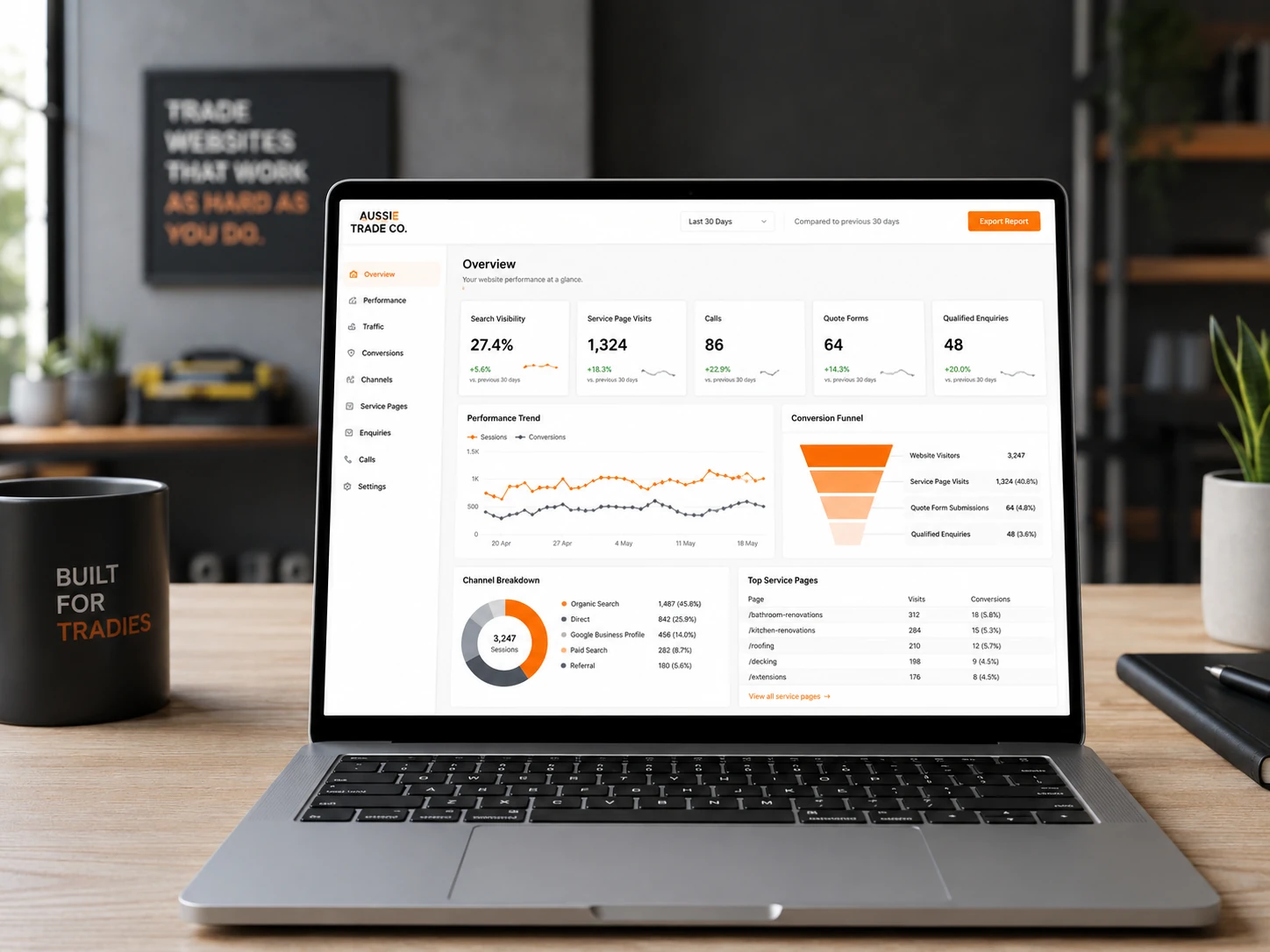
Website performance is measured through defined conversion events and business outcomes rather than traffic alone.
The measurement plan can record calls, forms, booking requests, file downloads and location interactions.
Google Analytics 4 can measure website events. Google Search Console can report search visibility, queries, clicks and indexing information. A call-tracking system can attribute calls to defined marketing sources.
| Measurement level | Example metric |
|---|---|
| Visibility | Search impressions |
| Engagement | Service-page visits |
| Conversion | Calls and quote forms |
| Lead quality | Serviceable enquiries |
| Sales | Accepted quotes |
| Commercial result | Revenue from completed work |
The website can reliably measure the first three levels when tracking is configured correctly. Lead quality and revenue require information from the business’s CRM, quoting or job-management process.
A website provider cannot accurately attribute revenue when sales outcomes are not recorded.
Australia-Wide Website Design for Tradies
SEO Agency for Tradies can design websites for trade businesses operating within local, metropolitan, regional or multi-state markets across Australia.
The service is delivered remotely through structured discovery, content collection, design review and digital handover.
A remote process does not justify creating artificial location pages. Dedicated city pages require a real commercial proposition, relevant service information and evidence.
Our web design for tradies service can support businesses serving:
- Sydney and New South Wales
- Melbourne and Victoria
- Brisbane and Queensland
- Perth and Western Australia
- Adelaide and South Australia
- Canberra and the Australian Capital Territory
- Hobart and Tasmania
- Darwin and the Northern Territory
- Regional and multi-state markets
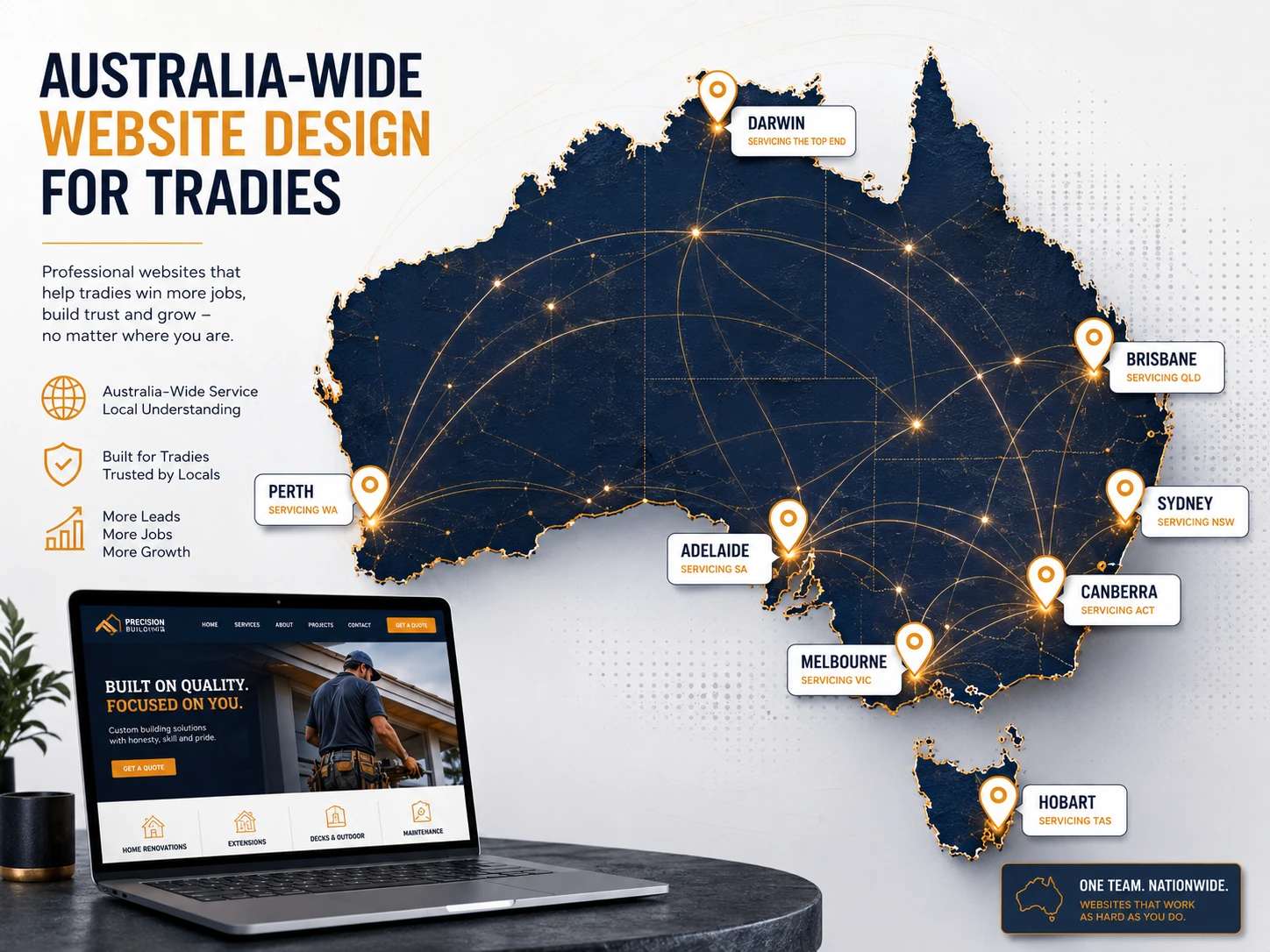
Location content must reflect actual coverage and operational capacity.
Frequently Asked Questions
Tradie website cost depends on page count, custom design, copywriting, integrations, SEO scope, migration requirements and post-launch support.
A four-page startup site requires less strategy and production than a 30-page contractor website with service areas, case studies and CRM integration.
The proposal itemises the website build, recurring fees and optional services.
A package can include strategy, design, development, copywriting, service pages, quote forms, search foundations, analytics and launch support.
The precise inclusions are documented before production begins. Hosting, premium software and ongoing marketing are listed separately.
The timeline depends on project size, content readiness, functionality, feedback speed and third-party access.
The proposal provides an estimated schedule after the sitemap and requirements are confirmed.
Professional website copywriting can be included within the project scope.
The client supplies accurate service information, licences, coverage details and project evidence. We structure and write the approved content in Australian English.
The website can include technical and on-page SEO foundations, but ongoing SEO is a separate service unless expressly included.
Launch foundations may include metadata, internal links, structured data, sitemap configuration and indexability checks.
No provider can guarantee a specific Google ranking.
Rankings depend on relevance, technical accessibility, competition, authority, location, content quality and other search-system factors.
Ownership and access are documented for the domain, website content, administration, analytics and customer data.
Third-party software and licensed assets may remain subject to separate supplier terms.
Ongoing fees may apply for hosting, domain renewal, maintenance, premium software and optional marketing services.
Every recurring fee is identified before the project begins.
Hosting is included only when it appears in the approved package or proposal.
The hosting scope should define renewal costs, backups, security, support and migration conditions.
Yes, an existing tradie website can be audited, redesigned and migrated under a defined migration plan.
The process includes reviewing URLs, content, access, analytics, redirects and current search performance.
Supported CRM and job-management integrations can be configured after the required data flow is documented.
Software subscriptions, API access and custom-development requirements are assessed separately.
Yes, quote forms can include photograph, plan or document-upload fields where the hosting and form system support them.
File types, size limits, storage and privacy controls must be configured before launch.
A content-management system can allow authorised staff to update agreed text, images and project content.
The handover can include administrator access and training.
The page count depends on the number of distinct services, customer groups, service areas and evidence assets.
Pages should serve a defined customer or search purpose. Additional pages should not be created solely to increase page count.
No website provider can guarantee lead volume or sales revenue.
Results also depend on demand, competition, reviews, prices, service availability, response speed and sales follow-up.
Build a Tradie Website Around the Work You Want
Get a website scope based on your services, service areas, customer types, proof and enquiry process.
SEO Agency for Tradies will review your existing website or planned build, identify the required page architecture and define the content, functionality, tracking and ownership arrangements before production begins.
Whether you need a single website for tradie services, a scalable trade website design, or multiple websites for trades operating across different regions, the scope will be matched to the actual business requirement.
Use the enquiry form to provide:
- Your trade
- Your current website
- Your primary services
- Your target service areas
- Your required integrations
- Your preferred launch timeframe


