
SEO for Landscapers That Targets Profitable Local Projects
SEO for landscapers connects your most profitable services and genuine service areas with homeowners, builders, strata managers and commercial buyers searching on Google. We improve Google Maps visibility, organic service rankings, suburb relevance and lead tracking so your campaign produces suitable enquiries rather than empty traffic.
Find out what's holding you back
Enter your number — we’ll call you with a free ranking report for your suburb.
We call within 2 business hours. No scripts. No pressure.
Most landscaping websites underperform because their service pages, Google Business Profile and location coverage do not match the work the business wants to secure.
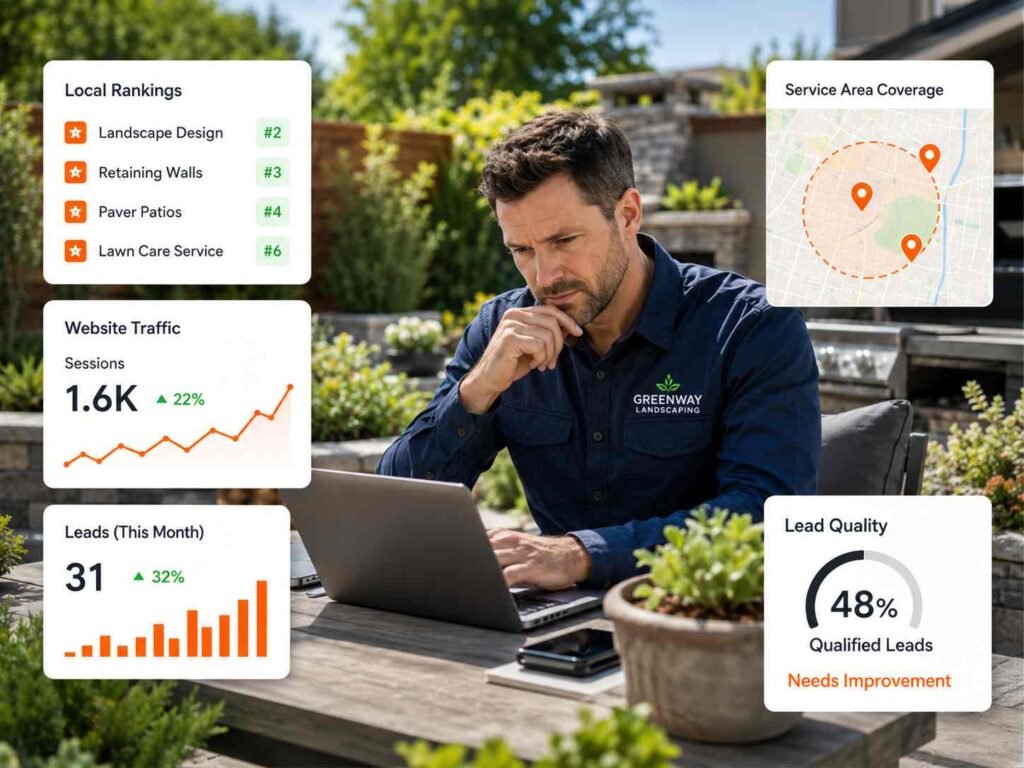
One Page Covers Every Service
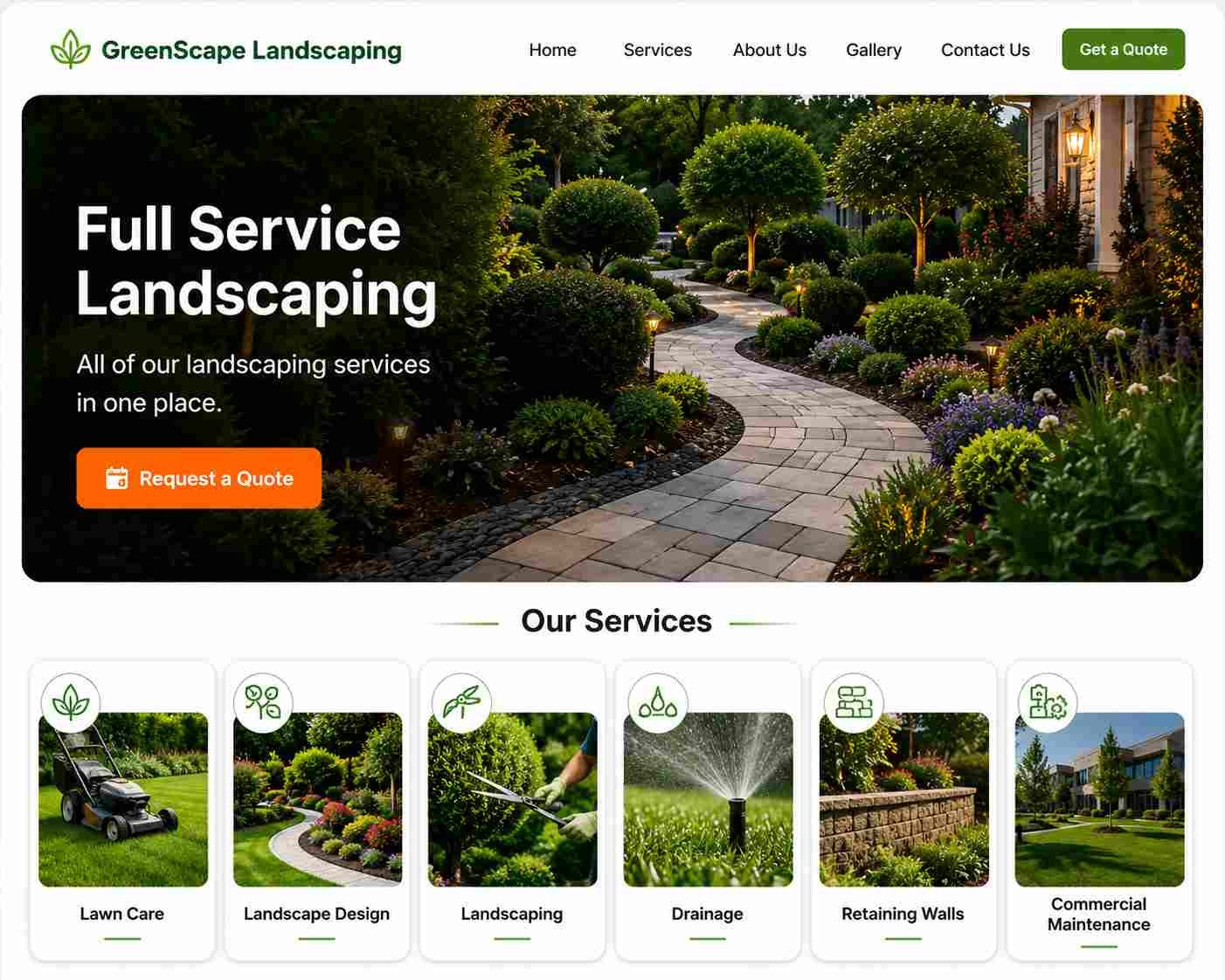
Grouping lawn mowing, landscape design, paving, drainage, retaining walls and commercial maintenance on one general page weakens relevance because each service attracts a different customer and requires different information.
Your Google Business Profile Is Incomplete
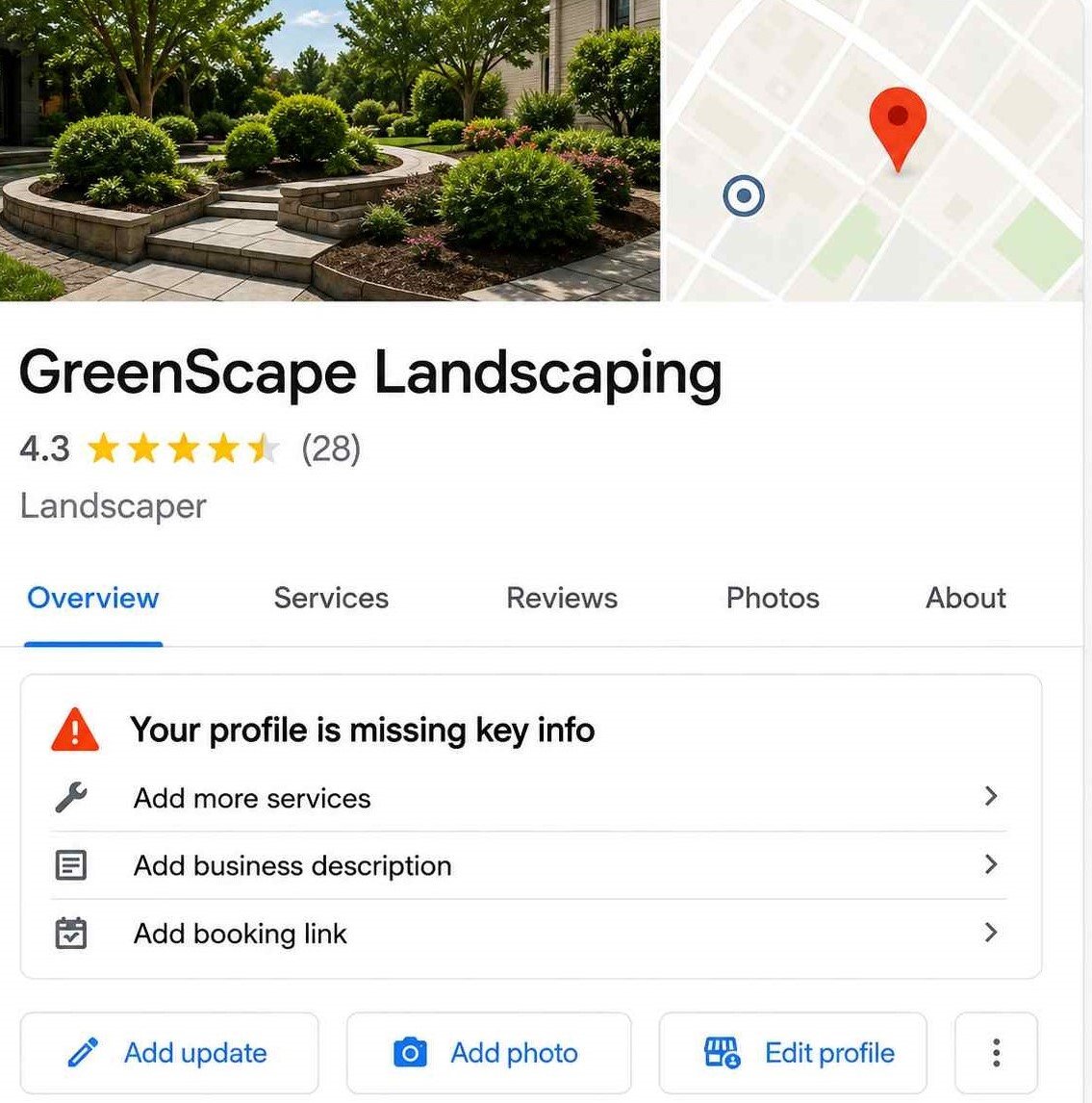
Incorrect categories, missing services, outdated contact details and weak website links can reduce local visibility because the profile does not clearly explain what your business provides or where it operates.
Your Location Pages Look Duplicated
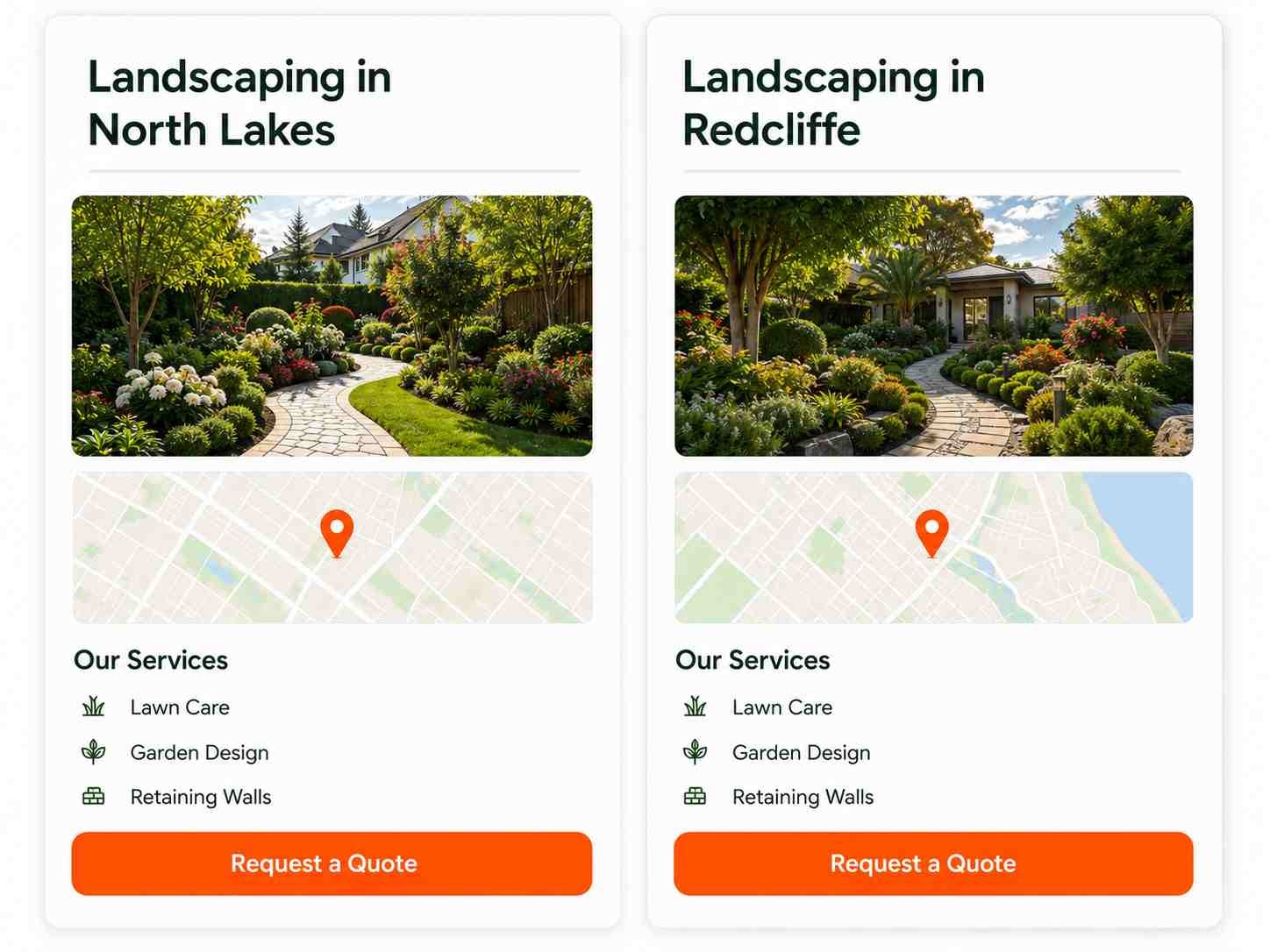
Replacing one suburb name with another does not create genuine local relevance because useful location pages need real service coverage, nearby project evidence and information specific to customers in that area.
Your Website Lacks Local Proof
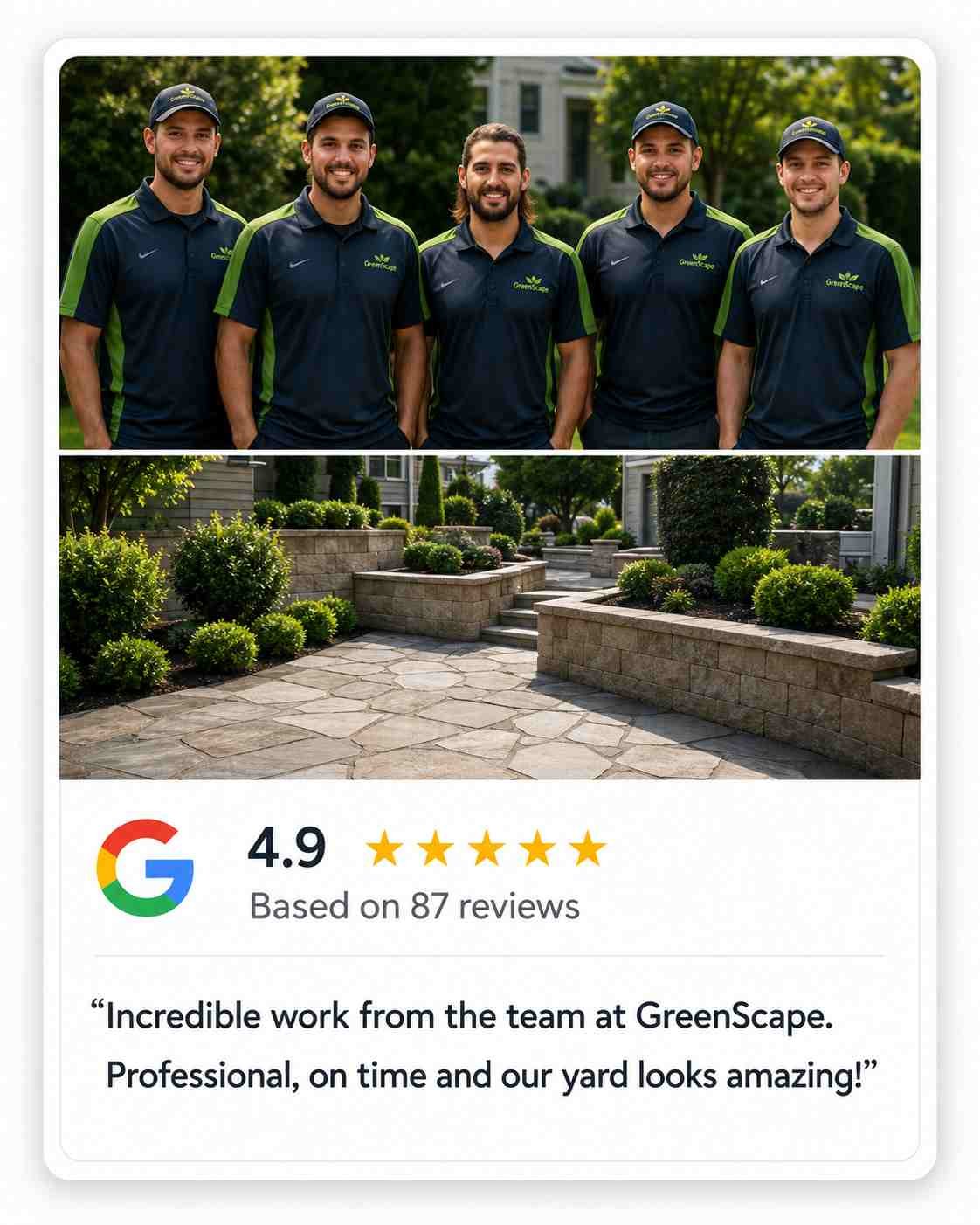
Generic claims and stock photos don’t build trust. Customers want to see real projects, local reviews, your team, and proof that you deliver results in their area.
Your Project Gallery Lacks Context
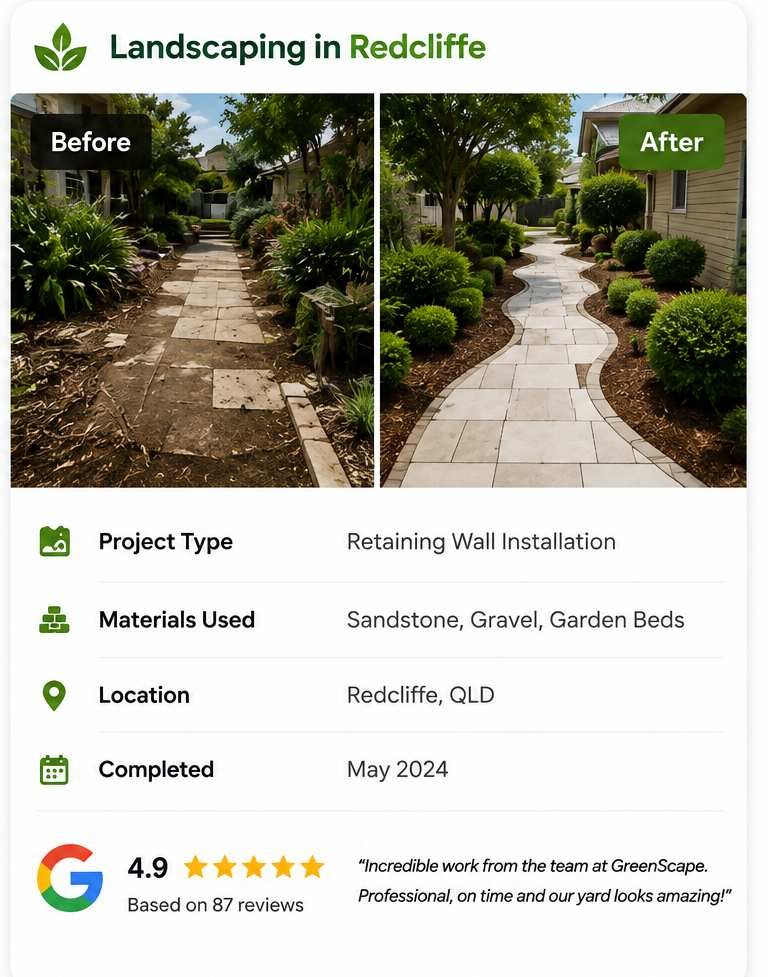
Project photographs provide limited value when they do not explain the original problem, work completed, materials used, project location and final outcome.
Your Reporting Stops at Traffic
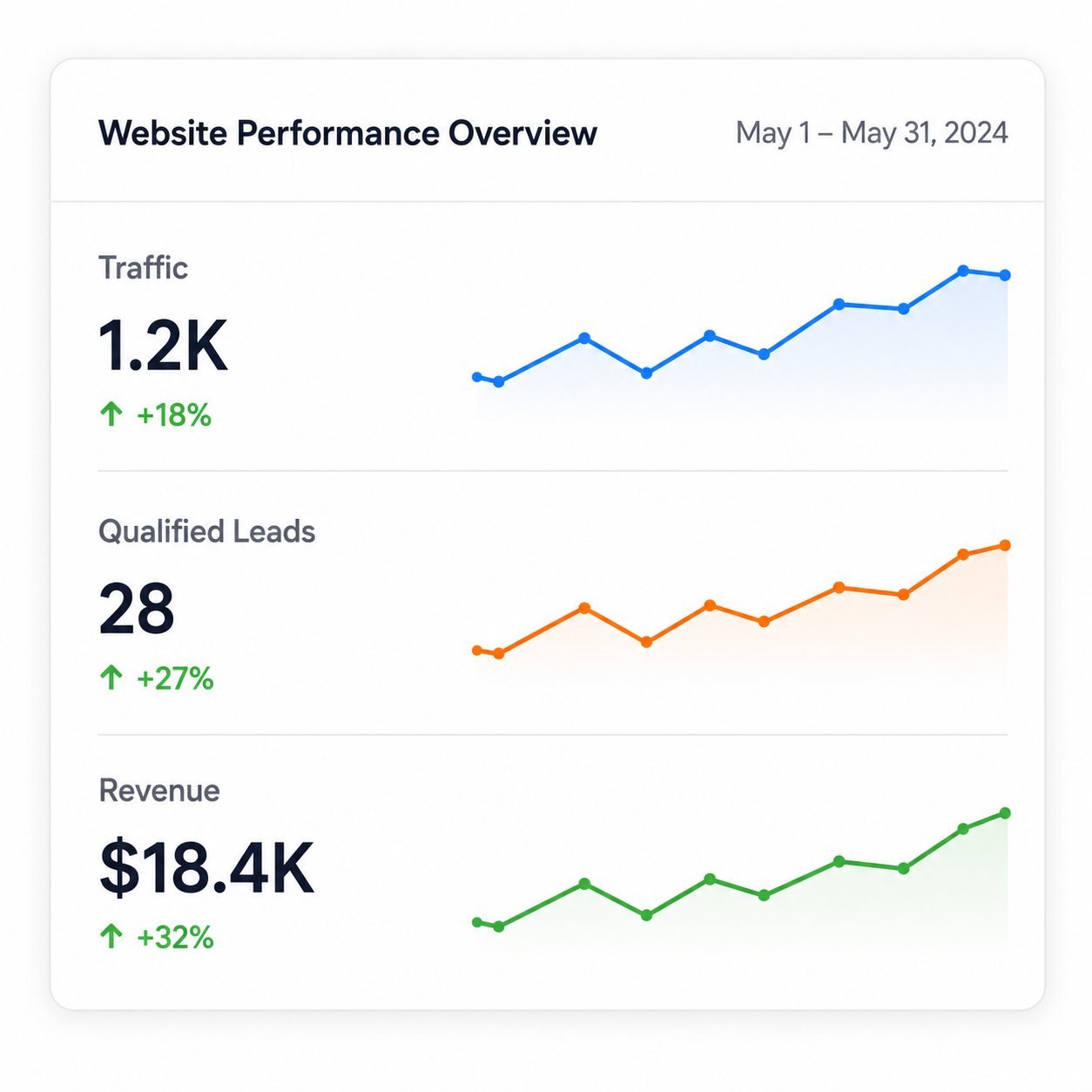
Traffic is just a vanity metric. Your reports should connect website performance to qualified leads, booked jobs, and revenue so you can make smarter growth decisions.
Which Landscaping Businesses Need This SEO Service?
This service is built for landscaping businesses that need more control over service demand, geographic coverage, lead quality and crew capacity.
The term “landscaper” covers several business models. Treating them as one audience produces generic campaigns.
Garden maintenance operators
Garden maintenance businesses provide recurring or seasonal services such as lawn mowing, hedge trimming, pruning, weeding, mulching and garden cleanup.
Their SEO priority is usually local density rather than national reach. Twenty recurring customers in nearby suburbs may be more profitable than forty isolated jobs spread across a large region.
The campaign must therefore target selected suburbs, recurring-service intent and practical route coverage. The quote process can ask about property size, maintenance frequency and preferred schedule.
Residential landscape contractors
Residential landscape contractors complete project work such as retaining walls, paving, turf laying, drainage, irrigation, fencing and complete garden transformations.
Their main problem is often lead mismatch. They may rank for “gardener” while the business wants landscape-construction projects. Separate pages clarify that difference and allow the company to target project value, location and scope.
Commercial landscaping contractors
Commercial contractors target facilities managers, property managers, schools, retail centres, industrial properties, developers and hospitality operators.
Their search volumes may be lower than residential terms, but contract values and customer lifetime value can be higher. The page architecture must explain operational coverage, maintenance schedules, safety, insurance, reporting, workforce capacity and procurement readiness.
Landscape design-and-build firms
Design-and-build firms plan and construct complete outdoor environments. Services may include concept design, planting plans, outdoor living areas, courtyards, pool surrounds, lighting and construction management.
These companies do not need every person looking for garden inspiration. They need consultation-ready property owners with a suitable site, budget and project timeframe.
The website must preserve premium positioning while adding enough information for search engines and customers to understand the design process, project scope and evidence.
Strata and body-corporate landscapers
Strata landscaping requires a different proposition from residential garden care. Buyers may need common-area maintenance, scheduled visits, issue reporting, contractor coordination, presentation standards and long-term maintenance plans.
Mixing this service into a general residential page can hide the information strata managers use to shortlist suppliers.
Multi-crew and multi-location landscaping companies
Established companies may already have traffic, service pages and Google Business Profiles. Their problem is usually control.
Pages may compete against each other. Several profiles may contain inconsistent information. Leads may enter the CRM without an identifiable source. The agency may report clicks but not qualified opportunities.
These businesses need architecture, attribution, governance and ownership—not another batch of generic blog posts.
How Do We Choose Which Landscaping Services to Target First?
We prioritise landscaping services using commercial value, search demand, closing probability, margin, service radius and available capacity.
Keyword volume by itself is a weak budgeting method. A frequently searched service can still be a poor target when the jobs are low margin, widely dispersed or outside the company’s preferred scope.
Commercial Service-Priority Matrix
Each service is assessed against the same commercial factors so the campaign can allocate effort according to opportunity rather than raw search volume.
| Commercial factor | What we assess |
|---|---|
| Search demand | Whether customers search for the service in the target area |
| Lead value | The likely value of a suitable enquiry |
| Closing rate | How often qualified enquiries become jobs |
| Profit margin | The contribution remaining after labour, materials and travel |
| Service radius | The distance the business can cover profitably |
| Route density | Whether recurring jobs can be grouped efficiently |
| Crew capacity | Whether the team can accept additional work |
| Seasonality | When demand rises or falls |
| Recurrence | Whether the work creates repeat revenue |
| Strategic fit | Whether the service leads to larger or related projects |
Commercial Priority
Demand × Qualified Lead Value × Closing Rate × Margin × Capacity Fit
This is a planning model, not a guaranteed forecast. Its purpose is to prevent the campaign from allocating equal effort to unequal opportunities.
How Priorities Change by Landscaping Business Model
Landscape Construction
A landscape-construction business may prioritise retaining walls, paving, drainage and complete renovations.
Garden Maintenance
A maintenance business may prioritise recurring garden care in five nearby suburbs.
Commercial Landscaping
A commercial contractor may target lower-volume terms connected to strata, facilities and grounds-maintenance contracts.
What the Semantic Analysis Adds
The semantic analysis identifies minimum job value, preferred project value, crew capacity, route density, travel time, quote-to-job rate and customer lifetime value as information competitors often omit.
Visibility Is Not the Same as Commercial Value
That is the part many SEO reports miss. Rankings describe visibility. Commercial prioritisation decides whether that visibility is useful.
What Is Included in SEO for Landscapers?
Our landscaping SEO service connects local search, website structure, content, technical improvements, authority building and lead tracking. Every service supports one goal: generating qualified landscaping enquiries from profitable services and genuine operating areas.

Market and Competitor Analysis
We review landscaping companies ranking in Google Search and Google Maps. The analysis covers services, suburb visibility, website structure, reviews, backlinks, project evidence and conversion paths. We identify practical opportunities without copying repetitive pages, weak content or risky SEO tactics.
Keyword and Intent Mapping
We organise keywords by landscaping service, customer problem, material, property type, location, cost and search intent. Each keyword group is assigned to one suitable page, helping prevent cannibalisation while connecting customers with the most relevant service or resource.
Google Business Profile Optimisation
We optimise your profile categories, services, opening hours, contact details, service areas, photos, reviews and landing pages. We use genuine business information and operating locations to improve Google Maps visibility without fake addresses, duplicate profiles or virtual offices.
Landscaping Website Architecture
We create a clear structure connecting your homepage, service pages, service areas, suburb pages, projects, resources and quote page. This helps customers move from a broad landscaping need to a relevant service, local example and clear enquiry action.
On-Page SEO
We optimise page titles, headings, opening answers, internal links, images and calls to action. Each page remains focused on one primary landscaping subject, using relevant supporting entities without unnecessary keyword repetition or unrelated information.
Technical SEO
We review crawlability, indexability, redirects, canonical URLs, broken links, XML sitemaps, mobile usability, page speed, JavaScript rendering and structured data. These improvements help search engines access, understand and index your landscaping website correctly. .
Reputation and Local Authority
We strengthen trust through consistent business information, genuine reviews, supplier relationships, builder partnerships, industry associations and relevant local directories. We prioritise credible landscaping and community sources instead of large volumes of unrelated or low-quality backlinks.
Conversion and Lead Tracking
We track calls, quote forms, consultations and service enquiries. Where possible, leads are also classified by service, suburb, quality, quotation status, won work and revenue, turning SEO reporting into a practical commercial decision tool.
What Is Our Landscaping SEO Process?
Our process moves from commercial analysis and local visibility auditing to website implementation, authority development and revenue measurement. Each stage supports the same objective: attracting profitable landscaping enquiries from genuine service areas.
Step 1: Set the Commercial Baseline
We document your priority services, unwanted jobs, average project values, profit margins, preferred suburbs, service radius and current capacity. This prevents the campaign from targeting low-value work or demand your team cannot fulfil.
Step 2: Audit Local Visibility
We review your Google Business Profile, Maps rankings, categories, services, service areas, reviews, citations and local competitors. The audit identifies whether poor visibility comes from incomplete optimisation, weak authority or limited proximity.
Step 3: Audit the Website
We assess existing rankings, website structure, technical health, overlapping pages, location content, internal links, mobile conversion and project evidence. Pages are retained, expanded, merged or redirected according to their search value and purpose.
Step 4: Map Search Demand
We organise searches by service, location, customer type, property, problem, cost, season and commercial value. Each priority topic receives one main page, while supporting questions are assigned to relevant resources.
Step 5: Build Priority Pages
We create or improve service pages, commercial landing pages, suburb pages, project case studies and quote pages. Work is prioritised by potential lead value, conversion probability and business capacity rather than alphabetical order.
Step 6: Strengthen Local Proof
We add verified project details, original job-site photos, customer reviews, team information, credentials and process evidence. These signals help customers and search engines verify your experience, service quality and local relevance
Step 7: Develop Local Authority
We correct inconsistent business listings and pursue legitimate links from suppliers, builders, partners, industry organisations and local directories. The focus remains on relevant authority rather than large volumes of low-quality backlinks.
Step 8: Measure and Refine
We track search visibility, calls, forms, lead quality, quoted work, booked projects and revenue. Future priorities are adjusted using commercial evidence instead of repeating the same monthly SEO checklist.
30/60/90 Day Landscaping SEO Roadmap
A clear roadmap makes the campaign easier to understand. The first 90 days establish the technical foundation, improve priority pages, strengthen local relevance and create a measurable path from Google Search to qualified landscaping enquiries.
First 30 Days: Audit, Research and Priority Planning
During the first month, we assess your current search presence and identify what is limiting visibility for your most profitable services and genuine service areas.
✓ Landscaping website SEO audit
✓ Google Business Profile review
✓ Landscaping keyword research
✓ Competitor and search-result analysis
✓ Technical SEO checks
✓ Existing service-page review
✓ Service-area and suburb gap analysis
✓ Review and citation assessment
✓ Call and enquiry-form tracking review
✓ Prioritised implementation plan
You receive a clear view of what is working, what is missing and which technical, local or content issues require attention first.
Days 31–60: Service-Page and Local SEO Improvements
After the audit, we improve the pages, local signals and conversion paths most closely connected to relevant calls, consultation requests and landscaping quotes.
✓ Priority landscaping service-page optimisation
✓ Google Business Profile updates
✓ Service and location-page architecture
✓ Internal-link improvements
✓ Page titles, headings and metadata
✓ Mobile usability improvements
✓ Priority citation corrections
✓ Project-photo and image optimisation
✓ Reviews, credentials and trust-signal placement
✓ Call, form and quote-path improvements
Your priority pages become easier for customers and search engines to understand, with clearer relationships between landscaping services, operating areas, project evidence and enquiry actions.
Days 61–90: Local Proof, Authority and Measurement
Once the foundation is improved, we expand verified local coverage, strengthen business authority and use early performance data to plan the next stage of growth.
✓ Verified suburb-page development
✓ Landscaping project and case-study pages
✓ Supporting guides and frequently asked questions
✓ Customer review-generation process
✓ Relevant citation and link development
✓ Google Search Console performance review
✓ Google Business Profile performance review
✓ Keyword and landing-page evaluation
✓ Call and quote-request analysis
✓ Lead-quality and next-quarter planning
Your landscaping SEO campaign becomes structured, measurable and ready to expand across additional profitable services or genuine service areas.
Why Choose SEO Agency for Tradies for Landscaping SEO?
We build landscaping SEO campaigns around service demand, project value, operating capacity and genuine service areas. The objective is not more traffic alone. It is to generate suitable landscaping enquiries your team can profitably complete.
What Makes the Campaign Different
Each part of the campaign is designed to reduce irrelevant demand, strengthen verifiable local relevance and keep the business in control of its digital assets.
Service Intent Mapping
We separate landscape design, construction, hardscaping, irrigation and commercial maintenance searches. Each service is matched with the right buyer, landing page, project evidence and conversion action.
Profitable Demand Targeting
We prioritise searches using project value, margins, recurrence, service radius, route density, seasonal capacity and closing rates—not keyword volume alone. This reduces low-value and unsuitable enquiries.
Real Project Evidence
We turn verified photographs, materials, locations, site challenges and completed outcomes into useful service and project content. We do not fabricate case studies or present stock images as completed work.
Genuine Local Coverage
We create suburb pages only where there is real demand, operational coverage and relevant local evidence. We avoid repetitive doorway pages created by changing only the location name.
Lower Owner Workload
We gather information through structured interviews, project records, photographs, sales knowledge and approved business documents. You provide operational insight without becoming responsible for writing the campaign content.
Commercial Performance Tracking
We track rankings, calls, forms, quote requests and lead quality. Where your systems allow it, we also connect SEO performance with quoted projects, won work and revenue.
Client-Controlled Ownership
Your website, content, Google Business Profile, analytics, Search Console and campaign assets remain under your control. You retain access and ownership throughout the engagement.
How Much Does SEO for Landscapers Cost?
Landscaping SEO pricing depends on the number of priority services, operating areas, website condition, competition, content requirements, Google Business Profiles and tracking complexity.
A small garden-maintenance business targeting five nearby suburbs does not require the same campaign as a multi-crew design-and-build company operating across several regions.
| Factor | Lower scope | Higher scope |
|---|---|---|
| Services | A small number of core services | Several design, build and maintenance divisions |
| Locations | One local market | Multiple cities or regions |
| Website | Sound existing platform | Migration, rebuild or major technical debt |
| Content | Existing detailed pages | New service, project and location pages |
| Business Profiles | One eligible profile | Several legitimate staffed locations |
| Competition | Limited local competition | Established regional brands |
| Tracking | Calls and forms | CRM, qualification and revenue attribution |
| Proof | Organised project assets | Media and evidence requiring documentation |
The audit determines whether the business requires a focused local campaign, a broader service-and-location build or an advanced multi-location strategy.
Is SEO Better Than Google Ads or Lead Marketplaces?
SEO is not universally better than every other channel; it is better suited to building a compounding search asset around profitable services and local demand.
Google Ads can generate visibility soon after launch. It is useful when the business needs immediate demand, wants to test a service or is entering a seasonal period.
| Channel | Primary strength | Main limitation |
|---|---|---|
| SEO | Compounding local and service visibility | Requires sustained implementation |
| Google Ads | Fast access to active demand | Visibility stops when spending stops |
| Lead marketplaces | Immediate shared lead supply | Limited control and competition per lead |
| Referrals | High interpersonal trust | Unpredictable volume |
| Social media | Strong visual project exposure | Weaker direct search intent |
Each Channel Solves a Different Problem
Lead marketplaces can provide short-term opportunities, but the business may compete with several contractors for the same enquiry. Referrals carry strong trust but are difficult to control. Social media displays visual work effectively but does not always capture active purchase intent. SEO improves the owned website, service architecture, local profile, content and authority over time.
New Contractor
May combine Google Ads with SEO to create immediate demand while building an owned search asset.
Established Company
May use SEO to reduce dependence on paid leads and improve control over future demand.
Maintenance Operator
May use local SEO to improve route density while retaining referrals and repeat work.
What Landscaping SEO Mistakes Reduce Lead Quality?
The most damaging mistakes create a mismatch between what the business wants, what the page targets and what the customer expects.
Weak Service Detail
Targeting “landscaper near me” without strong service pages leaves Google and customers with limited service detail.
Mixed Commercial Intent
Mixing weekly lawn mowing with high-value landscape construction sends both audiences through the same conversion path.
Conversion Friction
A quote button that fails on mobile or a cinematic video that delays the phone number can waste the visibility the campaign earned.
Unverifiable Trust Signals
Buying reviews, bulk links or adding titles, licences or capabilities that cannot be verified creates trust, factual and legal risk.
Conversion Friction
A quote button that fails on mobile or a cinematic video that delays the phone number can waste the visibility the campaign earned.
Traffic as the Final KPI
Traffic is an intermediate metric. The result is suitable work at a viable acquisition cost.
Landscaping SEO FAQs
These answers clarify service structure, location coverage, timelines, ownership, measurement and risk.
Does SEO work for landscaping companies?
SEO can generate landscaping enquiries when the website targets genuine services, serviceable locations and real customer intent. Performance depends on competition, authority, website condition, demand, proof and continued implementation.
How long does landscaping SEO take?
SEO does not have one fixed result period. Technical corrections may be processed quickly, while competitive service, suburb and Map Pack visibility can require several months of publishing, authority development and testing.
Does every landscaping service need a separate page?
No. A service needs a separate page when it represents distinct customer intent, scope, evidence or commercial value. Closely related synonyms can usually be consolidated into one comprehensive page.
How many suburb pages should a landscaper create?
Create only the number of suburb pages that can be supported by genuine demand, operational coverage and unique local evidence. The objective is useful coverage, not the highest page count.
Can SEO attract larger landscaping projects?
Yes, when the campaign prioritises high-value service intent and qualifies enquiries by location, property type, scope and budget. More traffic alone will not automatically produce better projects.
Is a Google Business Profile important for landscapers?
Yes. It is a primary local discovery asset for landscaping businesses that serve customers at their properties. Its categories, services, areas, reviews and linked website pages must remain accurate.
Do project photographs help SEO?
Project photographs improve proof, page usefulness and customer understanding when they are connected with genuine service and project information. Hidden photo metadata should not be treated as a guaranteed ranking factor.
Should landscapers buy backlinks?
No. Landscapers should earn or acquire legitimate references through relevant local, supplier, construction, industry and community relationships. Bulk links from unrelated sites do not provide the same context.
Is blogging useful for landscapers?
Yes, when each article answers a real customer question and supports a commercial service. Generic seasonal articles with no relationship to the business are unlikely to improve lead quality.
Can one campaign target maintenance and construction?
Yes, but the services require separate keyword groups, pages, calls to action and measurement. Recurring garden maintenance and one-off landscape construction have different buyers and economics.
How is landscaping SEO success measured?
Success is measured through visibility, qualified enquiries, quotes, booked jobs and attributable revenue. Rankings and traffic remain diagnostic metrics rather than the final commercial result.
Will I own the content and accounts?
Yes. Your business should retain ownership and administrative access to its website, content, Google Business Profile, Analytics and Search Console.
Can you manage SEO for multiple landscaping locations?
Yes, when each location is legitimate, eligible and operationally distinct. Each market requires accurate business information, unique evidence, local tracking and a non-duplicated page strategy.
Does schema markup improve landscaping rankings?
Schema markup can help search engines understand business and page information, but it does not guarantee rankings or rich results. The markup must match visible, accurate content.
Can you guarantee position-one rankings?
No legitimate agency can guarantee a specific organic position. Search results depend on competition, location, relevance, authority, user context and Google’s evolving ranking systems.
Find the Search Gaps Costing Your Landscaping Business Qualified Work
A landscaping SEO strategy must identify the services worth promoting, the locations worth targeting and the evidence required to convert search visibility into booked work.
We will not promise an instant ranking, fabricate a forecast or recommend hundreds of pages before understanding your operation.
You receive a clear explanation of what is limiting performance, which opportunities deserve priority and what the next implementation stage involves.


