
Lawn Care SEO Services for More Booked Jobs in Australia
SEO Agency for Tradies helps Australian lawn mowing, turf-care and grounds-maintenance companies improve local search visibility in Google Search and Google Maps. Our lawn care SEO strategy optimises Business Profiles, service pages and genuine service areas to attract homeowners, property managers and commercial buyers ready to request quotes and book profitable work.
Find out what's holding you back
Enter your number — we’ll call you with a free ranking report for your suburb.
We call within 2 business hours. No scripts. No pressure.
500+ Tradies Ranked
6+ Years SEO Experience
Australia-Wide
Transparent Tracking
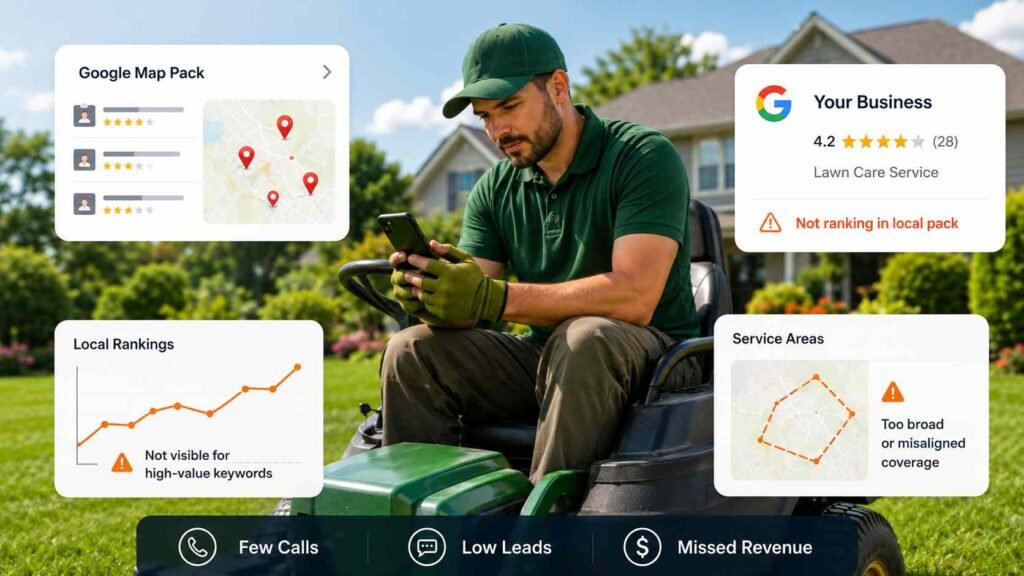
Most landscaping websites underperform because their service pages, Google Business Profile and location coverage do not match the work the business wants to secure.
Your Website Mixes Different Search Intent
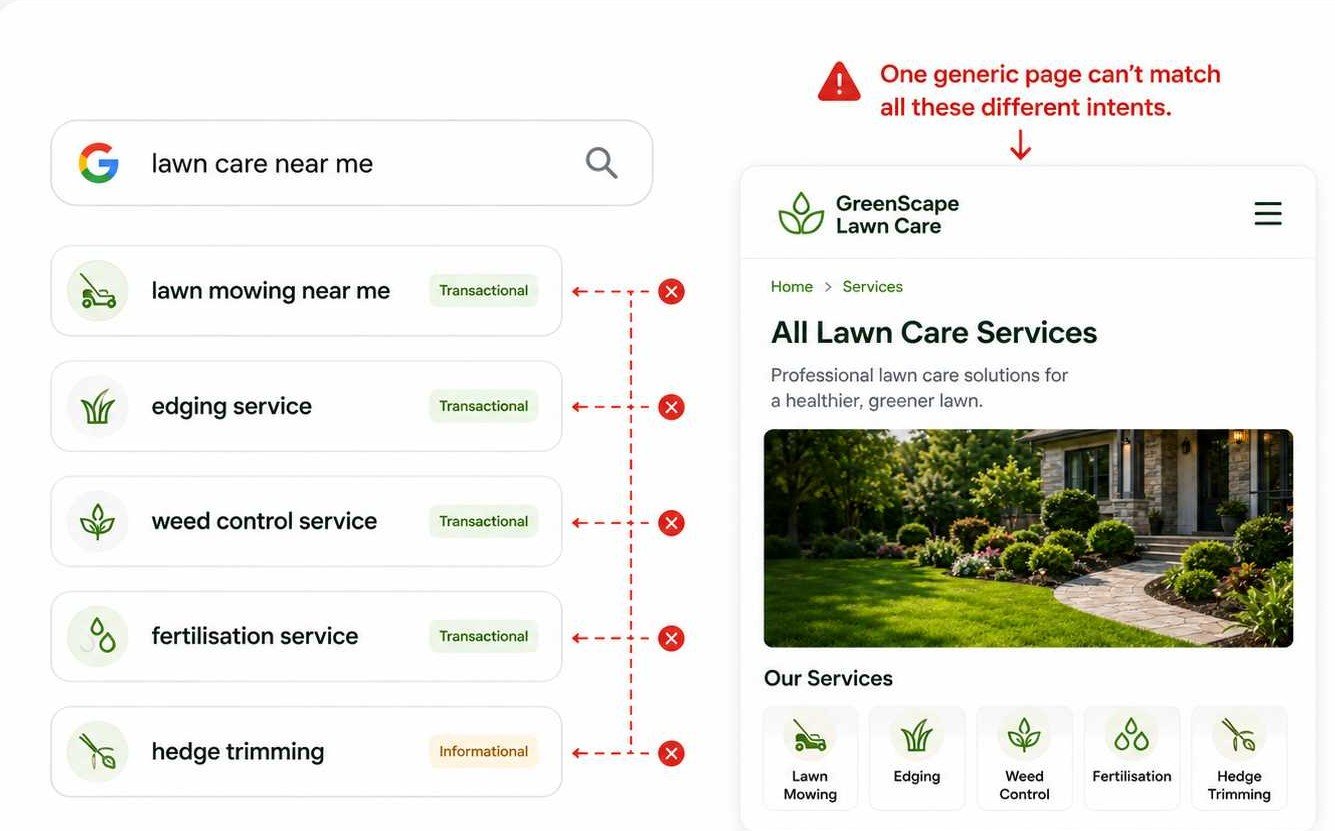
One generic page cannot accurately target every lawn care service and customer. Lawn mowing, fertilisation, weed control, aeration, turf renovation and commercial grounds maintenance involve different problems, buyers, pricing factors and proof requirements, so each priority service needs a defined page and conversion action.
Your Google Business Profile Is Misaligned
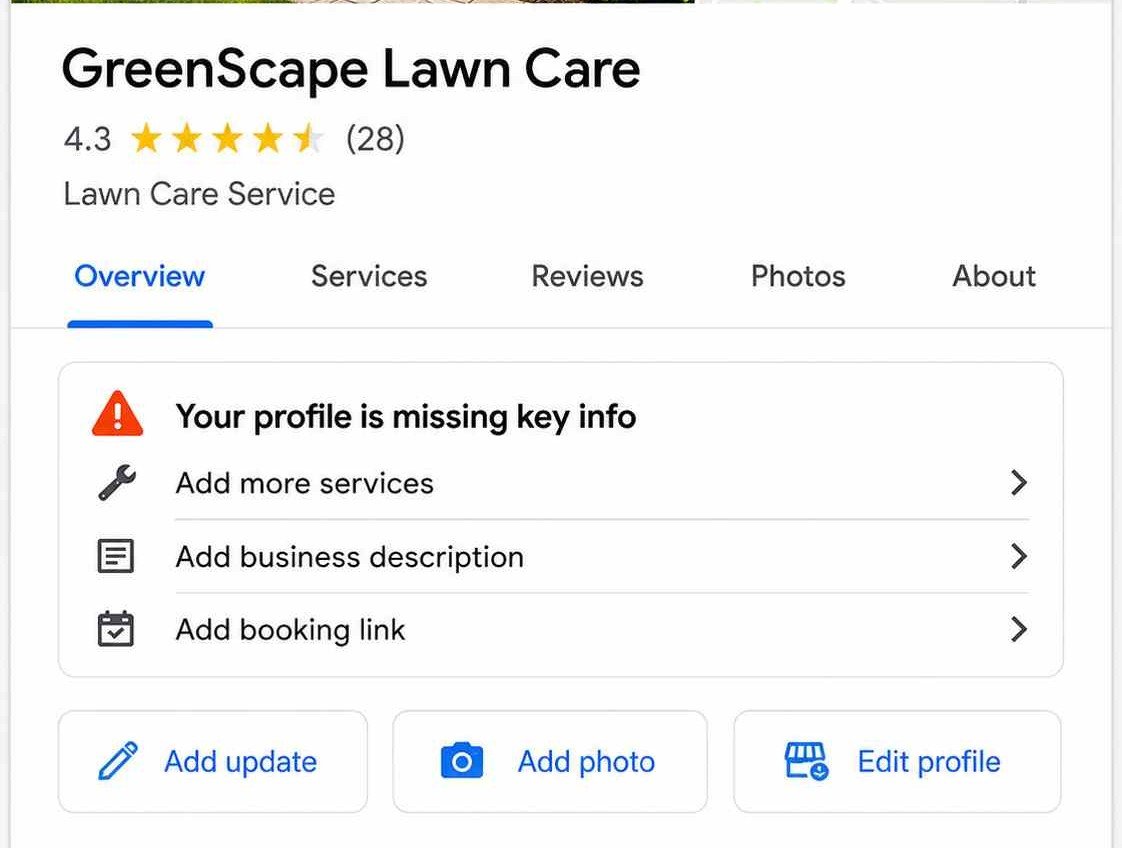
An inaccurate Google Business Profile can weaken local visibility and attract unsuitable enquiries. Align your categories, services, hours, contact details and service areas with the real business, following Google’s Business Profile guidelines to avoid verification or suspension risks.
Your Service Areas Ignore Route Efficiency
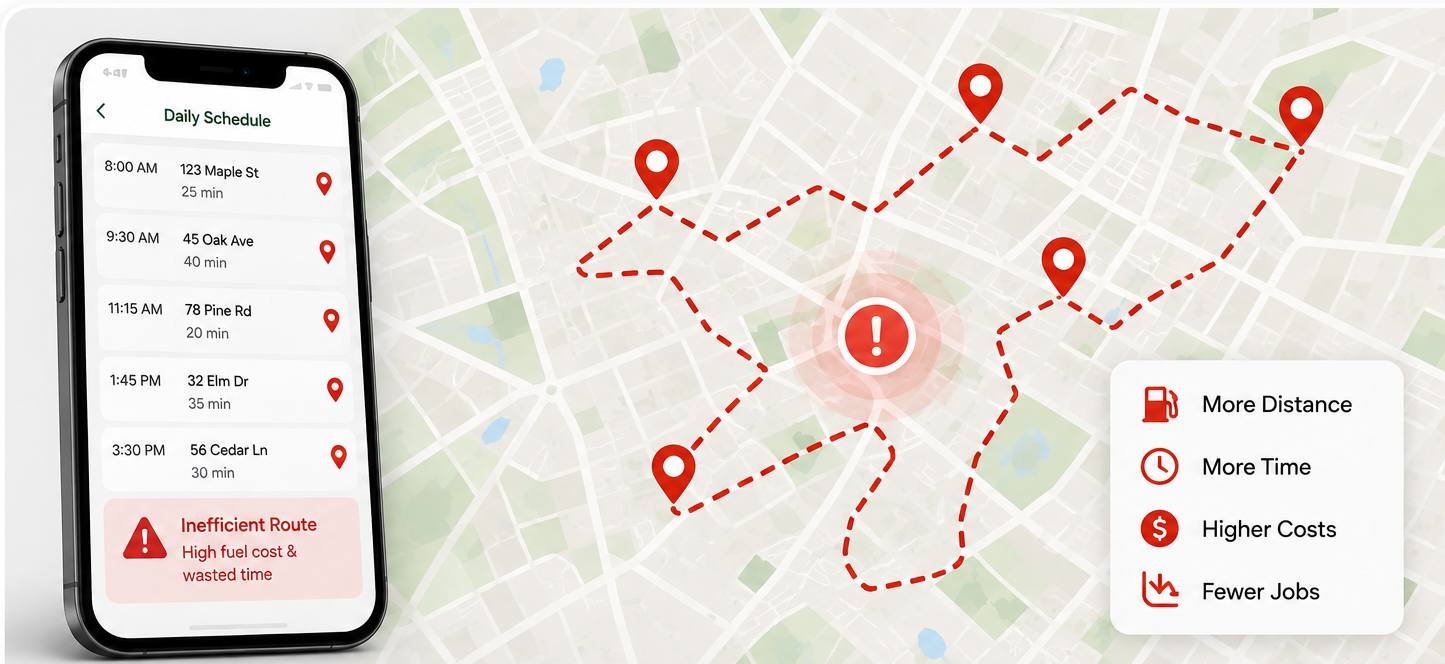
Ranking in more suburbs does not help when the resulting jobs increase travel time and operating costs. Geographic targeting must consider search demand, route density, crew capacity, average job value and practical travel limits so recurring customers strengthen existing routes instead of creating scattered work.
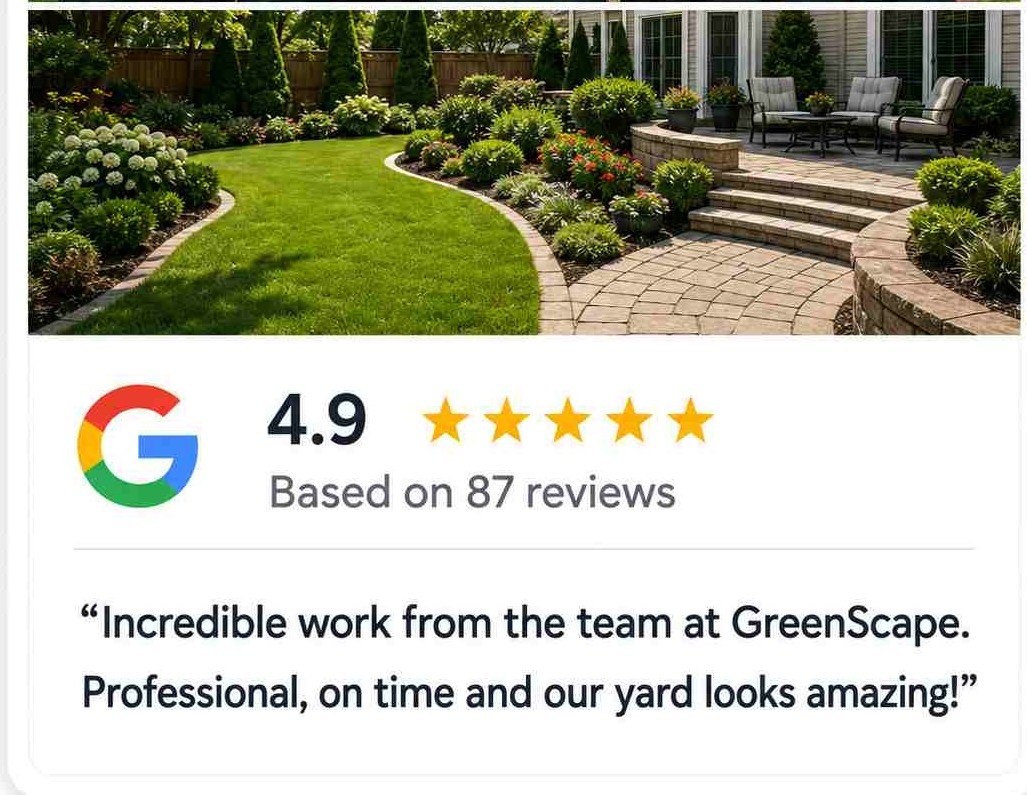
Your Website Lacks Local Proof
Rankings and website visits do not show whether SEO is producing qualified and booked work. Reporting must connect each call or form with the landing page, requested service, customer location, quote status and booking result so the campaign can identify which services and areas generate revenue.
Your Reporting Stops at Traffic
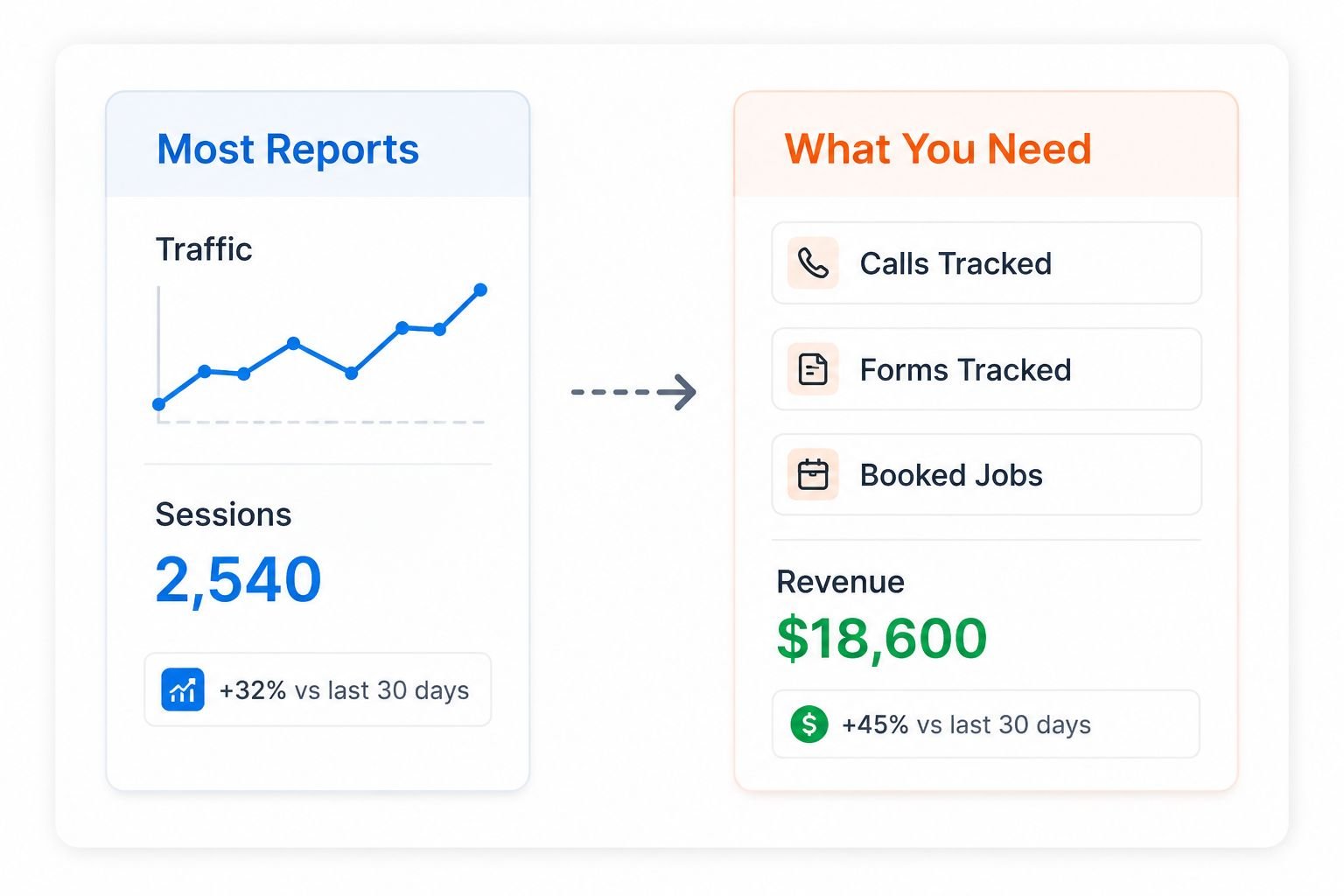
Rankings and website visits do not show whether SEO is producing qualified and booked work. Reporting must connect each call or form with the landing page, requested service, customer location, quote status and booking result so the campaign can identify which services and areas generate revenue.
What Is Included in Our Lawn Care SEO Services?
Commercial Demand and Service Analysis
Local Keyword and Search-Intent Architecture
Google Business Profile and Maps Optimisation
Service-Page and Website Architecture
On-Page and Semantic Optimisation
Technical SEO and Structured Data
Reviews, Citations and Local Authority
Seasonal Demand and Lawn-Problem Content
Conversion and Booked-Work Tracking
What Is Included and Not Included?
| Included | Not included |
|---|---|
| Profitable service and market analysis | Keyword selection based only on search volume |
| Genuine service-area strategy | Fake offices or virtual locations |
| Distinct service and location content | Pages that only replace the suburb name |
| Accurate Business Profile optimisation | Keyword stuffing in the business name |
| Ethical review-request systems | Purchased or incentivised reviews |
| Relevant local citations and partnerships | Bulk submissions to unrelated directories |
| First-party project evidence | Stock photographs presented as client work |
| Call, quote and booking measurement | Ranking reports without commercial attribution |
| Structured data based on visible facts | Misleading or hidden schema |
| Transparent implementation priorities | Guaranteed rankings or fabricated forecasts |
| Client ownership of approved assets | Undisclosed control of website accounts |
Which Lawn Care Businesses Do We Help?
We support lawn care businesses that depend on local visibility, qualified enquiries, efficient routes and recurring customer value. The campaign structure changes according to service model, team size, operating areas and commercial goals.
Owner-Operators Building Local Visibility
We help new lawn care operators build visibility beyond referrals, signage and branded searches. The campaign focuses on accurate business information, core service pages, a realistic service area, customer reviews and simple call or quote tracking rather than unnecessary blogs or mass-produced suburb pages.
Route-Based Lawn Mowing Companies
We help mowing companies attract weekly and fortnightly customers in compact, profitable service areas. Search demand is aligned with existing routes, crew availability, property types, seasonal add-ons and customer retention so new bookings reduce travel gaps instead of creating scattered one-off work.
Turf-Treatment and Lawn-Health Specialists
We help fertilisation, weed-control, aeration, pest-treatment and turf-renovation specialists attract customers seeking technical lawn solutions. Service pages separate treatment intent from basic mowing and use turf conditions, treatment scope, timing, technician expertise and completed work to qualify suitable program enquiries.
Multi-Crew Lawn Care Companies
We help established lawn care companies improve lead quality across services, crews and locations. The strategy may include cannibalisation correction, service-level tracking, route-capacity planning, CRM integration and location-level attribution so growth is measured through qualified bookings and customer value rather than total traffic.
Commercial Grounds-Maintenance Contractors
We help commercial contractors reach property managers, strata managers, facilities teams, schools, retail centres and industrial sites. Industry-specific pages present staffing, insurance, fleet capacity, safety procedures, reporting and multi-site experience to generate viable consultation and contract opportunities rather than residential mowing enquiries.
Franchise and Multi-Location Operators
We help franchise and multi-location lawn care businesses improve local visibility without allowing branches to compete for the same searches. Territory mapping, Business Profile governance, location-page standards, branch reviews and local performance tracking create scalable coverage based on legitimate staffed locations and distinct operating areas.
Does Every Suburb Need a Separate Page?
No. A suburb requires a separate page only when it represents genuine service coverage and a distinct customer need that cannot be addressed adequately on an existing page.
A location page may be justified when:
- The business regularly serves the area.
- The service mix or customer profile differs.
- Search demand is commercially relevant.
- Local work or customer proof exists.
- The content provides information beyond the suburb name.
- The page has a distinct conversion purpose.
A page is not justified when the company cannot reliably serve the area, has no local evidence or plans to repeat an existing page with minor wording changes.
The objective is a clear, browsable service-area hierarchy—not a wall of near-duplicate URLs.
Identify the Areas Worth Targeting
How Does Our Lawn Care SEO Process Work?
Our process moves from commercial diagnosis to implementation, evidence development and booked-work measurement.
Each stage answers a separate business question. What work is worth generating? Where can it be delivered? Which digital assets are weak? What proof is missing? Which enquiries became revenue?
Phase 1: Define the Commercial Target
We identify the services, customers and locations the campaign should prioritise. Margins, minimum job value, recurring revenue, route density, seasonal capacity, equipment and crew availability define qualified demand and prevent the campaign from attracting unsuitable work.
Phase 2: Map Search Demand to the Website
We connect service queries, location terms and buyer intent with the correct website pages. Overlapping URLs are consolidated or differentiated, while missing service, commercial and location pages are prioritised according to search relevance and potential business value.
Phase 3: Correct Local and Technical Barriers
We fix the issues preventing priority pages and Business Profile assets from performing effectively. The work may cover indexation, citations, website architecture, mobile usability, page speed, internal links and conversion paths before the content footprint is expanded.
Phase 4: Build Pages, Proof and Authority
We develop service pages, justified location pages, pricing guidance, project evidence and commercial buyer content. Real photographs, verified reviews, service records, accurate citations and relevant local relationships strengthen the company’s credibility and support customer decision-making.
Phase 5: Measure and Expand Profitable Results
We compare search visibility with calls, forms, requested services, customer locations, quotes and booked revenue. Pages producing suitable enquiries receive further support, while weak targeting is revised before new services or geographic markets are added.
What Lawn Care SEO Mistakes Reduce Lead Quality?
| Mistake | Why it fails | Correct approach |
|---|---|---|
| Targeting traffic rather than booked work | Irrelevant visits inflate reports without improving revenue | Prioritise services, locations and customer value |
| Covering every service on one page | Search and customer intent remain unclear | Build distinct pages for commercially different services |
| Creating repetitive suburb pages | Pages add little local value and may compete with each other | Require unique demand, evidence and purpose |
| Using fake offices | Creates verification and suspension risk | Use real staffed locations and accurate service areas |
| Adding keywords to the Business Profile name | Misrepresents the real-world business | Use the recognised business name |
| Publishing blogs before commercial pages | Informational traffic reaches weak conversion paths | Build service, location, pricing and proof assets first |
| Using stock photographs as proof | Does not demonstrate completed local work | Use original job, team, vehicle and equipment images |
| Hiding all pricing context | Visitors cannot assess suitability | Explain cost factors or verified starting prices |
| Reporting only rankings | Performance cannot be connected to sales | Measure calls, quotes, bookings and revenue |
| Treating schema as a shortcut | Markup cannot repair weak content or reputation | Use accurate schema after fixing core assets |
| Generating hundreds of automated pages | Produces repetitive, low-value content | Add first-party evidence and editorial review |
| Targeting every nearby area | Increases unsuitable leads and travel time | Align visibility with route and crew capacity |
Google’s spam policies specifically address doorway abuse and scaled content produced primarily to manipulate rankings. The policy applies whether pages are written manually, generated automatically or created through synonym replacement.
30/60/90-Day Lawn Care SEO Roadmap
A clear roadmap makes the campaign easier to understand. The first 90 days establish the technical foundation, improve priority service pages, strengthen local relevance and create a measurable path from Google Search and Maps to qualified lawn care enquiries.
First 30 Days: Audit, Research and Priority Planning
During the first month, we assess your current search presence and identify what is limiting visibility for profitable lawn services and genuine operating areas.
Main focus areas:
✓ Lawn care website SEO audit
✓ Google Business Profile review
✓ Lawn care keyword research
✓ Competitor and search-result analysis
✓ Technical SEO checks
✓ Existing service-page review
✓ Service-area and suburb gap analysis
✓ Review and citation assessment
✓ Route density and crew-capacity review
✓ Call and enquiry-form tracking review
✓ Prioritised implementation plan
Expected outcome:
You receive a clear view of what is working, what is missing and which technical, local, content or conversion issues require attention first.
Days 31–60: Service-Page and Local SEO Improvements
After the audit, we improve the pages, local signals and conversion paths most closely connected to relevant calls, quote requests and recurring lawn care bookings.
Main focus areas:
✓ Priority lawn care service-page optimisation
✓ Google Business Profile updates
✓ Service and location-page architecture
✓ Internal-link improvements
✓ Page titles, headings and metadata
✓ Mobile usability and page-speed improvements
✓ Priority citation corrections
✓ Completed-job photo optimisation
✓ Reviews, credentials and trust-signal placement
✓ Pricing guidance and quote-path improvements
✓ Call, form and booking tracking setup
Expected outcome:
Your priority pages become easier for customers and search engines to understand, with clearer relationships between lawn services, genuine service areas, local evidence and quote actions.
Days 61–90: Local Proof, Authority and Measurement
Once the foundation is improved, we expand verified local coverage, strengthen business authority and use early performance data to plan the next stage of growth.
Main focus areas:
✓ Verified suburb-page development
✓ Lawn care project and case-study pages
✓ Supporting guides and frequently asked questions
✓ Customer review-generation process
✓ Relevant citation and local link development
✓ Google Search Console performance review
✓ Google Business Profile performance review
✓ Keyword and landing-page evaluation
✓ Call and quote-request analysis
✓ Lead-quality and booked-work review
✓ Next-quarter service and location planning
Expected outcome:
Your lawn care SEO campaign becomes structured, measurable and ready to expand across additional profitable services or genuine service areas without creating thin or repetitive pages.
How Do We Measure Calls, Quotes and Booked Lawn Care Work?
We measure the full commercial journey from search visibility to qualified enquiry, quote, booking and attributed revenue.
Rankings remain useful for diagnosis. They show whether a page or Business Profile is becoming more visible. The business result appears later in the funnel.
Our reporting separates four levels of performance.
Search Visibility
This level records impressions, clicks, click-through rate, average position, local grid visibility, Business Profile discovery and landing-page traffic. These metrics show where demand is being captured or missed.
Lead Generation
This level records website calls, Business Profile calls, quote forms, booking requests and contact-page actions.A lead is then classified by requested service, customer type, property type and location.
Sales Progression
This level records qualified enquiries, quotes issued, follow-ups, consultations and proposal opportunities. Residential mowing, annual treatment programs and commercial contracts should not share one undifferentiated lead count.
Commercial Outcomes
level records booked jobs, recurring customers, contract values, customer-acquisition cost and attributed revenue.
The following calculations may be included where reliable data is available:
Lead-to-quote rate
Qualified quotes ÷ qualified enquiries × 100
Quote-to-booking rate
Booked jobs ÷ quotes issued × 100
Cost per booked job
Attributed SEO investment ÷ attributed booked jobs
Organic SEO return
(Attributed gross profit − SEO investment) ÷ SEO investment × 100
Gross profit provides a more useful commercial measure than total revenue when service-level margin data is available.
A monthly report should clearly answer:
- Which services generated enquiries?
- Which locations generated those enquiries?
- Which landing pages assisted conversion?
- How many enquiries were qualified?
- How many quotes and bookings were recorded?
- Which services produced recurring value?
- What will be changed next?
Track SEO Beyond Rankings
Why Choose SEO Agency for Tradies for Lawn Care SEO?
We Prioritise Profitable Lawn Services
We assess service margins, job frequency, customer lifetime value, route fit, equipment requirements and crew capacity before selecting keywords. Search demand is then mapped to commercial value so the campaign promotes the work your business wants rather than low-value or unsuitable enquiries.
We Separate Each Search Intent
We distinguish recurring lawn mowing, garden maintenance, turf treatment, landscape construction and commercial grounds services because each attracts different buyers. Every priority page receives one clear purpose, relevant evidence, defined customer type and conversion action, reducing overlap and keyword cannibalisation.
We Use First-Party Business Evidence
We strengthen service and location pages with genuine photographs, equipment details, property types, completed work, customer reviews and verified outcomes. We do not invent projects, locations or results; where evidence is missing, we provide a clear process for collecting it.
We Align SEO With Your Operations
We connect geographic expansion with crews, vehicles, equipment, routes, weather conditions and available appointment capacity. The objective is not to make every phone ring, but to generate suitable demand in areas your business can serve efficiently and profitably.
We Maintain Transparent Scope and Ownership
Our proposals define deliverables, responsibilities, account access, reporting methods, cancellation terms and asset ownership before implementation begins. Approved content and website assets remain under your control, with no guaranteed rankings, undisclosed link networks or mass-produced suburb pages.
How Much Does Lawn Care SEO Cost?
Lawn care SEO pricing depends on campaign scope, website condition, target services, genuine service areas, competition, content requirements, authority work and reporting complexity.
A one-crew mowing business targeting a compact group of suburbs does not require the same campaign as a multi-location grounds-maintenance contractor managing residential, commercial and franchise-level search assets.
We therefore do not publish a low teaser price that excludes the work required to make the campaign viable.
What Determines the Monthly Investment?
| Pricing factor | Lower-complexity campaign | Higher-complexity campaign |
|---|---|---|
| Website condition | Stable, indexable website | Legacy structure, migration or redevelopment |
| Target services | One or two core services | Multiple mowing, treatment and commercial services |
| Service areas | One compact market | Several cities, territories or legitimate locations |
| Business Profiles | One verified profile | Multiple staffed locations |
| Content | Existing pages need improvement | New service, location and evidence pages |
| Competition | Limited specialist competition | Franchises, directories and established operators |
| Technical requirements | Minor corrections | Indexation, rendering and architecture problems |
| Local authority | Existing citations and partnerships | Active citation cleanup and link acquisition |
| Tracking | Calls and forms | CRM, quote, booking and revenue attribution |
| Governance | One decision-maker | Franchise or multi-location approval process |
Request Pricing Based on Your Actual Campaign
Frequently Asked Questions About Lawn Care SEO
Lawn care SEO is the local search optimisation process used to help mowing, turf-care and grounds-maintenance businesses generate relevant enquiries from Google Search and Google Maps.
It connects the company’s services, website, Business Profile, reviews, service areas and conversion actions. The commercial result is measured through qualified calls, quotes, bookings and recurring work.
A complete campaign includes commercial analysis, keyword mapping, Business Profile optimisation, service pages, location strategy, technical SEO, reviews, citations, authority development and conversion tracking.
The exact scope depends on the services, locations, website condition, competition and reporting requirements.
Initial audits and implementation can begin within the first 90 days, but ranking and commercial outcomes depend on competition, website condition, authority, service area and execution quality.
No responsible provider can guarantee that a defined keyword will reach a specific position by a fixed date. Google’s search results remain dynamic, and Google states that improvements may take days or several months to be reflected.
The cost depends on the number of priority services, target areas, technical problems, content requirements, Business Profiles, authority work and attribution complexity.
A proposal should explain why each deliverable is required rather than placing every lawn care company into the same generic package.
Yes, SEO can target recurring mowing demand when pages clearly describe service frequency, operating areas, property types, pricing factors and booking requirements.
The campaign must distinguish weekly or fortnightly maintenance from one-off cuts, clean-ups and overgrown-property work.
Yes, a lawn care business can target several suburbs when it genuinely serves them and can provide useful, distinct information for those markets.
The strategy should account for travel time, route density, crew capacity and local proof. Creating a page for every nearby suburb is not required.
No. A suburb needs a dedicated page only when it represents a distinct, commercially relevant market supported by genuine operating coverage and local evidence.
Related areas can be covered through a city page or service-area hub when individual pages would repeat the same information.
No. A Business Profile supports Maps visibility, but the website provides deeper service information, proof, pricing context, commercial pages and conversion tracking.
The profile and website should reinforce the same business entity rather than operate as separate marketing assets.
SEO builds an owned organic visibility channel, while Google Ads purchases immediate visibility for selected searches.
The right allocation depends on campaign timing, available capacity, acquisition cost and service margin. Many businesses use ads for immediate demand while building long-term organic assets.
Results are measured through relevant visibility, qualified calls, forms, quotes, bookings, recurring plans, contract value and attributed revenue.
Traffic and rankings explain what happened in search. Lead and revenue data explain whether it mattered to the business.
Yes, but commercial SEO requires pages built for property managers, strata managers, facility teams and procurement decision-makers.
The content should show operational capacity, service frequency, insurance, staffing, equipment, communication systems, reporting and relevant commercial experience.
Seasonality changes when customers search for mowing, fertilisation, weed control, aeration, renovation and property clean-up services.
Demand can vary with regional grass species, rainfall, temperature, irrigation, nutrient cycles, soil compaction and property-maintenance schedules. The content calendar should reflect local conditions and business capacity rather than a generic northern-hemisphere schedule.
A lawn care website may use accurate Organisation or LocalBusiness, Service and Breadcrumb structured data when the marked information is visible on the page.
Structured data clarifies entities and relationships. It does not guarantee higher rankings or replace strong service content and business evidence.
The client should retain ownership of approved website content, project evidence and account access unless a contract clearly states otherwise.
Ownership, access, cancellation and handover conditions should be documented before implementation begins.


