
Google Ads for Plumbers That Generate Qualified Calls and Booked Jobs
SEO Agency for Tradies plans, builds and manages Google Ads for Australian plumbers. We target serviceable locations, profitable plumbing services and ready-to-book customers. Every campaign connects ad spend with qualified calls, bookings and plumbing revenue.
- Target High-Intent Plumbing Searches
- Reduce Irrelevant and Out-of-Area Clicks
- Track Calls, Bookings and Completed-Job Revenue
500+ Tradies Ranked
6+ Years’ Experience
Australia-Wide Campaigns
Transparent Tracking
Find out what's holding you back
Enter your number — we’ll call you with a free ranking report for your suburb.
We call within 2 business hours. No scripts. No pressure.
Are Google Ads Right for Your Plumbing Business?
Google Ads are suitable when your plumbing business has profitable services, defined service areas, available technicians and a reliable process for answering and booking calls.
The advertising platform can create demand quickly. It cannot repair weak operations. A campaign will struggle when calls go unanswered, crews are already full or every service is promoted without considering job value.
The strongest starting point is a clear commercial brief. We identify the services you want to sell, the locations you can serve, the hours your team answers calls and the amount you can afford to pay for a booked job.
A plumbing business is generally ready when it has one or more profitable services, such as blocked drain clearing, emergency plumbing, hot-water replacement, pipe relining or commercial maintenance. It should also have enough field capacity to complete additional work.
The operational requirement matters. Jobs and Skills Australia reports that 93% of Australian plumbers work full-time and average 44 hours per week. Campaign management must therefore reduce administrative pressure rather than create another system for an owner to monitor manually.

Why Do Plumbing Google Ads Generate Leads but Not Profitable Jobs?
Google Ads become unprofitable when campaigns optimise for clicks or basic conversions instead of qualified calls, booked jobs, completed work and revenue.
A click is an advertising interaction. It is not a customer. A phone call is an enquiry. It is not automatically a serviceable or profitable job.
The commercial sequence is longer:
Search query → ad click → call or form → qualified lead → quote → booked job → completed job → revenue
Most plumber PPC accounts break somewhere between the call and the booking. The campaign report shows conversions, but the office receives DIY questions, employment enquiries, out-of-area calls, spam or customers contacting five plumbers for the lowest quote.
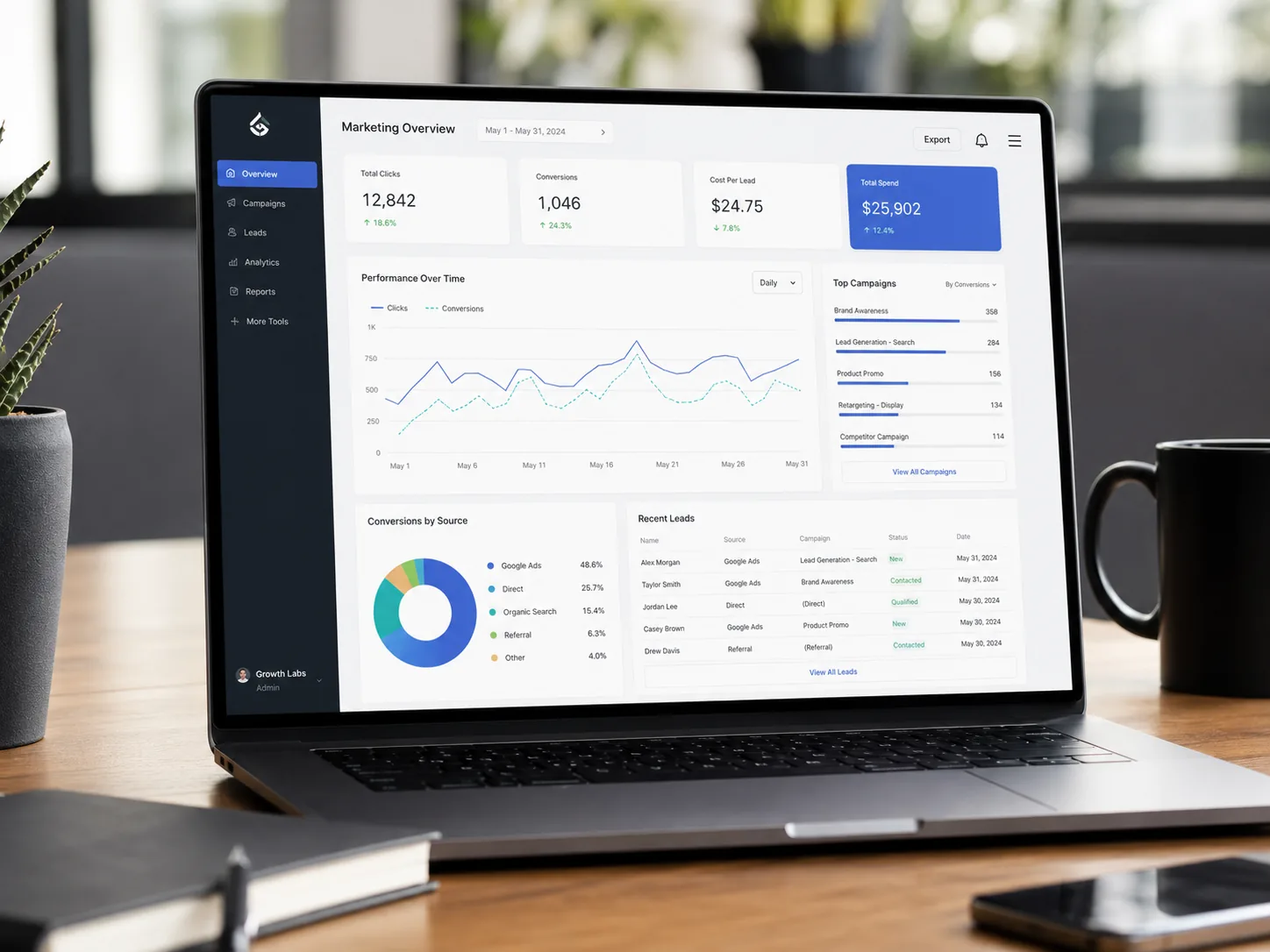
Expensive clicks are not the real problem
High cost per click is only a problem when the click has a low probability of producing gross profit.
An expensive click for pipe relining, sewer repair or commercial maintenance may be commercially acceptable. A cheaper click for a leaking tap may be less attractive if travel, labour and administration consume most of the job margin.
Campaign decisions should therefore consider:
Service value × lead qualification rate × booking rate × gross margin
The account should not treat an emergency sewer repair and a free-advice call as equal conversions.
Reported conversions can hide weak lead quality
Google Ads can record calls, forms and other actions as conversions. The default report does not know whether the caller was inside the service area, needed an offered service or booked a technician.
A commercially useful tracking model separates each stage:
| Conversion stage | Definition | Commercial value |
|---|---|---|
| Enquiry | Any recorded call or form | Unknown |
| Valid lead | Real person requesting plumbing help | Low to moderate |
| Qualified lead | Correct service, location and timing | Measurable |
| Booked job | Appointment or dispatch confirmed | High |
| Completed job | Plumbing work completed | Revenue-producing |
| Profitable job | Completed revenue exceeds acquisition and delivery cost | Final outcome |
This distinction gives Google’s bidding system better input and gives the plumbing business a more accurate performance report.
Missed calls make effective campaigns look unprofitable
A campaign may generate relevant demand and still lose money when no one answers.
The common pattern is simple. A person searches for an emergency plumber, clicks an ad and calls the business. The phone rings without an answer. The searcher then contacts the next plumber.
The first business pays for the click. The competitor receives the job.
Call-answer rate, speed to answer and booking rate must therefore be reviewed alongside cost per lead.
What Does Our Google Ads Management for Plumbers Include?
Our service includes commercial planning, campaign architecture, keyword control, location targeting, ad creation, landing-page guidance, conversion tracking, lead-quality analysis and ongoing optimisation.
We manage Google Ads as a customer-acquisition system. We do not manage it as an isolated media account.

Plumbing Google Ads Audit
We begin with the existing account, website and lead process.
The audit identifies where money is being spent, which searches trigger ads and which conversions become serviceable opportunities. We review campaign structure, search terms, match types, locations, schedules, bidding, ads, landing pages and conversion actions.
The commercial review goes further. It examines average job value, gross margin, booking rate, service capacity and revenue attribution.
The output is a prioritised plan. Each recommendation is classified by financial impact, implementation effort and measurement requirement.
Plumbing Service and Profitability Mapping
We identify what the business wants to sell before researching keywords.
Services may include emergency plumbing, blocked drains, hydro jetting, CCTV drain inspections, hot-water repairs, hot-water replacement, leak detection, gas fitting, pipe relining and commercial maintenance.
Each service receives attributes such as:
- Average invoice value
- Estimated gross margin
- Service radius
- Urgency
- Technician requirement
- Call-answering hours
- Seasonal demand
- Conversion probability
This prevents low-value work from consuming the budget intended for higher-value services.
High-Intent Plumbing Keyword Research
We map keywords to customer need, service type, location and urgency.
A search for “how to unblock a drain” indicates informational intent. A search for “blocked drain plumber Brisbane” indicates local transactional intent. These searches should not receive the same bid, advertisement or landing page.
High-intent keywords include service and location combinations, such as emergency plumber in Sydney, blocked drain specialist Melbourne and hot-water repair Perth.
Negative intent includes DIY instructions, jobs, apprenticeships, TAFE courses, licence training, wholesale supplies, product manuals and free advice.
Google defines negative keywords as terms that prevent an ad from being triggered by specified words or phrases. Negative keywords are therefore an exclusion control, not a complete guarantee against irrelevant traffic.
Service-Specific Campaign Architecture
We separate demand according to commercial purpose.
Emergency plumbing does not belong in the same campaign as planned bathroom installations. Residential drain clearing does not belong in the same ad group as commercial maintenance contracts.
A structured account may contain separate campaigns for:
- Emergency plumbing
- Blocked drains and sewer work
- Hot-water services
- Leak detection and pipe repairs
- Gas plumbing
- General residential plumbing
- Commercial and strata plumbing
- Brand protection
Each campaign receives its own budget, keywords, advertisements, service areas, schedule and conversion priorities.
Geographic Targeting and Service-Area Control
We target areas your technicians can serve profitably.
Targeting can be organised by city, suburb, postcode, radius or branch territory. Areas with excessive travel time, weak booking rates or low job values can be excluded.
Google Ads allows advertisers to target and exclude geographic locations. However, Google states that location targeting uses several signals and is a best-effort system rather than a 100% accurate boundary control.
That limitation matters. We do not set location targeting once and assume it is correct. We compare reported locations with actual lead addresses, booking data and technician travel patterns.
Plumbing Ad Copy and Assets
The advertisement should answer four questions immediately:
What service is available? Where is it available? Why should the customer trust the business? What should the customer do next?
An emergency advertisement may communicate current availability, service location and a direct call action. A hot-water advertisement may focus on repair, replacement and booking an inspection.
We use responsive search ads and appropriate assets, including call assets, sitelinks, location assets, callouts and structured snippets.
Claims must match the actual business. We do not advertise 24-hour service when no technician is available after hours. We do not publish response-time promises that dispatch records cannot support.
Dedicated Plumbing Landing Pages
A person searching for a blocked drain should reach a blocked drain page. The page should not force the user to search through a generic homepage.
Each primary service should have a focused conversion path. The page should confirm the service, location, availability and next action above the fold.
The core elements include a specific heading, visible phone number, click-to-call button, short form, areas served, customer reviews, licensing information, insurance details and realistic pricing guidance.
Call, Form and Booking Tracking
We track calls from advertisements, calls from landing pages, forms, qualified leads, bookings and completed jobs.
Google call reporting can provide call duration, call start time and connected-call status through a Google forwarding number. Google also allows advertisers to use their direct number or third-party tracking by changing call-reporting settings.
A call should only count as commercially meaningful when it meets an agreed qualification rule. The rule may include location, service type, call duration, urgency and customer intent.
A 30-second threshold can remove some accidental calls. It cannot determine whether the call became a booked job. That outcome must come from the call review, booking system or CRM.
Ongoing Optimisation
We review what happened after the click.
Optimisation includes search-term control, negative keyword expansion, budget pacing, location performance, device performance, ad testing, landing-page testing and conversion-quality analysis.
Google’s search terms report shows the queries that triggered advertisements. Some low-activity terms are omitted to meet privacy standards, so the report does not provide complete query visibility.
We compensate by combining available search-term data with first-party information, including caller location, service requested, booking status and revenue outcome.
Which Plumbing Campaigns Do We Manage?
We manage campaigns by plumbing service, customer urgency, service area and job value. This keeps advertisements relevant and prevents one service from consuming the entire budget.
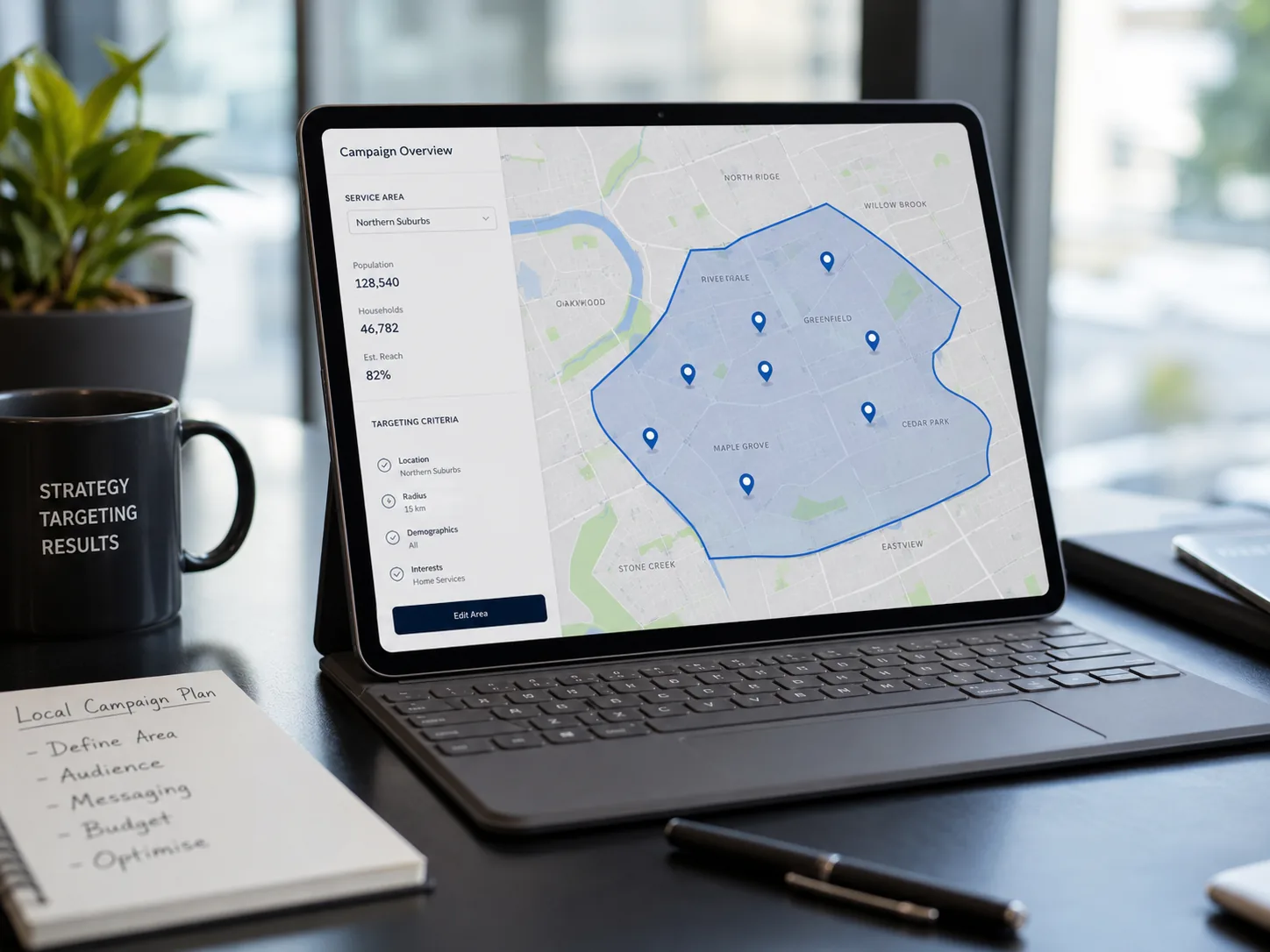
Emergency Plumbing Google Ads
Emergency campaigns target immediate problems, including burst pipes, major leaks, overflowing toilets, sewage backups and loss of hot water.
These campaigns require narrow service areas, accurate business hours and strong call coverage. Running emergency ads without an available dispatcher or technician creates paid demand that the business cannot serve.
Urgent searches often have high commercial intent. High intent attracts more advertisers, which can increase cost per click. Profitability therefore depends on booking rate and job value rather than click price alone.
Blocked Drain and Sewer Campaigns
Blocked drain campaigns may promote drain clearing, hydro jetting, CCTV inspection, root removal, sewer repair and pipe relining.
These services should not be grouped into one generic “plumber” campaign. A drain-cleaning enquiry and a pipe-relining opportunity have different job values, customer questions and sales processes.
We separate diagnostic searches from repair searches where demand supports the distinction.
Hot-Water Service Campaigns
Hot-water campaigns target repairs, replacements, new installations and system upgrades.
Campaign architecture can separate gas, electric and heat-pump systems. It can also distinguish urgent no-hot-water searches from planned replacement research.
The landing page should state the systems serviced, areas covered, appointment availability and whether repair or replacement assessments are offered.
Leak Detection and Pipe Repair Campaigns
These campaigns target hidden leaks, burst pipes, water-pressure problems, pipe repairs and whole-property repiping.
Ad copy should reflect the actual diagnostic capability. Terms such as thermal imaging, acoustic detection or pressure testing should only be used when the plumbing business provides them.
Residential Plumbing Campaigns
Residential campaigns may cover toilet repairs, leaking taps, fixtures, maintenance, renovations and general repairs.
The risk is budget dilution. General plumbing searches can generate high lead volume but inconsistent job value.
We classify these leads separately from emergency, drainage and replacement work. This shows whether general plumbing supports crew utilisation or displaces more profitable services.
Commercial and Strata Plumbing Campaigns
Commercial and strata campaigns target businesses, property managers, facility managers, real estate agencies and owners’ corporations.
These customers may need reactive repairs, scheduled maintenance, compliance work or multi-site support. Their decision cycle is usually different from a household emergency.
Residential and commercial campaigns therefore require separate advertisements, landing pages, qualification questions and conversion values.
Brand Protection Campaigns
Competitors may bid on a plumbing company’s name through Search campaigns.
A brand campaign can protect paid visibility, control the advertisement message and measure direct business demand. It should be reported separately from non-brand customer acquisition because branded searches already indicate awareness of the business.
Should Plumbers Use Search Ads or Local Services Ads?
Search Ads provide more control over keywords, advertisements and landing pages. Local Services Ads use service categories, service areas and lead-based charging where the format is available and the business is eligible.
| Attribute | Google Search Ads | Local Services Ads |
|---|---|---|
| Main charging model | Usually pay per click | Pay when a lead contacts the business |
| Targeting control | Keywords, locations, schedules and audiences | Service areas and job types |
| Landing page | Advertiser-controlled | Google-hosted business profile |
| Ad message | Advertiser writes the message | Generated from business information |
| Verification | Standard Google Ads requirements | Additional business screening may apply |
| Best use | Precise service and location campaigns | Supplementary local lead generation |
| Main limitation | Competitive click costs | Less control over query matching and presentation |
Google’s Local Services documentation allows providers to select job types and service areas. Businesses may also need screening involving licences, insurance, registration or other verification requirements, depending on category and region.
Local Services Ads should be treated as another acquisition channel. They should not be combined with Search Ads and organic leads in one undifferentiated conversion total.
How Do We Protect a Plumbing Advertising Budget?
We protect the budget by excluding irrelevant intent, controlling service areas, matching ad schedules to call coverage and reallocating spend according to qualified leads and booked jobs.
Budget protection does not mean chasing the lowest click price. It means preventing advertising cost from moving toward searches, areas and services that do not produce commercially acceptable work.
| Budget risk | Campaign control | Business metric |
|---|---|---|
| DIY and training searches | Negative keywords | Irrelevant-search rate |
| Calls outside the service area | Presence targeting and exclusions | Qualified leads by suburb |
| Low-value jobs | Service-specific budgets | Cost per booked job by service |
| Residential and commercial mismatch | Separate campaigns | Lead type and average job value |
| Unanswered calls | Ad schedules and call routing | Call-answer rate |
| Spam and duplicate leads | Validation and CRM deduplication | Unique qualified leads |
| Budget exhausted early | Budget pacing and priority campaigns | Lost impression share by hour |
| Competitor brand activity | Brand campaign and monitoring | Brand impression share |
| Weak automated bidding | Correct conversion goals | Cost per qualified or converted lead |

Irrelevant searches
We maintain campaign-level and account-level exclusions for unsuitable intent.
Examples include “DIY,” “jobs,” “apprenticeship,” “course,” “salary,” “manual,” “parts,” “wholesale” and “free.” Exact exclusions depend on the business because some plumbers may also sell products, recruit staff or provide trade services to other contractors.
Budget pacing
Google Ads uses an average daily budget rather than a strict daily spending ceiling. Google states that some bid strategies can spend up to twice the average daily budget on a given day while remaining subject to the monthly charging limit.
For plumbers, this means daily spend must be reviewed alongside hourly demand and booking capacity.
We may isolate emergency campaigns, general campaigns and high-value services into separate budgets. This prevents broad plumbing searches from consuming the budget before urgent or specialist demand appears.
Ad scheduling
Ads should run when the plumbing business can answer, qualify and dispatch the enquiry.
Google Ads permits schedules by day and hour. Ads are only eligible to show during the periods specified in the schedule.
A 24-hour campaign is suitable only when a genuine 24-hour response system exists. Otherwise, the schedule should reflect staffed phone hours, after-hours answering or an approved missed-call recovery process.
Automated bidding
Google’s Smart Bidding strategies use conversion tracking data to optimise bids at auction time. Those strategies include Target CPA, Target ROAS, Maximise Conversions and Maximise Conversion Value.
The weak point is usually not automation itself. It is the conversion input.
When spam calls, short calls and unqualified forms are primary conversions, the system may pursue more of the same activity. We first improve conversion definitions. We then introduce qualified-lead or value-based signals when enough reliable business data is available.
Policy and account continuity
Advertisements and landing pages must represent the plumbing business accurately.
Google may disapprove ads or assets that do not follow advertising policies. Repeated policy violations can lead to strikes and account suspension.
We review licensing claims, service-area statements, business identity, pricing claims, trademarks, tracking templates and destination pages. This reduces avoidable policy risk, but no agency can guarantee that an account will never receive a disapproval or review.
How Do We Connect Google Ads With Booked Plumbing Revenue?
We connect ad interactions with call quality, booking status, completed work and revenue. This replaces surface-level cost-per-lead reporting with cost per qualified lead and cost per booked job.
The measurement system uses defined stages:
Ad interaction → enquiry → qualified lead → quote → booking → completion → revenue
Each stage receives a status and, where available, a monetary value.
Google recommends enhanced conversions for leads as an upgraded method for connecting offline outcomes with advertising interactions. The system can use hashed first-party data and imported lead outcomes to improve measurement. Google recommends conversion goals such as “qualified lead” or “converted lead” for suitable lead-generation workflows.

Metrics that matter
Cost per lead
Advertising spend ÷ total enquiries
Cost per qualified lead
Advertising spend ÷ leads that match the service, area and customer criteria
Booking rate
Booked jobs ÷ qualified leads × 100
Cost per booked job
Advertising spend ÷ booked jobs
Return on ad spend
Attributed revenue ÷ advertising spend
Gross-margin-adjusted return
Attributed gross profit ÷ total acquisition cost
Illustrative campaign economics
The following example is not a forecast.
A campaign spends AUD 6,000 and generates 60 enquiries. After qualification, 36 enquiries are serviceable. The office books 18 jobs, producing a 50% qualified-lead-to-booking rate.
If completed-job revenue equals AUD 16,200, the reported revenue ROAS is 2.7. The cost per enquiry is AUD 100, but the more useful cost per booked job is AUD 333.33.
That result is still incomplete until gross margin, cancellations and uncompleted work are included.
This is why we do not scale campaigns from cost per lead alone.
Who Do We Help?
We help Australian plumbing businesses that need controlled local demand, clearer lead quality and measurable booked-job performance.
Our campaigns may support independent plumbers, residential plumbing companies, emergency teams, blocked-drain specialists, hot-water companies, gas fitters, leak-detection businesses, commercial contractors, strata plumbers and multi-location groups.
The decision-maker may be the owner, managing director, operations manager, office manager, dispatcher or marketing manager.
The common requirement is not business size. It is operational readiness.
A company with two technicians and a strong booking process may be better prepared than a larger business with poor call handling and no service-level reporting.
A peer-reviewed study published through UTS ePRESS found that digital marketing can help smaller residential construction businesses compete with larger companies. It also identified weak external analysis, limited investment and inadequate training as barriers to effective implementation.
Our service addresses that gap through structured planning, measurement and ongoing management.
How Does Our Plumbing Google Ads Process Work?
We use a five-stage process that connects campaign decisions with service capacity, customer intent, conversion quality and revenue.
1. Commercial Discovery
We document services, service areas, job values, gross margins, hours, crew capacity and growth objectives.
We also define what the business does not want. Examples may include low-value maintenance, distant suburbs, unprofitable after-hours work or commercial projects outside the company’s capability.
2. Account and Conversion Audit
We inspect the Google Ads account, website, landing pages, call tracking, forms, analytics and available CRM data.
The audit establishes whether reported conversions are valid and whether the account can distinguish enquiries from bookings.
3. Campaign and Landing-Page Build
We create the campaign hierarchy, keywords, exclusions, advertisements, assets, locations, schedules and conversion actions.
Each high-priority service receives a relevant user path. The keyword, ad message and landing page must describe the same plumbing need.
4. Controlled Launch
Before launch, we test phone numbers, forms, tags, conversion actions, locations, schedules, billing and policy status.
Initial budgets remain controlled. We collect enough information to compare search terms, lead quality, call handling and bookings.
5. Optimisation and Revenue Feedback
We move budget toward the services, locations and times that create commercially useful work.
Poor searches are excluded. Weak advertisements are replaced. Landing pages are revised. Qualified and converted lead outcomes are returned to the measurement system where the technical setup allows it.
What Happens During the First 30, 60 and 90 Days?

Days 1–30: Establish Accurate Control
The first 30 days focus on account structure, tracking accuracy, search relevance and location on account structure, tracking accuracy, search relevance and location control.
We audit existing data, repair conversion tracking, define lead stages and launch the priority campaign groups.
The first objective is not maximum lead volume. It is a reliable baseline.
Days 31–60: Improve Lead Quality
The next 30 days focus on removing waste and identifying which services, areas and schedules generate qualified enquiries.
We expand negative keywords, review calls, adjust geographic settings, test advertisements and compare booking outcomes.
Budgets begin moving away from poor-quality demand.
Days 61–90: Scale Proven Patterns
The final 30 days focus on scaling campaign segments supported by qualified-lead and booked-job data.
We may increase budgets for profitable services, extend proven suburb coverage and introduce offline lead stages or conversion values.
Ninety days is an operating framework. It is not a guarantee that every market, campaign or plumbing business will reach profitability within a fixed period.
Why Choose SEO Agency for Tradies?
Plumbing-Specific Campaign Structure
Your account is organised around plumbing services, customer urgency and service-area economics.
Emergency plumbing, blocked drains, hot water and commercial maintenance receive different campaigns because they attract different customers and produce different commercial values.
Booked-Job Measurement
We distinguish advertising activity from business outcomes.
Reports separate calls, qualified leads, bookings, completed jobs and revenue where the required operational data is available.
Transparent Account Access
You retain visibility into your advertising account, media spend and campaign data.
Ownership, administrative access, billing, tracking numbers and landing-page assets should be documented before work begins.
This matters because the Australian Small Business and Family Enterprise Ombudsman reports that almost three-quarters of small businesses do not remain with the same digital marketing provider for more than one year.
Service-Area Profitability
We evaluate where leads come from and whether those areas produce workable jobs.
A suburb with cheaper leads may still be unprofitable when travel time, cancellations and low average job value are included.
Capacity-Based Management
Campaign schedules and budgets can reflect technician availability.
Ads can be reduced, paused or redirected when a crew, branch or specialist service reaches capacity.
One Connected Conversion System
Keywords, advertisements, landing pages, calls, bookings and revenue are treated as one commercial pathway.
This prevents the Google Ads report from becoming disconnected from the plumbing company’s actual workload.
What Is Included in Google Ads Management?
| Included | Available when required | Not automatically included |
|---|---|---|
| Commercial campaign strategy | New landing-page development | Call-centre staffing |
| Google Ads account audit | CRM implementation | Plumbing sales management |
| Keyword and search-intent research | Advanced call tracking | Guaranteed lead quantities |
| Negative keyword management | Offline conversion integration | Guaranteed ad position |
| Campaign setup or rebuild | Multi-location expansion | Plumbing licensing |
| Ad copy and assets | Call recording integration | Full website redesign |
| Geographic targeting | Revenue import | Organic SEO campaign |
| Conversion tracking | Local Services Ads management | Third-party software costs |
| Ongoing optimisation | Additional branch campaigns | Unlimited creative work |
| Monthly reporting | Custom dashboards | Policy immunity |
Scope is confirmed in the proposal. Media spend, software and landing-page development should be shown separately from the monthly management fee.
How Much Does Google Ads Management for Plumbers Cost?
How Much Does Google Ads Management for Plumbers Cost?
Google Ads management for plumbers starts from A$880 plus GST per month. Your final fee depends on campaign complexity, service locations, plumbing service lines, monthly media spend, landing-page requirements and the depth of call, CRM and booked-job tracking required.
Essential
A$880 /month + GST
Campaign setup or rebuild from A$800 + GST
- One plumbing service location
- Up to three priority service campaigns
- Keyword and search-term management
- Negative keyword development
- Call and form conversion tracking
- Monthly optimisation and reporting
Growth
A$1,440 /month + GST
Campaign setup or rebuild from A$1,120 + GST
- One primary service area
- Up to six plumbing service campaigns
- Emergency and scheduled-job segmentation
- Residential and commercial separation
- Call-quality and booked-job tracking
- Landing-page conversion reviews
- Live dashboard and monthly strategy review
Scale
A$2,000 /month + GST
Campaign setup or rebuild from A$1,600 + GST
- Up to three plumbing locations
- Up to ten service campaigns
- Location-level budget control
- Service-line profitability reporting
- CRM and offline-conversion integration
- Booked-job and revenue attribution
- Expansion and budget-scaling strategy
What Your Proposal Separates
- Google media spend Paid directly to Google
- Campaign setup or rebuild From A$800 + GST
- Monthly management From A$880 + GST
- Dedicated landing page From A$1,200 + GST
- Call-tracking software Charged at software cost
- CRM or offline conversion setup Quoted after tracking audit
- Additional locations or services Quoted according to scope
How Your Advertising Budget Is Set
We do not recommend the same advertising budget for every plumbing business. A single-location plumber promoting blocked drains requires less campaign architecture than a multi-location company advertising emergency, residential, commercial and strata plumbing services.
The required media budget depends on local auction competition, search demand, click costs, website conversion rate, phone-answering rate, booking rate and the gross profit generated by each completed job.
Budget planning should therefore begin with the maximum amount your business can profitably pay to acquire a booked job—not an arbitrary daily advertising figure.
What Common Google Ads Mistakes Cost Plumbers Jobs?
The most expensive mistakes occur when campaign settings do not match the plumbing business’s services, locations, margins or phone coverage.
Sending every visitor to the homepage reduces message relevance. Combining emergency, general and commercial plumbing hides differences in job value. Running ads across an entire city without reviewing lead addresses increases travel and out-of-area waste.
Broad match is not automatically wrong. Using broad match without strong conversion data, exclusions and search-term review is the problem.
Automated bidding is not automatically wrong either. Optimising automated bids toward spam calls and unqualified forms gives the system the wrong commercial objective.
The final mistake is reporting cost per lead without measuring booking rate. A low cost per lead can still produce an unacceptable cost per booked job.
Should Google Ads Be the Only Lead Source?
No. Google Ads can capture immediate search demand, but a plumbing business should also develop organic visibility, reviews, referrals and first-party customer data.
Paid advertising provides speed and control. It also stops producing traffic when the campaign stops.
Local SEO, service pages and Google Business Profile visibility can reduce long-term dependence on paid clicks. Reviews can improve customer trust. CRM and email systems can support follow-up, maintenance reminders and repeat work.
Google Ads for Plumbers FAQs
Google Ads can be worthwhile when profitable services, service-area targeting, call coverage and booked-job tracking are in place.
The platform is less likely to be profitable when calls are missed, budgets are spread across too many services or lead outcomes are not recorded.
The budget should be based on local click costs, required booked jobs, booking rate, average job value and allowable acquisition cost.
A fixed national recommendation would ignore differences between cities, services and competition.
Management includes strategy, campaign structure, keyword research, exclusions, advertisements, geographic targeting, conversion tracking, optimisation and reporting.
Landing pages, software and CRM integration may be priced separately.
Advertisements can become eligible to show after approval and launch, but reliable profitability analysis requires enough lead, booking and revenue data.
Immediate visibility does not guarantee immediate campaign efficiency.
Start with services that combine search demand, technician capability, serviceable locations, strong gross margin and a realistic booking probability.
Examples include blocked drains, emergency plumbing, hot-water replacement and pipe relining.
Yes. Campaigns can target cities, suburbs, postcodes and radiuses while excluding unsuitable locations.
Google states that geographic targeting iss and cannot guarantee 100% location accuracy. citeturn112210search5
We use negative keywords, service-specific campaigns, controlled match types, geographic exclusions, ad qualification and regular search-term review.
Irrelevant clicks can be reduced but not eliminated completely.
Yes. Residential and commercial campaigns should use separate keywords, messages, landing pages and lead values.
This prevents domestic repairs from being mixed with facility, strata and contract enquiries.
We connect calls and forms with lead qualification, booking status and CRM outcomes where the required systems and consent are available.
Google Ads can then receive qualified ooffline measurement methods. citeturn112210search0turn112210search2
A missed call should trigger a defined recovery process, such as an immediate callback, SMS response or after-hours answering workflow.
The missed call should also be classified separately from answered and booked calls.
The plumbing business should retain administrative visibility into the account, billing and campaign data.
The proposal should also define ownership of landing pages, tracking numbers and reporting assets.
Contract terms, notice periods and handover obligations are stated in the proposal before work begins.
Replace this answer with the agency’s exact approved contract policy.
Yes. Budgets, campaigns and schedules can be adjusted when technicians, branches or specialist services reach capacity.
These changes should be planned because abrupt pauses can affect data continuity and demand coverage.
No responsible agency can guarantee a fixed number of leads or booked jobs because competition, budgets, customer demand, pricing, reviews and call handling affect results.
Campaign targets should be based on measurable assumptions and verified data.
Yes. Multi-location campaigns can use separate territories, budgets, phone numbers, landing pages and branch-level revenue reporting.
Territory exclusions help reduce overlap and duplicate leads.
Turn Plumbing Search Demand Into Booked Work
Stop judging Google Ads by clicks and surface-level conversions. Measure the services, locations and calls that become completed plumbing jobs.
SEO Agency for Tradies will review your current account, service areas, campaign structure, landing pages and conversion tracking. You will receive a practical plan showing where spend is being wasted and what must change before the account can scale.


