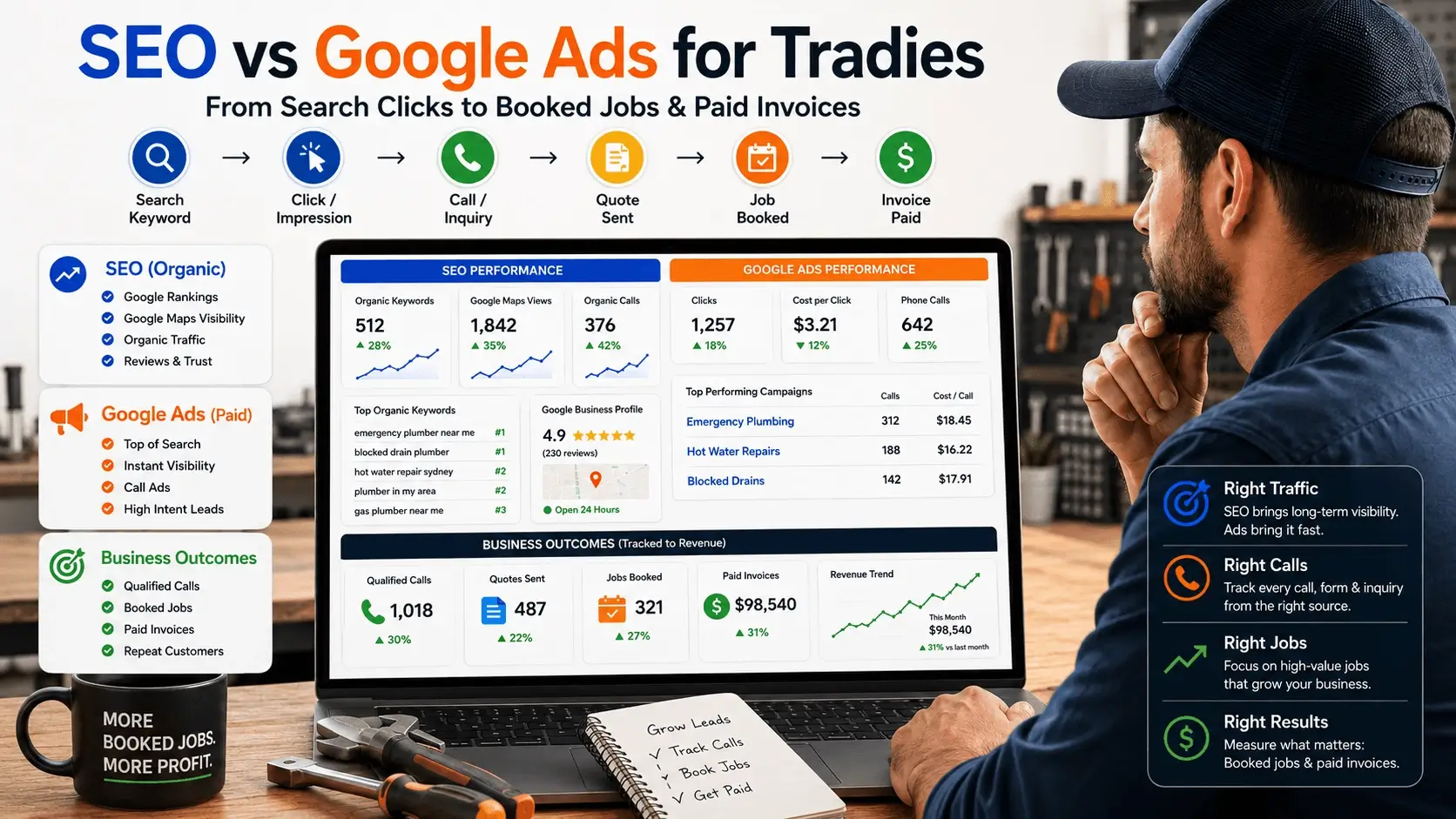
Google Ads gets tradies leads faster, while SEO builds long-term local visibility. Most trade businesses should use Google Ads for urgent jobs and SEO for Google Maps visibility, service pages, reviews, and lower paid-click dependency.
Most tradies do not need more website traffic. They need more local calls, better quote requests, higher job-value inquiries, and fewer wasted leads. A plumber, electrician, roofer, HVAC technician, landscaper, pest control company, builder, or locksmith should judge SEO and Google Ads by one commercial metric: which channel creates profitable booked jobs.
Google Ads can place a trade business in sponsored search results quickly. Google defines cost-per-click bidding as a model where the advertiser pays for each click on an ad. SEO works differently. Google’s SEO Starter Guide explains that SEO helps search engines understand content and helps users find a site through search.
The correct decision is not “SEO or Google Ads.” The correct decision is based on urgency, monthly budget, service area, average job value, call-handling speed, Google Business Profile strength, landing page quality, and tracking accuracy.
For most tradies, the strongest setup is:
- Use Google Ads for immediate demand.
- Use SEO for long-term organic visibility.
- Use Google Business Profile for local trust and Map Pack visibility.
- Use call tracking and conversion tracking to measure booked jobs.
- Use invoice value to decide which keywords deserve more budget.
Quick Comparison: SEO vs Google Ads for Tradies
SEO and Google Ads differ by speed, cost model, control, trust, and long-term value. Google Ads can generate fast paid clicks, while SEO can build local rankings, Google Maps visibility, and organic inquiries over time.
| Dimension | SEO for Tradies | Google Ads for Tradies | Commercial Meaning |
| Speed | Slower build | Faster launch | Ads can fill short-term calendar gaps |
| Cost model | Monthly investment | Pay per click | Ads create direct click cost exposure |
| Best use | Long-term local visibility | Immediate local inquiries | Each channel serves a different demand window |
| Main risk | Slow movement | Wasted spend | Both fail without tracking |
| Local role | Google Maps, organic rankings, suburb pages | Radius targeting, call ads, location assets | Local relevance affects both channels |
| Conversion asset | Service pages and location pages | Dedicated landing pages | The page must match the service and search intent |
| Measurement | Rankings, organic calls, GBP actions, booked jobs | CPC, CPL, conversions, booked jobs | Leads are not enough |
| Trust layer | Reviews, organic results, proof, photos | Ad copy, landing page proof, reviews | Trust affects conversion probability |
| Dependency | Can reduce paid-click dependency over time | Stops when budget stops | Ads buy demand; SEO builds an asset |
The main difference is acquisition mechanics. Google Ads uses paid search auctions. SEO uses organic relevance, website quality, local authority, technical accessibility, and trust signals.
A tradie should not compare SEO and Google Ads only by traffic. A better comparison includes cost per lead, cost per booked job, average invoice value, close rate, missed-call rate, and repeat-job potential.
What Is SEO for Tradies?
SEO for tradies is the process of improving a trade business’s website, Google Business Profile, service pages, location pages, reviews, and technical structure so it can appear for local service searches.
Google’s Google SEO Starter Guide explains that SEO helps search engines understand website content and helps users find relevant pages through search.
SEO for tradies connects a service-area business with customers searching for local help. These searches include examples such as “blocked drain plumber near me,” “emergency electrician in Brisbane,” “roof repair in Sydney,” “air conditioning repair in Perth,” and “landscaper near me.”
A tradie SEO system usually includes 10 main assets:
- Google Business Profile.
- Service pages.
- Suburb or location pages.
- Review generation.
- Before-and-after project photos.
- Technical SEO.
- Internal linking.
- LocalBusiness schema.
- Citations and NAP consistency.
- Backlinks from relevant local or industry sources.
Google’s SEO Starter Guide explains that SEO supports search engine understanding and user discovery through search. For tradies, this means the website must make the business entity, services, locations, proof, and contact path clear.
A strong tradie SEO page answers these questions:
- What service does the business provide?
- Which suburbs or service areas are covered?
- What urgent and non-urgent jobs are handled?
- What proof shows that the business can complete the work?
- What action should the customer take next?
- How can Google crawl, index, and understand the page?
SEO fails when service pages are thin, suburb pages are generic, reviews are weak, the website loads slowly, and no one tracks calls from organic search to booked jobs.
What Are Google Ads for Tradies?
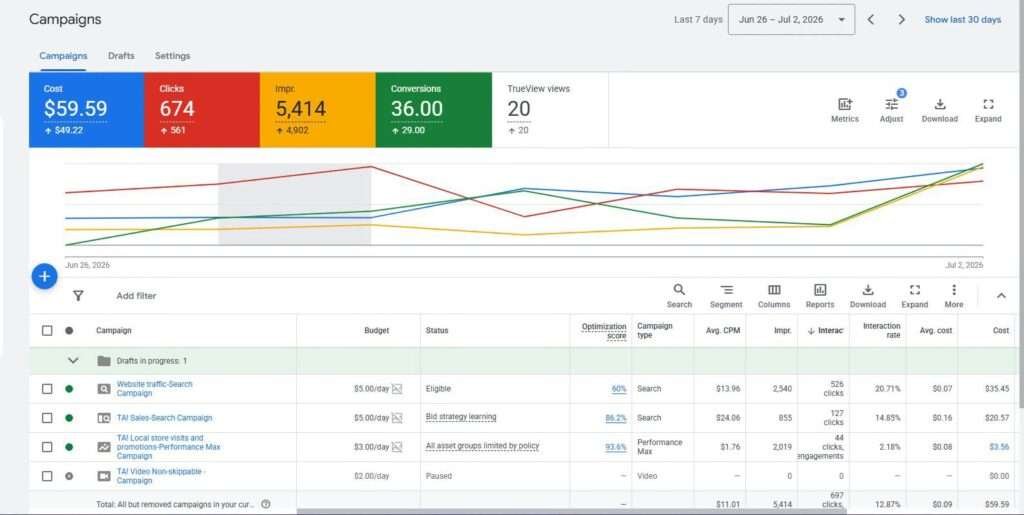
Google Ads for tradies are paid search campaigns that place a trade business in sponsored results for service keywords, such as emergency plumber, electrician near me, roof repair, or pest control service.
Google Ads can create immediate visibility because the business pays to appear for selected keywords. Google explains that paid search ads can drive traffic to a website, and advertisers can choose keywords and monitor results.
Google Ads uses cost-per-click bidding, where advertisers pay when someone clicks their ad.
For tradies, Google Ads usually works best when the campaign targets high-intent service searches. These searches include examples such as:
- “emergency plumber near me”
- “blocked drain plumber”
- “24 hour electrician”
- “roof leak repair”
- “hot water repair”
- “pest control near me”
- “locksmith callout”
- “air conditioning repair”
A Google Ads campaign for tradies should not send every click to the homepage. Paid traffic should usually go to a service-specific landing page because conversion probability depends on message match, proof, service-area clarity, and call accessibility.
A practical Google Ads setup includes:
- Search campaigns.
- Service-specific ad groups.
- Phrase match and exact match keywords.
- Negative keywords.
- Location targeting.
- Call assets.
- Location assets.
- Conversion tracking.
- Call tracking.
- Landing pages.
- Search terms review.
Google Ads becomes risky when the campaign targets broad keywords, weak locations, low-margin jobs, or users outside the trade business’s service area. The channel can create clicks quickly, but clicks do not prove lead quality, booked jobs, or profit.
SEO vs Google Ads: The Core Difference for Trade Businesses
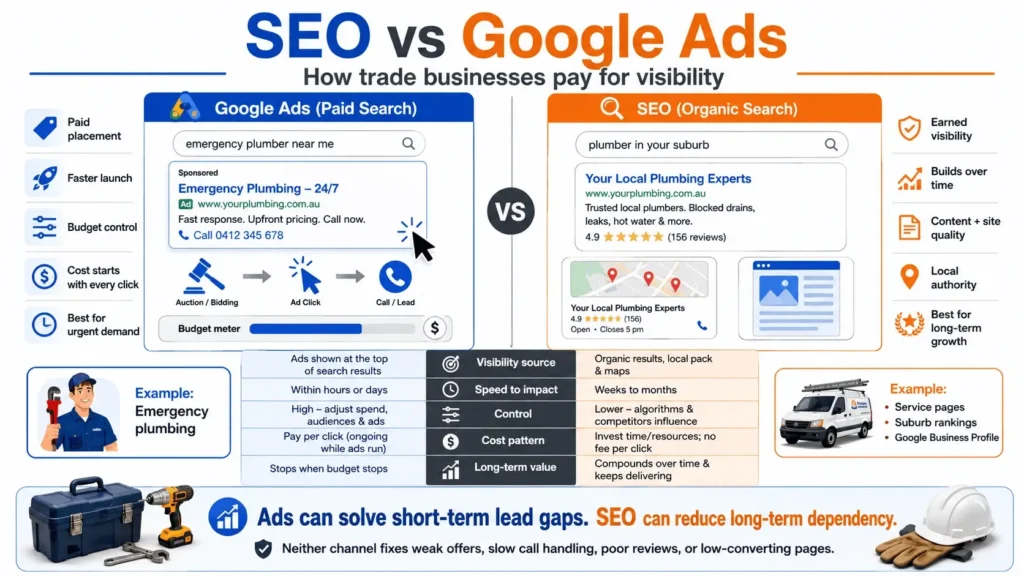
The core difference is acquisition mechanics. Google Ads buys search visibility through paid clicks, while SEO earns search visibility through relevance, content quality, local authority, website health, and Google Business Profile strength.
Google Ads is auction-based. SEO is relevance-based. That distinction matters because a tradie pays for traffic differently in each channel.
Google Ads uses paid clicks. Google’s CPC definition states that advertisers pay for each click and can set a maximum amount they are willing to pay for a click. SEO does not charge per click, but it still requires investment in website improvements, content, Google Business Profile activity, technical fixes, reviews, citations, links, and measurement.
The commercial difference is simple:
| Factor | Google Ads | SEO |
| Visibility source | Paid auction | Organic ranking system |
| Speed | Fast after launch | Slower because pages need to be crawled, indexed, evaluated, and ranked |
| Control | Stronger short-term budget and keyword control | Lower direct control over ranking speed |
| Cost risk | Click cost starts immediately | Time and execution cost starts before results |
| Long-term asset | Campaign data | Website authority, service pages, local trust, GBP strength |
| Failure mode | Spend without qualified jobs | Rankings or traffic without qualified jobs |
Google Ads can solve a short-term visibility problem. SEO can solve a long-term dependency problem. Neither channel solves a weak offer, slow call response, poor reviews, unclear service area, or low-converting website.
Which Is Better for Tradies: SEO or Google Ads?
Google Ads is better for fast calls. SEO is better for long-term local visibility. Most tradies should use Google Ads for immediate demand and SEO for Maps rankings, service pages, reviews, and lower acquisition cost over time.
The better channel depends on 7 measurable conditions:
- Lead urgency.
- Monthly budget.
- Average job value.
- Service-area competition.
- Review strength.
- Website quality.
- Call-handling speed.
Choose Google Ads when the business needs immediate inquiries. Examples include emergency plumbing, urgent electrical faults, roof leak repairs, lockouts, burst pipes, HVAC breakdowns, and pest control callouts.
Choose SEO when the business wants long-term visibility for service and suburb searches. Examples include “bathroom plumbing,” “switchboard upgrades,” “roof restoration,” “air conditioning installation,” “commercial landscaping,” and “termite treatment.”
Use both when the business needs short-term cash flow and long-term search control. This is the most practical strategy for established trade businesses because Ads can generate lead data while SEO builds organic assets.
The non-commodity decision is this: a tradie should not choose the channel that creates the most inquiries. The business should choose the channel mix that produces the lowest cost per profitable booked job.
When Google Ads Is Better for Tradies
Google Ads is better when a tradie needs leads quickly, sells urgent or high-margin services, has strong call handling, and can track which keywords generate qualified calls, quotes, booked jobs, and invoices.
Google Ads should be prioritized when demand has high urgency. Emergency customers often search with immediate intent, compare fewer providers, and call quickly from mobile search results or landing pages.
Google Ads is stronger in these cases:
- The business needs calls this week.
- The trade offers urgent services, such as blocked drains, burst pipes, electrical faults, roof leaks, pest infestations, or lockouts.
- The job value can absorb paid click costs.
- The business answers calls quickly.
- The service area is clearly defined.
- The landing page matches one service and one customer problem.
- Conversion tracking is installed before spending increases.
Google Ads can also test demand before an SEO investment. For example, a roofer can test “metal roof replacement,” “roof leak repair,” and “gutter replacement” campaigns, then build SEO pages around the services that generate booked jobs.
The channel becomes more useful when the campaign separates job types. Emergency repair campaigns should not be mixed with low-margin maintenance campaigns because urgency, cost per click, conversion rate, and invoice value differ.
When SEO Is Better for Tradies
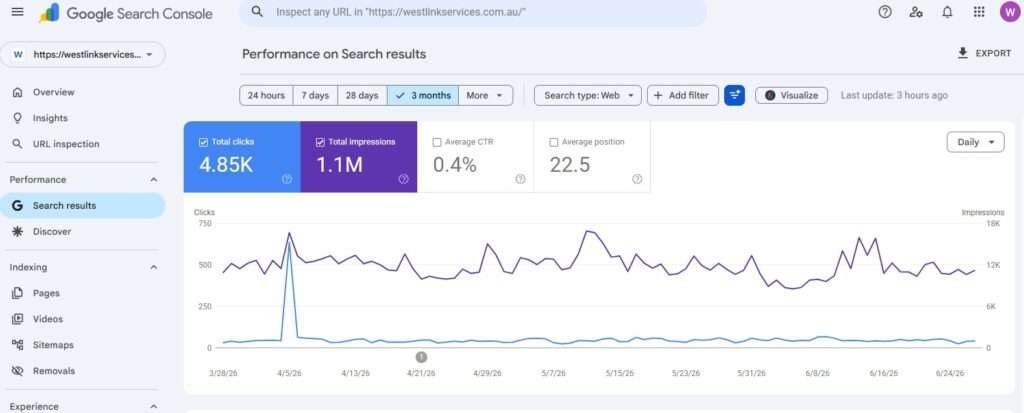
SEO is better when a tradie wants long-term Google visibility, stronger Maps presence, more trust before the call, and less dependency on rising paid-click costs.
SEO should be prioritized when the business wants to build search assets that can keep producing inquiries after the initial work is completed. These assets include service pages, location pages, Google Business Profile content, reviews, citations, project proof, internal links, and technical improvements.
Google explains that local ranking on Google is mainly based on relevance, distance, and prominence.
Google states that local rankings are mainly based on relevance, distance, and prominence. For tradies, this means Google Business Profile accuracy, service relevance, customer reviews, location signals, and business prominence all matter.
SEO is stronger in these cases:
- The business wants to appear in Google Maps.
- The business targets multiple suburbs.
- The business has real project photos.
- The business can collect reviews after completed jobs.
- The website needs better service-page coverage.
- The business wants to reduce dependence on paid traffic.
- The service is not urgent enough to justify high CPC pressure.
- The company wants long-term brand and category visibility.
SEO is not a shortcut. It depends on crawlability, indexing, internal linking, content quality, service-area relevance, reviews, page speed, and authority. Google Search Central describes SEO best practices as helping search engines crawl, index, and understand content.
Cost Comparison: SEO vs Google Ads for Tradies
Google Ads cost is usually measured through CPC, CPL, and ad spend. SEO cost is usually measured through monthly investment, content, technical work, links, and time. The better metric is cost per booked job.
Many tradies compare SEO and Google Ads incorrectly. They compare monthly SEO cost with monthly ad spend. That comparison is incomplete because it ignores job value, close rate, and invoice revenue.
A more accurate cost model uses 5 levels:
| Metric | What It Measures | Why It Matters |
| Cost per click | Paid traffic cost | Shows how expensive search demand is |
| Cost per lead | Inquiry cost | Shows lead-generation efficiency |
| Cost per qualified lead | Relevant inquiry cost | Removes poor-fit calls |
| Cost per booked job | Sales acquisition cost | Shows real commercial performance |
| Cost per paid invoice | Revenue acquisition cost | Connects marketing to cash flow |
Google Ads can look expensive at the click level but profitable at the booked-job level. A $60 click is not automatically bad if the lead becomes a $2,500 job. A $15 click is not automatically good if the caller is outside the service area or only wants the cheapest quote.
SEO can look cheaper because organic clicks do not create a direct CPC charge. That does not mean SEO is free. SEO requires execution cost across technical SEO, content, local SEO, reviews, internal linking, citations, link acquisition, and reporting.
The correct question is not:
“Which channel costs less?”
The correct question is:
“Which channel produces more profitable booked jobs per dollar invested?”
Timeline Comparison: How Fast Do SEO and Google Ads Work?
Google Ads can create visibility after launch, but optimization needs data. SEO usually needs months because Google must crawl, index, evaluate, and rank website pages, local signals, content, and authority.
Google Ads and SEO work on different timelines.
| Timeframe | Google Ads Activity | SEO Activity |
| Week 1 | Campaign setup, tracking, keyword grouping, landing page launch | Technical audit, keyword mapping, GBP review |
| Weeks 2–4 | Search terms review, negative keywords, bid adjustments | Core page fixes, service-page planning, internal linking |
| Months 2–3 | CPL optimization, call quality review, landing page testing | Service pages, location pages, content expansion |
| Months 3–6 | Campaign segmentation and budget reallocation | Ranking movement, Map Pack improvement, review growth |
| Months 6–12 | Scaling profitable campaigns | Compounding organic visibility and local authority |
Google Ads can generate paid search visibility quickly, but lead quality depends on data collection and campaign refinement. SEO takes longer because the site must become more relevant, crawlable, authoritative, and useful for the target service queries.
SEO feels slow for tradies when the site has:
- Weak service pages.
- Generic suburb pages.
- Few reviews.
- Poor internal linking.
- Slow mobile load speed.
- Missing schema markup.
- Low authority.
- Poor Google Business Profile activity.
- No local proof.
The timeline should be judged against business constraints. A new plumber with no inquiries may need Google Ads immediately. An established electrician with strong reviews but weak service pages may gain more from SEO.
Lead Quality: Which Channel Brings Better Customers?
Lead quality depends less on SEO or Ads alone and more on search intent, landing page relevance, reviews, pricing cues, call handling, service-area targeting, and whether the lead becomes a paid job.
A high-quality tradie lead has 6 attributes:
- It is inside the service area.
- It matches the trade specialty.
- It has clear intent.
- It can become a booked job.
- It has acceptable job value.
- It can be tracked to revenue.
Google Ads can produce high-quality leads when the campaign targets commercial or emergency keywords. Examples include “blocked drain plumber,” “emergency electrician,” “roof leak repair,” and “hot water replacement.”
Google Ads can produce low-quality leads when broad targeting attracts price shoppers, research-only users, irrelevant locations, or low-margin jobs.
SEO can produce high-quality leads when service pages match specific customer problems. Examples include “switchboard upgrade,” “bathroom plumbing,” “commercial pest control,” and “roof restoration.”
SEO can produce low-quality leads when the site ranks for informational terms that do not lead to quote requests. Examples include “how to fix a drain,” “DIY electrical safety,” or “roof leak temporary fix.”
Lead quality should be measured through:
- Call source.
- Search keyword.
- Landing page.
- Service requested.
- Location.
- Quote value.
- Booking status.
- Invoice value.
- Profit margin.
Traffic does not prove demand. Calls do not prove profit. Booked jobs and paid invoices prove commercial return.
Google Business Profile: The Local SEO Layer Most Tradies Miss
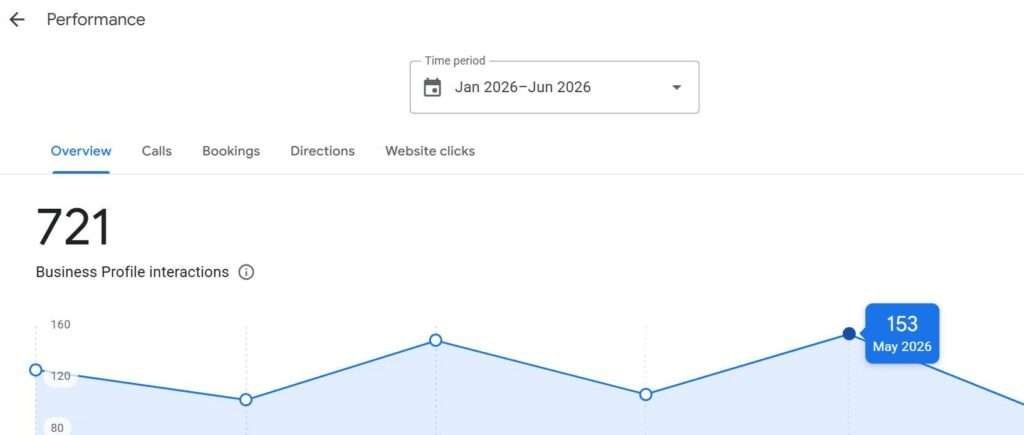
Google Business Profile helps tradies appear in local search and Google Maps through business information, categories, reviews, photos, services, service areas, and local relevance signals.
Google Business Profile is important because many tradie customers search locally and compare providers through proximity, reviews, photos, opening hours, and call options. Google’s local ranking documentation states that local results are mainly based on relevance, distance, and prominence.
For a tradie, GBP can influence:
- Google Maps visibility.
- Local Pack impressions.
- Phone calls.
- Direction requests.
- Review trust.
- Service-area clarity.
- Brand recognition.
- Conversion probability.
A strong Google Business Profile should include:
- Correct primary business category.
- Accurate secondary categories.
- Complete service list.
- Accurate service areas.
- Business hours.
- Emergency availability if offered.
- Real project photos.
- Review request process.
- FAQ answers.
- Google Business Profile posts.
- UTM tracking on the website link.
GBP also supports Google Ads when location assets connect local business information to campaigns. A tradie with strong reviews, accurate service areas, and real job photos has more trust signals than a competitor with a thin profile.
The practical mistake is treating GBP as a one-time listing. For tradies, GBP should work like a lightweight local proof system. Every completed job can create a review, a photo, a service update, and stronger local relevance.
Trade-Specific Recommendations: Plumbers, Electricians, Roofers, Builders, and More
Different trades need different SEO and Google Ads mixes because urgency, margin, seasonality, service area, and customer intent vary across plumbing, electrical, roofing, HVAC, landscaping, building, and pest control.
A generic marketing plan fails because a blocked drain lead behaves differently from a landscaping project lead. The channel mix should match the trade’s buying behavior.
| Trade | Google Ads Priority | SEO Priority | Reason |
| Plumbers | Blocked drains, burst pipes, hot water repairs | Suburb pages, drain cleaning pages, emergency plumbing pages | High urgency and high mobile search intent |
| Electricians | Emergency faults, power outages, safety issues | Switchboard upgrades, inspections, lighting, smoke alarms | Mixed urgent and planned demand |
| Roofers | Storm damage, roof leaks, emergency repairs | Roof restoration, roof replacement, guttering, inspections | Seasonal demand and high job value |
| HVAC companies | Breakdowns, urgent repairs, seasonal spikes | Installation pages, brand-specific repair pages, suburb pages | Strong seasonality and high replacement value |
| Landscapers | High-value installation campaigns | Portfolio pages, suburb pages, project galleries | Visual proof affects conversion |
| Pest control companies | Urgent infestations | Termite treatment, recurring pest plans, suburb pages | Local intent and repeat service potential |
| Builders | Specific renovation or extension inquiries | Project pages, service pages, trust proof | Longer decision cycle and proof-heavy buying process |
| Locksmiths | Lockouts and urgent access issues | Local service pages and review growth | High urgency and proximity sensitivity |
The channel mix should follow the money. Services with urgent intent and high job value can support paid campaigns. Services with slower decision cycles need stronger SEO, proof, reviews, case studies, and educational service pages.
When Google Ads Wastes Money for Tradies
Google Ads wastes money when campaigns target the wrong keywords, use broad locations, lack negative keywords, send traffic to weak landing pages, ignore call tracking, or measure clicks instead of booked jobs.
Google Ads becomes inefficient when campaign structure does not match trade economics.
The most common waste points are:
- Broad match keywords without search-term review.
- No negative keyword list.
- Service areas set too wide.
- Low-margin jobs mixed with high-margin jobs.
- Emergency and non-emergency services in the same campaign.
- Ads sent to the homepage.
- No call tracking.
- No landing page proof.
- No review visibility.
- No missed-call recovery.
- No CRM or booked-job tracking.
Google explains that Ad Rank affects whether ads are eligible to show and where they appear, with factors including competition, search context, and ad quality. This means paid search performance is not only about spending more. Relevance, ad quality, landing page experience, and conversion path also matter.
A campaign is not healthy because it has clicks. A campaign is healthy when it produces qualified calls, accepted quotes, booked jobs, and paid invoices at an acceptable acquisition cost.
Signs of wasted Google Ads spend include:
- Many clicks but few calls.
- Calls from outside the service area.
- High spend on research terms.
- Too many price-only inquiries.
- Poor mobile landing page conversion.
- Low call answer rate.
- No data on which keywords produce revenue.
The fix is not always more budget. The fix is usually better segmentation, tighter targeting, negative keywords, stronger landing pages, and tracking from keyword to invoice.
When SEO Fails for Tradies
SEO fails for tradies when the website has thin service pages, generic suburb pages, weak Google Business Profile signals, poor reviews, slow speed, no local proof, and no tracking from rankings to booked jobs.
SEO failure is often hidden because rankings and impressions can rise while qualified calls stay flat. That happens when the site attracts the wrong intent or fails to convert high-intent visitors.
Common SEO failure points include:
- Thin service pages.
- Duplicate suburb pages.
- Weak internal linking.
- Missing local proof.
- Poor Google Business Profile activity.
- Low review count or low review recency.
- Slow mobile performance.
- Crawlability problems.
- Indexing problems.
- Missing LocalBusiness schema.
- No call tracking.
- No conversion tracking.
- Blog content that attracts non-buyers.
Google’s structured data documentation explains that LocalBusiness structured data can tell Google about business hours, departments, reviews when applicable, and other business details. Structured data does not replace strong content, but it can clarify business information when implemented correctly.
SEO should be judged through commercial metrics, not vanity metrics. A tradie should ask:
- Which service pages generate calls?
- Which suburb pages generate quote requests?
- Which GBP actions turn into jobs?
- Which rankings match profitable services?
- Which pages attract traffic but no inquiries?
- Which organic leads become paid invoices?
SEO is not working when visibility increases but job volume, lead quality, or revenue does not improve.
The Best Strategy: Google Ads Now, SEO for Long-Term Control
The best strategy for most tradies is to use Google Ads for immediate demand, use PPC data to identify profitable services, and build SEO pages, GBP signals, reviews, and local authority around those services.
This strategy uses Google Ads as a demand-capture system and SEO as an asset-building system.
| Phase | Action | Commercial Outcome |
| Phase 1 | Run Google Ads for urgent or high-margin services | Fast lead data |
| Phase 2 | Track calls, quotes, booked jobs, and invoice value | Profit visibility |
| Phase 3 | Identify profitable keywords and locations | Smarter SEO planning |
| Phase 4 | Build service pages and suburb pages around proven demand | Organic growth |
| Phase 5 | Strengthen Google Business Profile, reviews, photos, and local proof | Higher local trust |
| Phase 6 | Keep Ads for urgent demand and let SEO handle broader visibility | Lower dependency over time |
This system avoids a common mistake. Many agencies sell SEO and Google Ads as separate services. Tradies need a connected system where paid search data informs organic content, and organic visibility reduces long-term paid dependency.
Example:
If Google Ads shows that “emergency hot water repair” produces profitable jobs in 3 suburbs, the SEO plan should include:
- A hot water repair service page.
- Suburb-level relevance for those locations.
- Internal links from plumbing pages.
- GBP service updates.
- Review requests from hot water repair customers.
- Project photos where appropriate.
- FAQ content around symptoms, response time, and pricing cues.
The strongest search strategy is not channel-first. It is job-value-first.
Landing Page Checklist for Tradies Running Google Ads
A tradie Google Ads landing page should match one service, one location group, one customer intent, and one conversion action, such as a phone call, quote request, or booking inquiry.
A Google Ads landing page fails when it asks a high-intent visitor to search through a generic website. Emergency customers need a clear service match, visible proof, and fast contact options.
A strong landing page should include:
- Service-specific headline.
- Clear service-area statement.
- Tap-to-call button.
- Short quote form.
- Emergency availability if offered.
- Review proof.
- License information.
- Insurance proof.
- Before-and-after photos.
- Real job photos.
- Pricing cues or “starting from” ranges if appropriate.
- Same-day or 24/7 availability if true.
- FAQ section.
- Fast mobile loading.
- Conversion tracking.
- Call tracking.
Stanford’s Web Credibility Project guidelines state that websites should make it easy to verify information, show that a real organization exists, and make contact information easy to find. For tradie landing pages, this means visible phone numbers, real photos, service proof, clear business details, and accurate claims.
Avoid these landing page mistakes:
- Sending all paid traffic to the homepage.
- Using stock photos only.
- Showing no reviews.
- Hiding the phone number.
- Using a long form for urgent services.
- Mixing too many services on one page.
- Ignoring suburb or service-area relevance.
- Making claims without proof.
- Using slow mobile pages.
- Forgetting tracking tags.
A landing page should not only describe the service. It should reduce uncertainty before the customer calls.
Tracking: Measure Booked Jobs, Not Clicks
Tradies should track SEO and Google Ads from keyword to call, quote, booked job, paid invoice, and profit margin because clicks and inquiries do not prove commercial return.
Google Ads provides phone call conversion tracking so businesses can measure calls generated from ads and website interactions.
The biggest measurement error is stopping at leads. A form submission or phone call is not revenue. A quote is not revenue. A booked job is closer, but the strongest metric is a paid invoice connected to the original channel.
A practical tracking model uses this sequence:
- Keyword.
- Channel.
- Landing page.
- Call or form.
- Lead quality.
- Quote request.
- Quote sent.
- Quote accepted.
- Job booked.
- Invoice paid.
- Profit margin.
- Repeat or referral value.
Google Ads supports phone call conversion tracking, including calls from ads and calls from call or location assets. Google also provides setup guidance for measuring phone call conversions from websites and lead tracking systems.
A tradie should track at least 8 numbers:
| Metric | Why It Matters |
| Cost per click | Shows paid traffic cost |
| Cost per lead | Shows inquiry acquisition cost |
| Lead qualification rate | Shows traffic quality |
| Call answer rate | Shows response capacity |
| Quote rate | Shows sales fit |
| Booking rate | Shows commercial conversion |
| Average invoice value | Shows job economics |
| Cost per paid invoice | Shows true acquisition cost |
Response latency also affects lead value. The MIT Lead Response Management study reported that the odds of contacting a lead within 5 minutes versus 30 minutes dropped by 100 times, and the odds of qualifying a lead dropped by 21 times.
This matters for tradies because many search leads are urgent. A missed call from Google Ads or Google Business Profile can become revenue for a competitor within minutes.
Decision Matrix: Which Channel Should Your Trade Business Choose?
A tradie should choose Google Ads for urgent demand, SEO for long-term local visibility, and both when the business needs immediate calls while building lower-dependency organic search assets.
| Business Situation | Recommended Channel | Reason |
| New tradie business with no rankings | Google Ads + GBP setup | The business needs immediate visibility and local trust signals |
| Established business with weak Maps presence | Local SEO + GBP optimization | Google Maps visibility depends on local relevance, distance, and prominence |
| Emergency service business | Google Ads + Local SEO | Paid search captures urgent demand while SEO builds trust |
| Low-margin service | SEO-first approach | High CPC may make paid acquisition inefficient |
| High-margin installation service | Ads + dedicated landing pages + SEO pages | Job value can support acquisition cost |
| Seasonal service | Ads during peak periods + SEO year-round | Campaigns control short-term demand while SEO builds baseline visibility |
| Strong reviews but weak website | SEO service pages and internal linking | Trust exists but organic page coverage is weak |
| Many clicks but few jobs | Tracking + CRO + campaign cleanup | The issue is conversion or targeting, not only traffic |
| Many missed calls | Fix response process first | More leads will increase waste if calls are not answered |
| Multiple suburbs served | SEO location pages + Ads by service area | Both channels need geographic control |
The decision should not be based on preference. It should be based on acquisition efficiency, response latency, lead qualification rate, attribution accuracy, conversion probability, and marginal cost per booked job.
Use this rule:
- If the business needs leads now, start with Ads.
- If the business wants durable local visibility, build SEO.
- If the business wants both cash flow and control, combine Ads, SEO, GBP, reviews, landing pages, and tracking.
Final Recommendation: SEO or Google Ads for Tradies?
Most tradies should use Google Ads for fast, high-intent leads and SEO for long-term local visibility. The winning system tracks every click, call, quote, booked job, and invoice before increasing spend.
Google Ads is the stronger channel when speed matters. SEO is the stronger channel when long-term visibility, trust, and lower paid-click dependency matter. Google Business Profile connects both because local customers often compare trade businesses through Maps, reviews, photos, services, proximity, and call options.
The best marketing strategy for tradies is not a channel choice. It is a tracked search system.
That system should include:
- Google Ads for urgent and high-margin services.
- SEO for service pages, suburb pages, and organic rankings.
- Google Business Profile for Maps visibility and trust.
- Review generation after completed jobs.
- Landing pages for paid traffic.
- Call tracking for phone leads.
- Conversion tracking for forms and calls.
- CRM or job-management tracking for booked jobs.
- Invoice-value reporting for profitability.
A tradie should increase marketing spend only when the data shows which keywords, pages, services, and suburbs produce profitable booked jobs.
The final rule is direct:
Use Google Ads to buy immediate demand. Use SEO to build long-term local authority. Use tracking to decide where the next dollar should go.
FAQs
Is SEO or Google Ads better for tradies?
Google Ads is better for fast leads, while SEO is better for long-term local visibility, organic rankings, and reduced paid-click dependency.
Should a new tradie business start with SEO or Google Ads?
A new tradie business should usually start with Google Ads for immediate inquiries while building SEO, Google Business Profile, reviews, and service pages in the background.
How long does SEO take for tradies?
SEO usually takes months because Google must crawl, index, evaluate, and rank pages based on relevance, content quality, technical accessibility, and local authority.
Are Google Ads worth it for tradies?
Google Ads can be worth it for tradies when campaigns target high-intent services, use tight location controls, and track calls, quotes, booked jobs, and invoice value.
Why do Google Ads become expensive for plumbers and electricians?
Google Ads become expensive in urgent trades because emergency keywords often have high commercial intent, strong competition, and direct phone-call value.
Can SEO reduce Google Ads spend?
SEO can reduce paid-click dependency over time when the business builds service pages, location pages, Google Business Profile visibility, reviews, authority, and conversion tracking.
Do tradies need landing pages for Google Ads?
Yes. Tradies need dedicated landing pages because paid traffic converts better when the page matches the service, location, urgency, proof, and call action.
What should tradies track from SEO and Google Ads?
Tradies should track clicks, calls, forms, lead quality, quotes, booked jobs, invoice value, profit margin, and cost per paid invoice.
Is Google Business Profile part of SEO or Google Ads?
Google Business Profile is mainly part of local SEO, but it can also support Google Ads through location assets, reviews, local trust, and call actions.
What is the best marketing strategy for tradies?
The best strategy is Google Ads for immediate demand, SEO for long-term authority, Google Business Profile for local trust, and tracking for booked-job profitability.


