SEO for Mechanics in Australia to Get More Leads and Booked Jobs
Our SEO for mechanics helps Australian workshops and mobile mechanics get found when local drivers need servicing, repairs, diagnostics or inspections. We connect your website, Google Business Profile, service pages and local authority signals so more of the right searches turn into qualified leads, booked jobs and measurable revenue.
Enquire Now
Find out what's holding you back
Enter your number we’ll call you with a free ranking report for your suburb.
We call within 2 business hours. No scripts. No pressure.
Attract the Right Jobs, Not Just More Website Traffic
More website visits do not automatically create more revenue. Your mechanic business needs enquiries from customers who require work you actually provide, within the market you serve, while your team has capacity to accept the booking.
A broad automotive query may increase traffic but produce few suitable leads. Commercial value comes from reaching people whose needs match your services, location, availability and job criteria. This includes customers discovering businesses through conventional search results, local listings and AI-generated recommendations.
Australia provides a substantial market for automotive work. The Bureau of Infrastructure and Transport Research Economics recorded 22.3 million registered motor vehicles as of 31 January 2025, while the fleet’s average age reached 11.54 years. These figures indicate an extensive and ageing vehicle base, but they do not guarantee leads for an individual business. A mechanic must still become visible for relevant demand, earn the customer’s confidence and make the booking process easy.
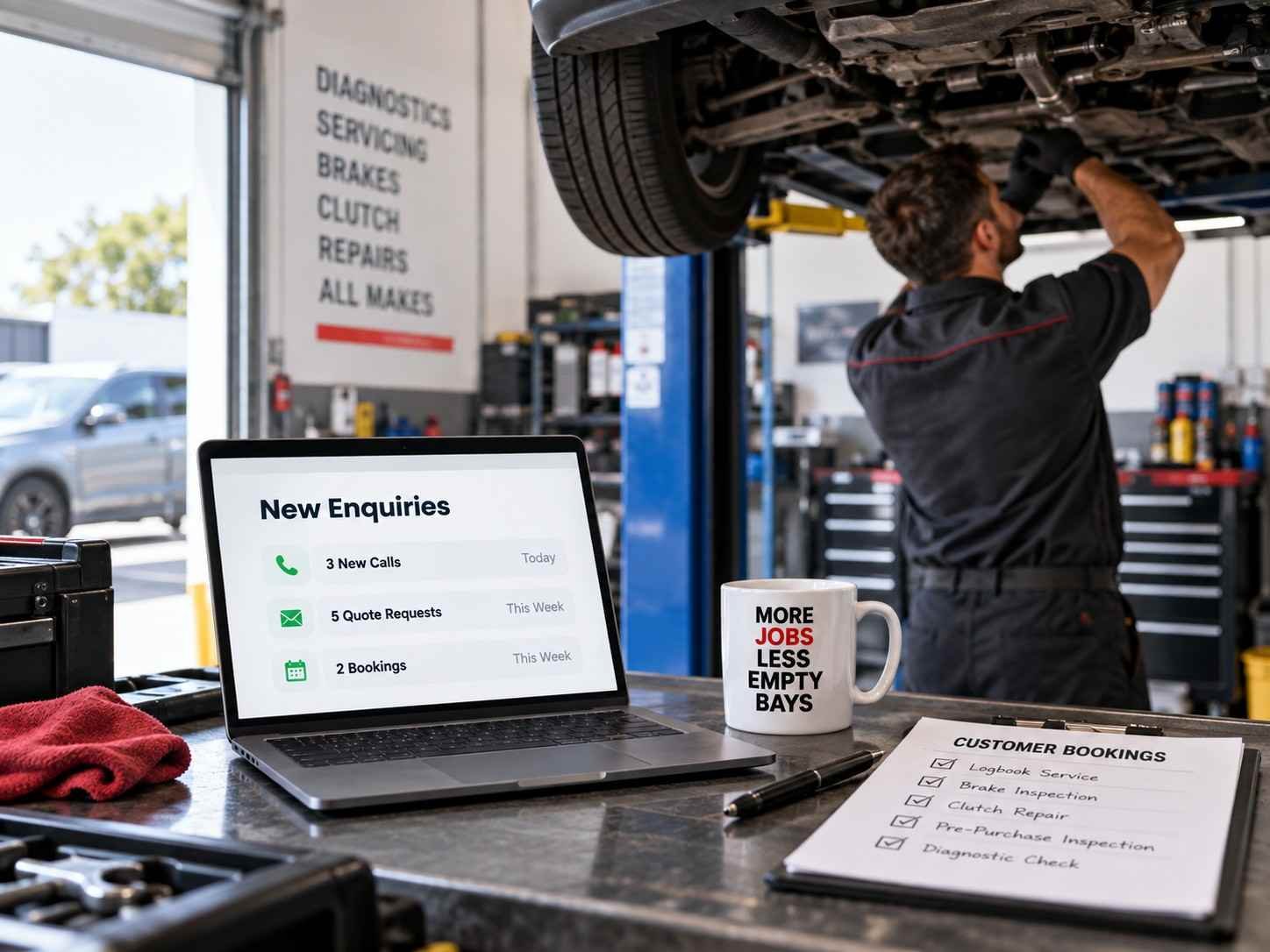
Our approach prioritises the search opportunities most likely to produce qualified enquiries, confirmed bookings and revenue. Traffic and rankings remain useful indicators, but the commercial test is whether your marketing brings suitable work into the business.
Mechanic SEO Services Built Around How Your Business Operates
A mechanic workshop, mobile mechanic and combined operation cannot use the same search strategy. Each business model has different customer locations, travel limits, booking paths and revenue opportunities. These differences affect where leads come from and which enquiries can become profitable work.
SEO for Auto Repair Shops and Fixed-Location Workshops
A fixed-location workshop serves customers at a physical automotive repair facility. Its lead-generation strategy should connect the workshop address with its services, opening hours, surrounding market and available booking capacity. The main commercial goal is to attract nearby vehicle owners who can bring their cars to the premises. Search results, local listings and AI-generated answers must accurately identify where the workshop operates, what type of automotive work it accepts and how customers can request an appointment. Clear information reduces unsuitable calls and helps turn local discovery into confirmed bookings. Best outcome: More relevant workshop enquiries from customers within a practical driving distance.
SEO for Mobile Mechanics and Service-Area Businesses
A mobile mechanic travels to customers instead of serving them at a public workshop. The search strategy must therefore reflect a genuine operating radius, travel time, call-out availability and the work that can be completed at the customer’s location. Google allows a service-area business to hide its address when customers are not served there. However, listing a suburb as a service area does not guarantee visibility throughout that location. The coverage must remain realistic so incoming leads can be reached efficiently and completed profitably. Google Business Profile representation guidelines Website content and AI-readable business information should clearly distinguish mobile service from workshop-based repairs. That prevents potential customers from expecting a shopfront and reduces enquiries from areas that are too far away to serve. Best outcome: More suitable call-out leads within a commercially viable travel area.
SEO for Hybrid Workshop and Mobile Mechanic Businesses
A combined operation serves some customers at a workshop and performs other jobs at the customer’s location. Its website must clearly separate these two fulfilment methods so drivers understand where each type of work is available. The workshop address should support premises-based bookings, while mobile coverage should represent only genuine service locations. Calls, online forms and booking requests can then be classified by service method, location and job value. This makes it easier to see which side of the operation produces stronger leads and higher revenue. Search engines and AI systems also receive a clearer business description when workshop services and mobile call-outs are not mixed together. Best outcome: Separate lead pathways for workshop appointments and mobile jobs, with clearer revenue attribution.
Automotive SEO for Specialist and Fleet Workshops
General mechanic searches can create volume, but specialist searches often reveal stronger service fit. A workshop that genuinely works on European vehicles, diesels, 4WDs, EVs, hybrids or performance cars should demonstrate that capability through service detail, equipment, technician knowledge and real proof.
Fleet servicing requires a different conversion path. A fleet manager may care about vehicle classes, turnaround, preventative maintenance, reporting, account processes and operational downtime. We treat fleet SEO as commercial lead generation, not as another version of a retail car-service page.
We Target Mechanic Searches Most Likely to Become Booked Jobs
Search demand becomes commercially useful when the customer’s need matches your services, location and availability. We map traditional search terms and conversational AI prompts by job type, urgency and customer value. This helps prioritise enquiries that can become confirmed bookings and revenue instead of attracting people seeking information or services you do not provide.
Scheduled Servicing Searches
Planned maintenance searches include car servicing, logbook servicing, oil changes, scheduled maintenance and manufacturer-specific service intervals. These customers may not need immediate repairs, but they can produce repeat bookings and longer customer relationships.
We target only the vehicle makes, service types and locations the business can genuinely support. The goal is to attract suitable motorists before they choose another workshop or return to a dealership.
Repair and Diagnostic Searches
Repair demand usually begins with a known fault, a warning sign or a specific component problem. Relevant entities can include brake repair, clutch replacement, transmission service, engine diagnostics, battery replacement, exhaust repair, suspension work, wheel alignment, radiator repair, cooling-system service, air-conditioning repair and auto electrical work.
These searches should lead to dedicated content only when the mechanic actually provides the service. A high-volume term has little value if the workshop lacks the equipment, skills, parts access or capacity to complete the job.
Urgent and Local Mechanic Searches
Urgent customers may search for an emergency mechanic, mobile mechanic, mechanic near me, car repair near me, same-day mechanic or mechanic open now. The search often carries strong contact intent, but urgency alone does not make every lead profitable.
The campaign must account for business hours, response time, available technicians, towing requirements and travel limits. Search listings and AI-generated answers should not suggest immediate assistance when the business cannot provide it.
Inspection and Vehicle-Purchase Searches
Inspection demand includes vehicle inspections, pre-purchase inspections and state-specific roadworthiness services. Terminology and authorisation requirements vary across Australia, so a business should target only the inspection services it is legally approved and operationally equipped to perform.
A prospective vehicle buyer has a different need from a customer requesting repairs. The inspection page should explain the service scope, booking process, location, limitations and next step without mixing the intent with general maintenance content.
Vehicle and Workshop Specialisation Searches
Some motorists choose a provider by vehicle type, make, fuel system or technical capability. Relevant specialisations may include European cars, Japanese vehicles, diesel engines, 4WDs, performance vehicles, electric vehicles and hybrids.
Make-specific or model-related pages should be created only when the workshop has real experience, suitable diagnostic equipment and a distinct offer. Unsupported specialty claims may attract unsuitable leads and weaken trust.
Fleet and Commercial Servicing Searches
Fleet managers and commercial operators search differently from private motorists. Their needs may include fleet servicing, commercial vehicle maintenance, preventive maintenance, inspection scheduling, service records and ongoing account support.
These buyers often evaluate capacity, turnaround time, reporting, vehicle classes and long-term reliability before making contact. A dedicated commercial pathway can separate account enquiries from one-off retail bookings and help measure recurring revenue.
Adjacent Automotive Services
Competitors also mention panel beating, tyre replacement and windscreen replacement, but these are adjacent automotive categories rather than universal mechanic services. Include them only when the business genuinely delivers them. Otherwise, they can dilute the mechanic topic and generate irrelevant leads.

Build Your Website Around Revenue-Producing Services
A clear site structure helps customers, search engines and AI platforms understand what your business offers, where it operates and how someone can book.
Core Service Pages
Create a dedicated page for each important offering, such as logbook servicing, brake repairs, engine diagnostics or vehicle inspections. Only separate a topic when it represents a distinct customer need and genuine source of revenue.
Specialist and Commercial Pages
Add focused pages for proven capabilities such as diesel vehicles, European cars, electric vehicles, fleet maintenance or mobile assistance. Avoid advertising work your team cannot confidently deliver.
Genuine Service-Area Pages
Publish location content only for suburbs or regions you actively serve. Each page should include available work, travel limits, operating hours and a direct enquiry option. Do not create copied pages with only the place name changed.
Supporting Advice
Use maintenance guides and troubleshooting articles to answer early questions. Connect each resource to the relevant commercial page so readers can progress from research to a call or confirmed booking.
Local SEO Connects Your Workshop, Google Profile and Service Areas
Local SEO for mechanics aligns your real-world business with the information customers see across Google Search and Google Maps. That includes the correct name, address or service-area setup, phone number, categories, services, hours, photos, reviews, citations and website content.
Google says local results are mainly influenced by relevance, distance and prominence. Relevance concerns how well the business matches the search. Distance considers how far the business is from the searcher. Prominence reflects how well known and well supported the business appears online. No agency can remove the distance factor or buy a better organic local position.
For a workshop, we strengthen its visibility around the physical location and the areas from which customers realistically travel. For a mobile mechanic, we focus on mobile service intent and an honest working territory. Selecting more service areas inside a Google Business Profile does not automatically create rankings across them. The website, reviews, authority, competition and searcher location still affect visibility.
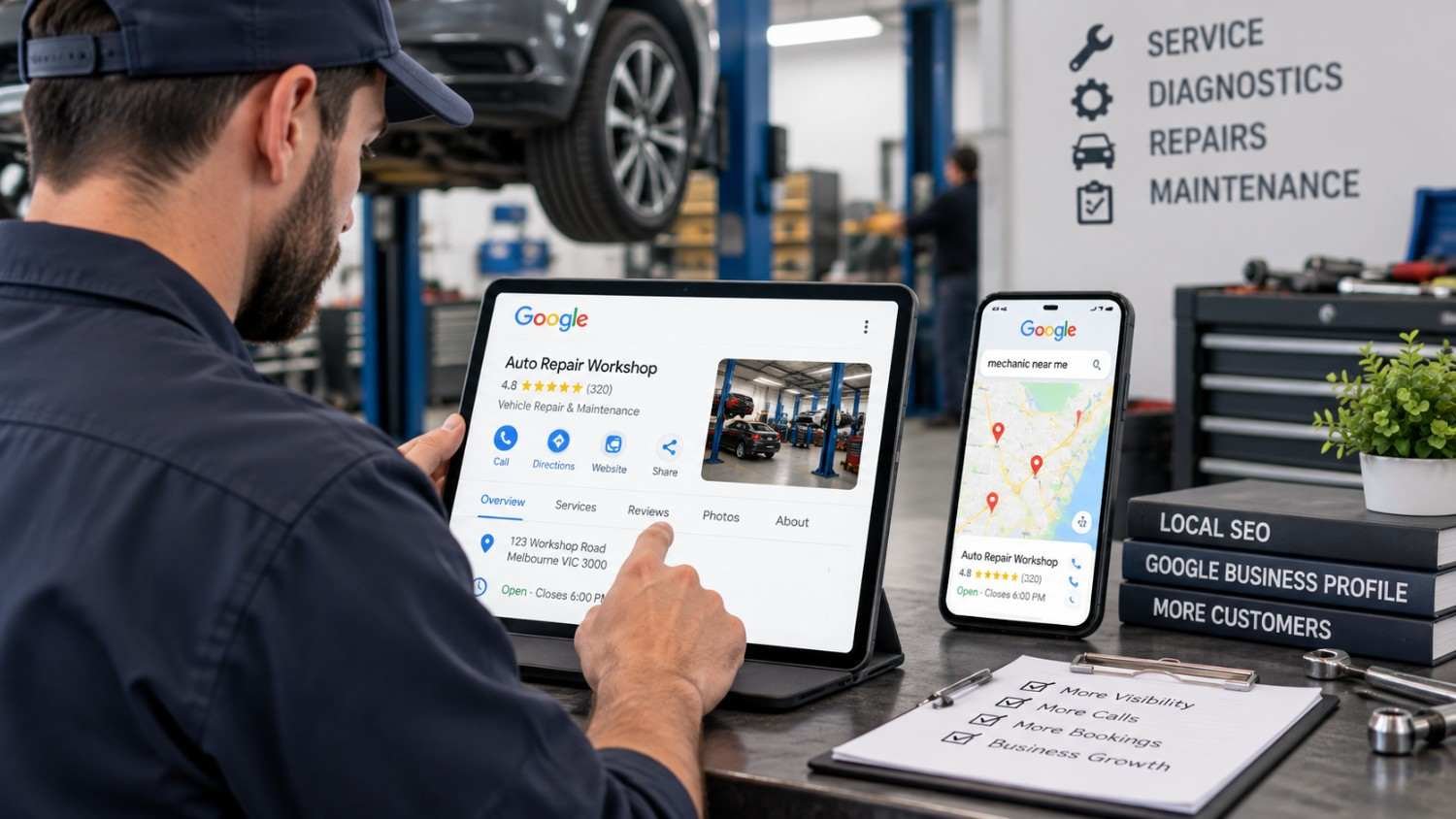
Geography also changes competitive priority. BITRE reports that New South Wales, Victoria and Queensland accounted for more than 76.2% of Australian motor vehicle registrations in January 2025. Sydney, Melbourne and Brisbane therefore contain large vehicle markets, but also dense competition. Perth, Adelaide, Canberra, Hobart, Darwin and regional centres require their own service and travel analysis. We assess the workshop’s actual catchment, nearby competitors and profitable driving distance instead of applying one national location template.
Reviews and citations support both trust and local prominence. We help create a compliant review-request process after completed jobs, keep business details consistent across relevant directories and identify local or automotive websites that can provide genuine authority. Fake reviews, mass directory submissions and keyword-stuffed business names create risk rather than durable lead growth.
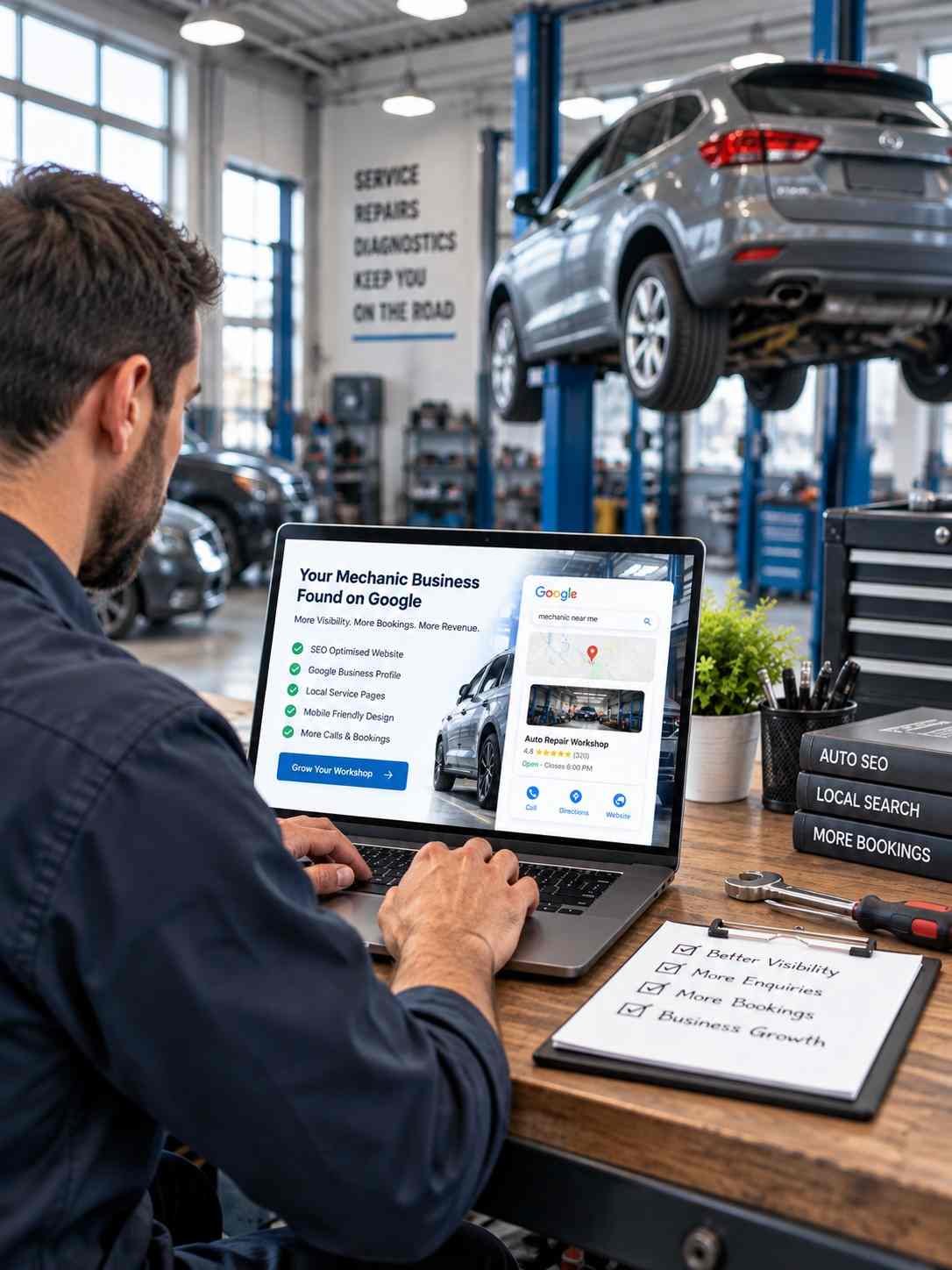
Automotive SEO Starts With a Website Google Can Crawl and Customers Can Use
A service page cannot generate leads if Google cannot index it or a mobile customer cannot use it. Technical SEO makes the mechanic website accessible, understandable and fast enough to support the buying journey.
We review crawlability, indexation, canonical tags, internal links, page speed, Core Web Vitals, mobile layout and broken booking paths. We also check whether service, location and business information is consistent across the site. Structured data can reinforce clear information about the organisation and its services, but markup cannot rescue weak content or guarantee a search feature.
Conversion work is equally practical. Mobile visitors should be able to tap the phone number, see whether the workshop is open and request a booking without searching through several screens. Each priority page should explain the service, relevant location, proof and next step. The aim is to reduce the distance between a high-intent search and a qualified enquiry.
What Is Included in Our Mechanic SEO Services?
Our service combines research, local visibility, website optimisation, authority development and measurement. Each activity is prioritised by its potential to produce qualified enquiries, bookings and revenue.
SEO Research and Analysis
We complete keyword research, search-intent analysis, competitor comparison, technical auditing and backlink assessment. Google Analytics and Search Console data help identify service gaps, weak pages and commercial opportunities.
Local SEO
We optimise your Google Business Profile, Google Maps presence, service areas, opening hours and contact details. Local citations, automotive directories, customer reviews and consistent name, address and phone information support nearby discovery.
On-Page SEO
We improve title tags, meta descriptions, headings, service copy, images, videos and internal links. Navigation and calls to action are refined so mobile visitors can quickly call, request a quote or arrange a booking.
Technical SEO
Our checks cover crawling, indexing, Core Web Vitals, loading speed, mobile compatibility, HTTPS security, JavaScript, XML sitemaps and clean URLs. Structured data helps machines interpret your organisation, services, reviews and contact information.
Content Strategy
We develop commercial pages for repairs, diagnostics, maintenance, inspections and specialist capabilities. Supporting articles answer vehicle-care questions and create opportunities for featured snippets, conversational queries and internal linking.
Off-Page SEO
Authority work includes relevant backlinks, directory submissions, automotive publications, industry citations and online reputation signals. Existing inbound links are monitored for quality, relevance and loss.
AI Search Optimisation
Business facts, expertise, locations and offerings are organised consistently for Google AI results, ChatGPT, Gemini, Copilot and Perplexity. This improves machine understanding but does not guarantee mentions or citations.
Monitoring and Revenue Attribution
We review rankings, organic visits, engagement, backlink health and content decay. More importantly, we measure calls, forms, confirmed appointments, completed jobs and attributable income.
How We Prioritise SEO Around Workshop Capacity and Job Value
The best SEO plan is not always the one that creates the most enquiries. If diagnostic work is profitable and the workshop has trained technicians available, that service may deserve priority. If Saturdays are already full for six weeks, increasing Saturday booking demand solves nothing.
We start with the services the business wants more of. We then consider technician skills, available bays, service margins, parts access, repeat-booking potential and the locations from which customers are willing to travel. For a mobile mechanic, travel time and call-out density also matter because two distant low-value jobs can consume most of a working day.
This produces a different content plan for each mechanic. A suburban workshop may focus on recurring logbook customers and selected repair work. A specialist may target fewer but better-qualified European or diesel leads. A mobile mechanic may build density across a smaller group of neighbouring suburbs before expanding further. A fleet provider may need fewer enquiries, but each opportunity requires stronger qualification and commercial proof.
Traffic remains a useful diagnostic metric. It shows whether visibility is growing. Revenue comes from what happens after the visit, so we keep the reporting chain intact: search visibility, customer action, qualified lead, booked job and commercial result.
Your First 90 Days of Mechanic SEO
Days 1–30: Audit, Tracking and Opportunity Mapping
The first month establishes the baseline. We review Google Search Console, analytics, current rankings, the Google Business Profile, service pages, competitors, technical issues and conversion paths. Call and form tracking is checked before performance is judged. You receive a prioritised plan based on lead opportunity and implementation impact.
Days 31–60: Core SEO and Local Visibility Improvements
The second phase addresses the strongest blockers. That may include improving priority service pages, correcting local business information, refining the Google Business Profile, strengthening internal links, fixing indexation problems and making calls or booking requests easier on mobile.
Days 61–90: Service Coverage, Authority and Performance Review
The third phase expands relevant coverage. We may publish a priority service page, specialist page or genuine service-area asset, depending on the approved strategy. Early data is reviewed to see which queries, pages and locations are creating useful actions. The next quarter is then planned around evidence rather than assumptions.
SEO does not have a universal ranking date. Timing depends on the website’s starting point, market competition, domain authority, implementation access and location. We report progress, blockers and commercial signals without inventing a guaranteed lead deadline.
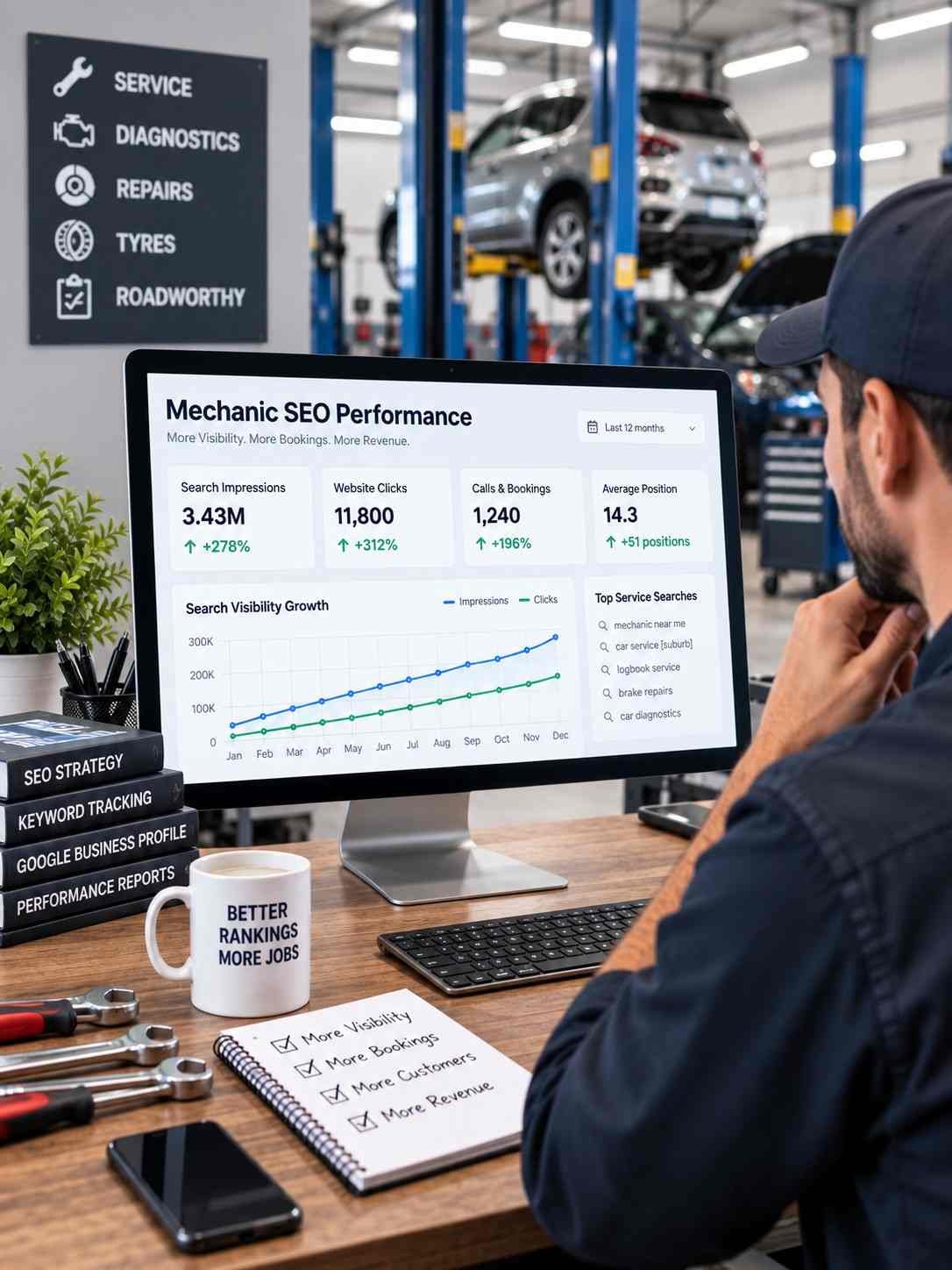
How We Measure Mechanic SEO Performance
Rankings matter, but they are the start of measurement rather than the final result. We track whether stronger visibility produces customer actions and whether those actions become suitable work.
The reporting path is:
Search and Maps visibility → website or profile action → qualified enquiry → booked job → service and location → revenue where data is available
Calls, forms and booking requests are separated where possible. Leads can then be classified by service type, suburb and suitability. This shows whether growth is coming from valuable repair and servicing work or from irrelevant calls outside the business’s scope.
Our existing Australian service-area work shows the scale that a connected search system can build. For Westlink Services, our documented 12-month Search Console reporting period recorded 3.43 million search impressions and 11,800 clicks. Those figures are specific to that cleaning-sector campaign and are not presented as a mechanic result. They demonstrate our experience with technical structure, service and location visibility, internal linking and measurable organic acquisition across an Australian service-area business.
Why Mechanic Businesses Choose Our Agency
Mechanics need accountable marketing, not reports filled with impressions and vague ranking gains.
Tradie Market Experience
Our team has more than six years of search experience and has supported over 100 businesses. Campaigns are shaped around local demand, service areas and practical operating limits.
Commercial Priorities
We focus on profitable repairs, suitable customers and available workshop capacity. High traffic with weak booking potential is treated as wasted demand.
Transparent Reporting
You can see which calls, forms and appointments come from organic, local and AI-assisted discovery. Where sales data is available, reporting extends to completed work and revenue.
Strategy Built Around Your Business
A fixed workshop, mobile mechanic and fleet provider require different targeting. Your campaign reflects your actual services, coverage and growth goals.
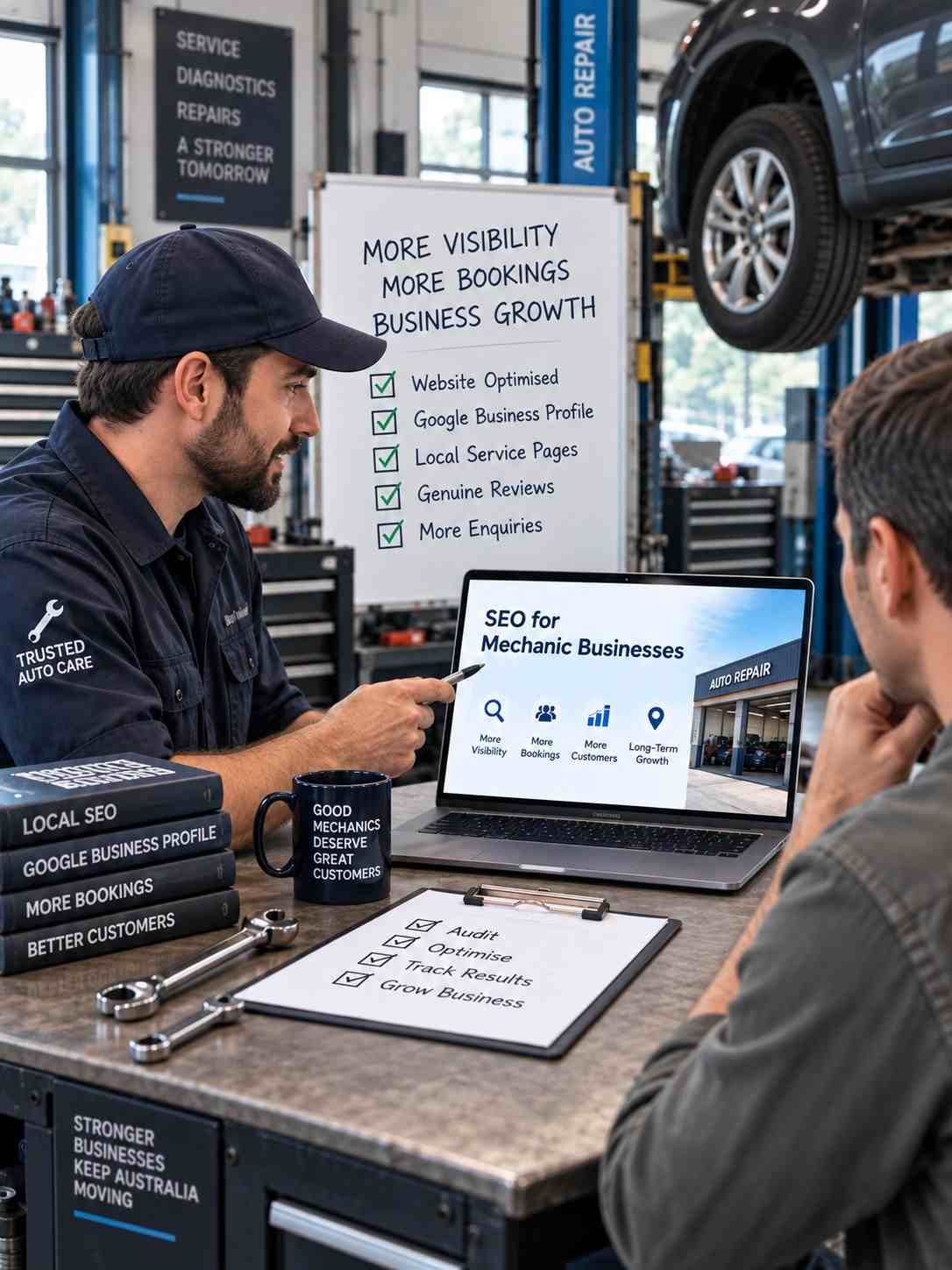
Is SEO Right for Your Mechanic Business?
SEO is a strong fit for a workshop or mobile mechanic with a real operating base, clear services, capacity for more suitable jobs and a medium-to-long-term growth goal. The business must also be willing to improve its website, maintain accurate profile information, request genuine reviews and track what happens to enquiries.
SEO may not be the right immediate channel if you need guaranteed bookings this week, cannot answer incoming calls, want to use fake locations or are unwilling to make essential website changes. Google Ads may support short-term demand while organic visibility develops, but paid traffic still needs a clear offer, suitable geography and reliable lead handling.
The correct decision depends on your current visibility, competition, available capacity and customer value. That is why we audit the business before recommending the scope.
How Much Does SEO for Mechanics Cost?
The cost depends on your market, business model and growth target. A single workshop usually needs a smaller campaign than a mobile operator covering several regions or a company managing multiple branches.
Pricing is influenced by:
- Website condition and technical issues
- Number of services and operating areas
- Local competition
- Content and authority requirements
- AI visibility and conversion tracking scope
We assess these factors before recommending a package. Your proposal explains the work included, monthly investment and the commercial priorities behind it.
A cheaper campaign may reduce upfront costs but often excludes implementation, content, authority building or proper lead attribution. The better comparison is expected job value against total acquisition cost.
Frequently Asked Questions About SEO for Mechanics
SEO for mechanics is a specialised form of search engine optimisation for workshops, auto repair businesses and mobile mechanics. It improves visibility across Google Search and Maps for relevant services and locations, then strengthens the path from a search to a call or booking request.
There is no fixed timeframe. Technical fixes and Google Business Profile improvements may be completed early, while competitive service and location rankings can take longer. Website history, competition, authority, geography and implementation speed all affect progress.
Yes. A genuine mobile mechanic can use a service-area Google Business Profile and hide the address if customers are not served there. Hiding the address follows Google’s rules, but selecting service areas does not guarantee rankings throughout those locations.
A workshop can earn visibility outside its immediate suburb, but distance remains part of local rankings. Strong service pages, reviews, relevant authority and useful location content can support wider reach. No agency can guarantee map visibility across every surrounding suburb.
No. A service needs its own page when it represents a distinct customer problem, search intent and commercial offering. Closely related or minor services can remain grouped when a separate page would add little useful information.
Neither channel is automatically better. Google Ads can create faster visibility while the campaign is funded. SEO takes longer but builds organic assets across the website and local profile. Many workshops use Ads for immediate demand and SEO for longer-term lead acquisition.
We track calls, forms, booking requests and Google Business Profile actions. When the workshop shares booking or CRM outcomes, leads can be matched with service type, location, booked jobs and revenue. Tracking quality depends on the systems and data access available.
Yes, when the website demonstrates real capability. Specialist SEO can target vehicle types, technologies or repair categories, while fleet SEO can address commercial decision-makers, vehicle classes, maintenance needs and account enquiries.
Find the Search Gaps Costing Your Workshop Bookings
Your free mechanic SEO audit will show where your business is losing visibility across Google Search, Google Maps, priority services and genuine service areas. We will also review the website path from search to call or booking request, so you can see which improvements are most likely to support qualified leads and revenue.


